Insurer-ready from the first visit
Trace and Access in London for Insurance Claims
Most UK buildings insurance policies include trace and access cover: the cost of finding a hidden leak and making good whatever had to be opened to reach it. What policies rarely explain is that a successful claim depends on evidence, who found the leak, how, where exactly it was, and what damage it caused.
What is trace and access cover?
Trace and access is a section found in many buildings insurance policies. It pays the reasonable cost of finding the source of an escape of water in your home, and of opening up and then making good the floors, walls or tiles that had to be disturbed to reach it. It normally sits alongside escape of water cover rather than replacing it.
What it does not settle is the detail. The repair of the failed pipe or appliance is often excluded, and the limit, the excess and any requirement to tell the insurer before work starts are set by each policy, not by an industry standard. Check your own schedule, or ring your insurer, before the survey is booked.
Our part is the survey and the written report: trace and access work is £200 an hour, with the report written inside the hours worked, and a typical domestic survey takes two to four hours, so £400 to £800 in total.
Quick answer
Trace and access is the work of locating a hidden leak and opening up the fabric to reach it. Most buildings insurance policies cover it, and the cost of resulting damage, where an escape of water causes sudden damage. Gradual seepage and wear are usually excluded.
Trace & access, typical figures
| Job | Typical cost | Time |
|---|---|---|
| Leak detection survey fee | £300–£800 | 1–3 hours on site |
| Access / opening up (lifting floors, cutting walls) | £250–£1,500 | Half to full day |
| Reinstatement (making good after access) | £500–£4,000 | 1–5 days |
| Typical policy cap for trace & access | £5,000–£15,000 | Per claim limit |
| Written report turnaround | £0–£250 | 1–5 working days |
Typical UK trade cost-guide ranges, not a quote. Our detection is charged at a fixed hourly rate quoted at booking, under no find, no fee.
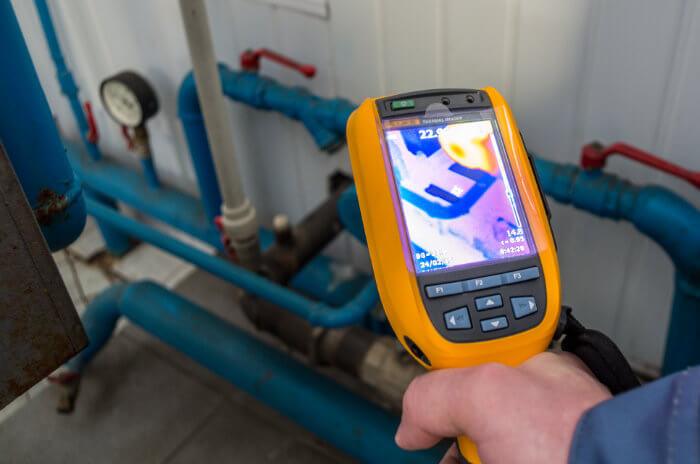
We run leak detection visits with the claim in mind from the start. Every reading, thermal image and moisture measurement goes into a structured report that names the cause, marks the location and documents the affected areas, the exact package a loss adjuster wants to see.
Homeowners use our reports to unlock trace and access cover; landlords and managing agents use them to settle who pays when a leak crosses between flats.
Detection and reporting fees are commonly recoverable under trace and access cover, check your policy schedule; we can help you read it.
What you get
- Detection visits documented to insurance standard
- Cause, origin and affected-area reporting
- Thermal images, moisture readings and photos included
- Liability clarity for flat-to-flat and HMO leaks
- Direct correspondence with adjusters on request
- Fast turnaround, report typically within 48 hours of the visit
How it works
How a trace and access survey is run
01
Detect and document
The leak is located non-invasively, with every step recorded as evidence.
02
Map the damage
Moisture profiling shows the true spread of water, often wider than the visible stain.
03
Issue the report
Cause, location, method and damage in a format insurers accept without follow-up.
04
Support the claim
We answer adjuster queries and coordinate with drying and reinstatement teams.
Before you book anyone
6 things to check before you book trace and access in London
01
The open-ended clock is where the money disappears
London leak detection firms billing by the hour typically charge £95-£145 per hour. The advertised rate is not the problem - the open-ended clock is, and complex jobs billed that way can run to day rates of £595-£1,500. Before anyone crosses your threshold, get four things in writing: the rate, the hours expected, what you owe if nothing is found, and what would trigger any extra charge. If a company cannot give you that number over the phone or by email, assume the meter runs in their favour.
02
Read the 'no find no fee' small print twice
Plenty of London firms advertise no find no fee, then bury exclusions: it only applies if intrusive works go ahead, or it excludes anything external, or excavation voids it entirely. Homeowners describe being thousands out of pocket for excavation that found nothing. Ask exactly what happens to the bill if no leak is located - in writing. Our version is deliberately simple: a fixed hourly rate agreed at booking (£200 an hour for trace and access, typically £400–£800 in total for a London domestic visit), and if we do not find your leak, you do not pay for the detection time.
03
Check your trace and access cover before you spend a penny
Most UK buildings insurance policies include trace and access cover, typically capped at £5,000-£10,000. It pays for locating a hidden leak, opening up floors or walls to reach it, and making good afterwards - but almost never the repair of the failed pipe itself, which stays your cost. Your escape of water excess still applies, and these have crept up to £500-£1,000 on many policies. Ring your insurer, confirm the limit and excess, and ask whether you need pre-authorisation before instructing a detection company. Ten minutes on that call can turn a four-figure bill into a reimbursed one.
04
Ask what equipment is actually coming on the van
A genuine multi-method survey uses acoustic microphones and correlators, thermal imaging, tracer gas, moisture mapping and per-circuit pressure testing - because each method fails in different conditions. Before booking, ask the company to list the equipment they will bring and which methods are included in the price. A firm that arrives with one tool has one chance of finding your leak; the rest of the visit is guesswork you are paying for.
05
Watch your wording when you speak to the insurer
Insurers routinely reject water leak claims under the 'gradual damage' or wear-and-tear exclusion - and your own words can trigger it. Saying 'it's been leaking for ages' or 'there's been damp for months' hands the loss adjuster grounds to classify the escape of water as gradual and decline the claim. Be truthful, but precise: report when you first discovered the damage, not how long you speculate the pipe has been weeping. Report it promptly too - every week of delay makes the gradual-damage argument easier for the insurer to run. Aviva, Admiral, Direct Line and others all apply these exclusions.
06
A report the loss adjuster rejects is worthless
Loss adjusters look for specific things: the detection methods used, the confirmed cause and origin of the leak, moisture readings, photographs of the leak location, and justification for any access works. A scribbled plumber's invoice saying 'found leak under bathroom' gives an adjuster grounds to withhold payment and request more information - stalling your claim for weeks. Ask any company you are considering to show you a sample report before you book. Ours are structured for UK loss adjusters - cause, origin, method, moisture map and photographs - and delivered within 48 hours of the visit.
Compare like for like
Trace And Access In London For Insurance Claims
Trace and access is the work of finding a hidden leak and reaching it, then putting the surrounding area back. For an insurance claim the report matters as much as the repair. This page shows what a proper trace and access report should contain and how the three approaches differ.
| What to check | A vague one-line invoice | A detection-only firm | London Leak Specialist |
|---|---|---|---|
| What the report contains | One line such as 'traced and accessed leak' with no cause, origin or supporting detail for the adjuster to assess. | Detail limited to whatever their single method found, often thermal or acoustic alone, with gaps where that method cannot reach. | Cause, likely origin, methods used, moisture readings and dated photos, written so an adjuster can follow the evidence. |
| Survives a loss adjuster | Rarely holds up; an adjuster can query or reduce it because nothing evidences what was found or why work was needed. | May be challenged where one method leaves the source unproven, so parts of the claim can be questioned. | Built to be reviewed; evidence is documented so a loss adjuster can verify the findings without a second visit. |
| Notifying your insurer first | Often no guidance given, so you may authorise work before notifying and risk part of the cost being disputed. | Focus stays on detection, with little advice on claim timing or how the policy handles trace and access cover. | We suggest notifying your insurer early and keeping their reference, so the claim and the works line up cleanly. |
| Escape of water condition | Damage and its cause are not separated, so it is unclear whether an escape of water actually occurred. | The leak may be located, but the link between escape of water and the resulting damage is often left implicit. | We record the escape of water, the affected areas and the damage condition so the claimed loss is clearly established. |
| Gradual wear awareness | No mention of gradual or long-term causes, which can leave a claim exposed to a wear-and-tear exclusion later. | Detection notes the fault but seldom comments on whether the cause looks sudden or gradual in nature. | We note whether findings point to a sudden event or gradual wear, so you understand how policy exclusions may apply. |
| Reaching the leak | Access can be cut wider than needed, adding damage and cost without recording why the opening was made there. | Access is guided by one method's reading, which can mean opening the wrong spot when the source sits elsewhere. | Findings guide targeted access, so we open the smallest area that reliably reaches the source and record the reason. |
| Reinstatement after access | Making good is often excluded or vague, leaving you to arrange and fund repairs to the opened areas yourself. | Detection-only firms usually stop at the report and do not reinstate, so a separate trade must finish the works. | We can make good the areas we open and note the reinstatement, keeping the works consistent with the report. |
| Pricing model | A flat headline figure that hides scope; extras appear later once cutting and making good are actually required. | Priced around one method, so added visits or trades can push the final cost above the original quote. | Clear scope against typical UK trade cost-guide ranges; trace and access is often capped by policies between £5,000 and £15,000. |
Questions
What trace and access cover means, and what it costs
What is trace and access cover?
A section of many buildings insurance policies that pays the reasonable cost of locating the source of a water leak and repairing whatever was removed to access it, floors, tiles, walls. The pipe repair itself is often excluded, and the limit and excess depend on your own policy schedule.
Will my insurer accept your report?
Our reports follow the structure UK adjusters expect: confirmed cause and origin, detection methods used, precise location, moisture mapping of affected areas and photographic evidence. They are routinely accepted without a second visit.
The leak came from the flat upstairs, who pays?
It depends on the lease and on negligence, but everything starts with establishing the origin. Our report gives both parties and their insurers an independent, documented answer to argue from, which usually shortens the dispute dramatically.
Should I contact my insurer before or after detection?
Notify them as soon as you suspect a leak causing damage, then arrange detection. Acting quickly to find and stop a leak is viewed favourably; waiting while damage spreads is not.
How much does trace and access cost in London?
Our trace and access surveys are charged at a fixed £200 an hour, with the report writing included in the hours worked. A typical domestic survey takes two to four hours, so £400–£800 in total. Across the trade, firms billing hourly charge £95-£145 per hour, and complex jobs run to day rates of £595-£1,500, so an open-ended hourly booking can easily exceed a fixed quote. If your buildings insurance includes trace and access cover (usually capped at £5,000-£10,000), the detection cost is normally reimbursable once you supply a compliant report, subject to your excess.
Is trace and access covered by home insurance?
Most UK buildings insurance policies include trace and access cover, typically with a £5,000-£10,000 limit. It pays to locate a hidden leak, open up walls or floors to reach it, and make good the surfaces afterwards. It does not cover repairing the failed pipe or appliance itself - that cost stays with you. Your escape of water excess, often £500-£1,000, still applies, and insurers may require a professional detection report before paying out.
How long does trace and access take?
A typical London domestic leak detection visit takes two to four hours. The engineer works through methods in sequence - pressure testing each circuit, acoustic listening, thermal imaging, moisture mapping and tracer gas where needed - until the leak is pinpointed. Larger properties, underfloor heating circuits or external supply pipes can take longer. The written report insurers need should follow within 48 hours of the visit, and claims stall without it.
Who pays for trace and access in a flat?
It depends where the leak originates. Leaks in communal pipework are the freeholder's responsibility, usually funded through the service charge. Leaks inside a private flat typically fall under the buildings insurance trace and access clause, whether that is a block policy or the leaseholder's own. The pipe repair itself normally stays with whoever owns the pipework. Get the source professionally identified and documented before anyone argues about liability.
Will insurance pay if the leak was gradual?
Usually not. Insurers including Aviva, Admiral and Direct Line apply gradual damage and wear-and-tear exclusions, refusing claims where water escaped slowly over time through failed grout, perished seals or corroded pipes. Cover applies to sudden and unexpected escapes of water. Report damage the day you discover it, avoid speculating about how long it has been leaking, and obtain a professional report establishing a specific cause - that documentation is what keeps a claim inside the policy wording.
London-wide
Trace and access across every London borough
Related services
Home Leak Detection
Home leak detection for London flats, houses and supply pipes.
Learn moreLeak Repair
Water leak repair across London: burst pipes, pinhole leaks, failed joints and weeping valves, usually fixed on the same visit as the detection survey itself.
Learn moreHeating Leaks
Boiler losing pressure? Separate a real heating leak from an expansion vessel or relief valve fault before buying parts.
Learn moreInsurer asking where the leak is?
Tell us the symptoms and your postcode. We’ll confirm the visit, the fixed hourly rate, how long we expect to need and the arrival window before you commit to anything.
Book a detection visit