BS 8102 and Water in a Basement: Leak, Ground Water or Failed Waterproofing
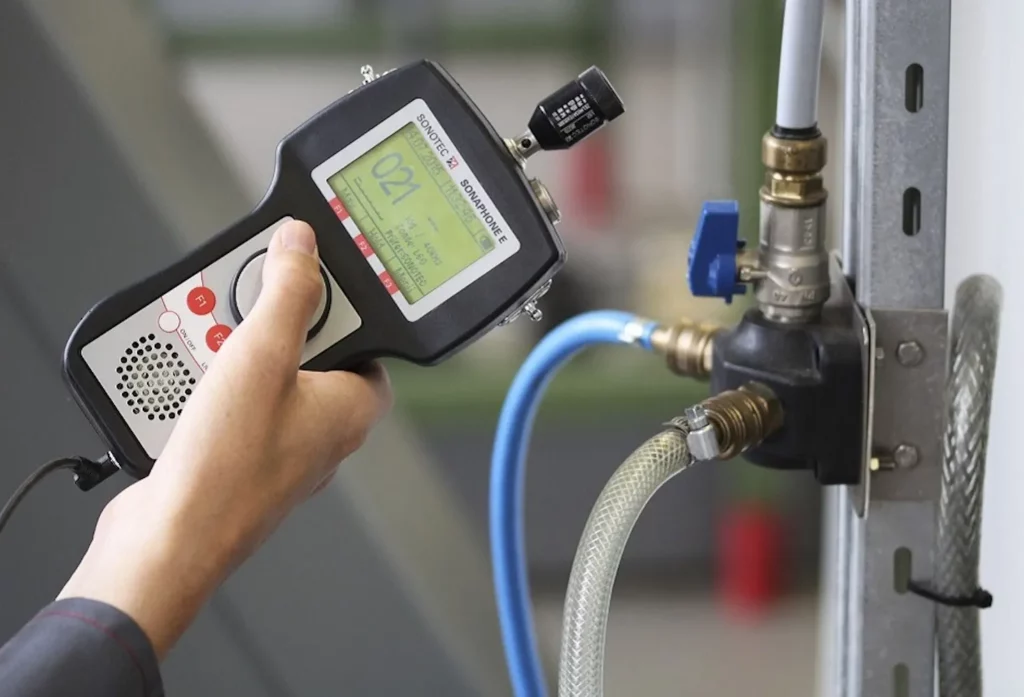
A pipe leak, rising ground water and a failed waterproofing system leave the same stain on a basement wall. BS 8102 governs two of the three and is silent on the first. Which one you actually have decides the trade you need, the cost, and whether your insurer pays a penny.
Three completely different things put water on a basement floor, and on the wall they look the same. A pipe can be leaking. Water can be pushing in from the saturated ground outside. Or the waterproofing that was supposed to hold that ground water back can have stopped working. The first is a plumbing repair. The second and third are governed by a British Standard called BS 8102, and neither of them is a plumbing repair.
Which one you have decides the cost, the trade you need, and whether your insurer pays. It is worth getting right before anyone quotes you for a tanking system.
What BS 8102 covers, and what it does not
The current version is BS 8102:2022, Protection of below ground structures against water ingress, Code of practice. It was published in March 2022 and replaced BS 8102:2009. It deals with water arriving from the ground: the water table, surface water in the surrounding soil, and in the 2022 revision, ground gases and flooding as well.
It says nothing at all about your plumbing. A copper pipe weeping under a basement slab is outside its scope. This matters more than it sounds, because a waterproofing specification written to BS 8102 assumes the water is coming from the ground. Install a system on that assumption while a supply pipe is leaking behind it and the system will be blamed for a failure it did not cause.
There is an awkward detail worth knowing. Approved Document C of the Building Regulations, in its 2004 edition incorporating the 2010 and 2013 amendments, still cites BS 8102:1990 as an alternative approach at paragraphs 4.12 and 5.6. That is two revisions out of date. So when a contractor tells you a basement "meets Building Regulations", that is not the same claim as "was designed to the current standard", and you are entitled to ask which one they mean.
The grades, and why most pages get them wrong
BS 8102:2022 sets four performance grades, not three. The Basement Information Centre summary of the revision, published by The Concrete Centre, sets them out as follows.
| Grade | What is acceptable |
|---|---|
| 1a | Seepage and damp areas from internal and external sources are tolerable, where this does not affect the proposed use of the space. Internal drainage might be necessary to deal with seepage. |
| 1b | No seepage. Damp areas from internal and external sources are tolerable. |
| 2 | No seepage is acceptable. Damp areas caused by internal air moisture or condensation are tolerable, and measures might be needed to manage water vapour. |
| 3 | No water ingress or damp areas is acceptable. Ventilation, dehumidification or air conditioning is necessary, appropriate to the intended use. |
You will still find pages telling you that Grade 1 means a car park and Grade 3 means a habitable room. The 2022 revision deliberately deleted those worked examples, because the grade depends on the intended use of the space and the examples were causing confusion. Anything still quoting them is quoting a superseded edition.
The second thing to take from that table is that Grade 3 is not delivered by the waterproofing alone. The standard's own note says the additional measures needed to achieve the required internal environment sit outside its scope. A Grade 3 basement with no ventilation strategy can still feel damp, and that is a condensation problem, not a waterproofing failure. It is one of the more common arguments between a homeowner and an installer, and both sides are usually half right.
Types A, B and C, and how each one fails
The standard describes three forms of protection, which can be combined. The 2022 revision expanded the guidance on combining them, including internal plus external barriers and full Type A with B and C.
Type A, barrier protection. A membrane, slurry, render or coating, applied either inside or outside the structure. The 2022 revision removed the sandwiched arrangement entirely, because sandwich systems had seen a lot of failure. Type A fails at penetrations, at movement joints, and at the junction where the wall meets the slab. New clauses on structural penetrations and movement joints were added in 2022 for exactly that reason.
Type B, structurally integral protection. The concrete itself is the waterproofing. The 2022 revision now describes that concrete as watertight rather than water resistant, and asks for waterstops to be designed as a continuous system. It fails at construction joints, at pour boundaries, and where services were drilled through afterwards instead of cast in.
Type C, drained protection. Commonly retrofitted in existing basements, because it can be installed from the inside without excavating. A dimpled cavity membrane lets water into a managed void behind the finish, and a channel takes it to a sump and a pump. It does not stop water, it moves it. That makes the pump a single point of failure. When the channel silts up, the float switch sticks or the power goes, the floor can flood inside an hour, with clean cold water and no warning, which is a convincing impersonation of a burst pipe. The 2022 revision added further detail on pump systems and their discharge for this reason.
Telling a pipe leak from ground water
Before anyone spends money, the source has to be established rather than assumed. There are honest tests you can run yourself in an afternoon.
- Read the meter. Turn every outlet off, note the meter, wait an hour, read it again. Movement means a live supply leak somewhere on your side. Our guide on how to read your water meter to check for a leak covers the method properly.
- Watch the boiler pressure. A sealed heating system that needs topping up every week or two is losing water somewhere, and buried pipework under a basement slab is a common place for it to go.
- Correlate. Ground water tracks the weather. It worsens days after heavy rain, peaks in winter, and eases in a dry spell. A pressurised leak ignores the weather entirely. A waste leak appears only when something upstairs is used.
- Feel the water. A heating leak is warm at the source. Ground water at depth is cold and stays cold all year, which is why it is easy to mistake a cold wall for a wet one.
- Look at where it enters. Water following a pipe route, or emerging at one service penetration, suggests plumbing. Water appearing evenly along a whole elevation at the wall and floor junction suggests the ground.
Across our last 400 leak detection surveys, the cause was found in 95 per cent of cases. In 2 per cent the water was coming from a neighbouring property. In 3 per cent it was not a plumbing leak at all: gutters, roofs and other structural defects letting water in. That last figure is the one basement owners should hold on to. Water in a below ground room being nothing to do with the pipes is not a rare event, and the reverse is just as true, which is why the test is worth running before you commit to a waterproofing contract.
If you want the full diagnostic sequence for a below ground room, we cover it in more depth in our guide to leak detection in basements and cellars.
If you are being quoted for tanking and nobody has yet excluded a plumbing leak, call us on 020 7123 8560 first. A standard leak detection survey runs at a fixed hourly rate of GBP 160, agreed before we travel and unchanged on the day, and a typical basement survey takes two to four hours. If we attend a confirmed live leak and cannot locate it, the detection time is not charged. Full rates are on our pricing page.
Why the distinction decides the insurance position
This is where the two categories separate hardest. Escape of water from a pipe, tank or appliance is an insured peril on a standard buildings policy. Water rising out of the ground into a basement is a different event, and gradual deterioration of a waterproofing system is usually excluded outright.
It is not quite as blunt as "insurance never pays for waterproofing", though. A published Financial Ombudsman Service case study makes the point well. A couple's basement flooded after heavy rainfall. The insurer agreed to pay for the flood damage but refused to pay to make the walls watertight, arguing the tanking had failed through defective design, poor workmanship or gradual deterioration. The Ombudsman found the evidence pointed to wear and tear, which strictly was not covered. But because the flood was caused by a risen water table that was not expected to fall, it concluded that the only effective and lasting repair was to repair the tanking, and told the insurer to pay for a replacement system.
Read that carefully and the lesson is about evidence, not entitlement. The outcome turned entirely on what an engineer's report said had caused the water. That is the same finding a leak detection survey produces, and it is why the survey should come before the argument rather than after it.
The trace and access clause behaves the same way. It pays for the work of getting at a leak and making good afterwards, and it attaches to escape of water. If the survey concludes the water is coming from the ground, there is no escape of water for the clause to attach to and the cost sits with you. Our pages on insurance leak claims and on what trace and access cover actually pays for set out how the two clauses interact.
What we can settle, and what we cannot
We should be clear about the boundary. We are leak detection engineers. We do not design waterproofing systems and we cannot certify a basement to BS 8102. The 2022 revision asks for a waterproofing specialist, suitably qualified and experienced for the size of the project, to be appointed early, ideally before technical design. If your basement needs a designed system, that is who writes it, and their guarantee is the one that matters.
What we settle is the question that comes first. Using pressure testing, acoustic listening, thermal imaging, moisture mapping and tracer gas, we establish whether a live plumbing leak exists and where it is. A clean result is as useful as a positive one, because it tells a waterproofing designer they are looking at a genuine ground water problem and lets them specify against it with confidence. We work across all 32 London boroughs and out to the M25; the methods are the same ones described on our leak detection pages, adapted for below ground work, where thermal imaging on its own tells you far less because the whole room is cold to begin with.
The order matters more than anything else here. Diagnose, then specify, then install. A waterproofing system installed over an undiagnosed leak will fail, and the dispute that follows will be between you, the installer and the manufacturer, with a standard sitting in the middle that never claimed to cover the pipe in the first place.
How we help with this
If the article describes a problem you actually have, these are the visits that deal with it.
- leak detection in London
Finding a hidden leak without opening the property up first.
Not sure which one applies? Describe the symptom on the phone and you will be told which survey it is, the hourly rate and roughly how long it takes, before anything is booked. 020 7123 8560
Frequently asked questions
Does BS 8102 cover a leaking pipe in my basement?
No. BS 8102:2022 is titled Protection of below ground structures against water ingress, and it deals with water arriving from the ground: the water table, surface water in the surrounding soil, and in the current revision, ground gases and flooding. A leaking supply, heating or waste pipe is outside its scope entirely. That is why the plumbing question has to be answered first. A waterproofing system specified to BS 8102 is designed against ground water pressure, and it will not stop, and was never meant to stop, water arriving from a pipe behind it.
How many grades does BS 8102 have, and which one do I need?
Four: 1a, 1b, 2 and 3. Grade 1a tolerates seepage and damp areas where that does not affect the use of the space. Grade 1b allows no seepage but tolerates damp areas. Grade 2 allows no seepage, with damp from internal air moisture tolerated. Grade 3 allows no water ingress or damp areas, and requires ventilation, dehumidification or air conditioning appropriate to the use. The 2022 revision removed the old worked examples that matched grades to specific room types, because the grade follows the intended use of the space and should be agreed with the client at the earliest stage. Anyone still quoting car parks and habitable rooms as fixed grade definitions is working from a superseded edition.
My basement was built to BS 8102 and it is still damp. Has the waterproofing failed?
Not necessarily. Grade 3 permits no water ingress or damp areas, but the standard's own note states that the additional measures needed to achieve the required internal environment sit outside its scope. In practice that means ventilation, dehumidification or air conditioning. A sealed below ground room with no ventilation strategy will produce condensation on cold surfaces regardless of how good the waterproofing is, and that is a different problem with a different fix. The way to separate them is to check whether the moisture correlates with occupancy and humidity or with rainfall and the water table.
Will my buildings insurance pay to waterproof a basement that keeps flooding?
Usually not on its own, because escape of water from a pipe or appliance is the insured peril and gradual deterioration of a waterproofing system is normally excluded. But it is not automatic. In a published Financial Ombudsman Service case study, an insurer paid for flood damage after heavy rainfall but refused to pay to make the walls watertight. The Ombudsman accepted the tanking had suffered wear and tear, so was not strictly covered, yet still directed the insurer to fund a replacement system because the water table was not expected to fall and repairing the tanking was the only way to make the flood repair effective and lasting. The outcome hinged on what the engineer's report said had caused the water.
Should I get a leak detection survey before I accept a tanking quote?
Yes, if nobody has yet excluded a live plumbing leak. Across our last 400 leak detection surveys the cause was found in 95 per cent of cases, and in 3 per cent the water was not a plumbing leak at all but gutters, roofs and other structural defects letting water in. The reverse happens too, and a waterproofing system installed over an undiagnosed pipe leak will fail, leaving you arguing with an installer about a guarantee. A survey runs at a fixed hourly rate of GBP 160, agreed before we travel, typically two to four hours for a basement, and if we attend a confirmed live leak and cannot find it the detection time is not charged.