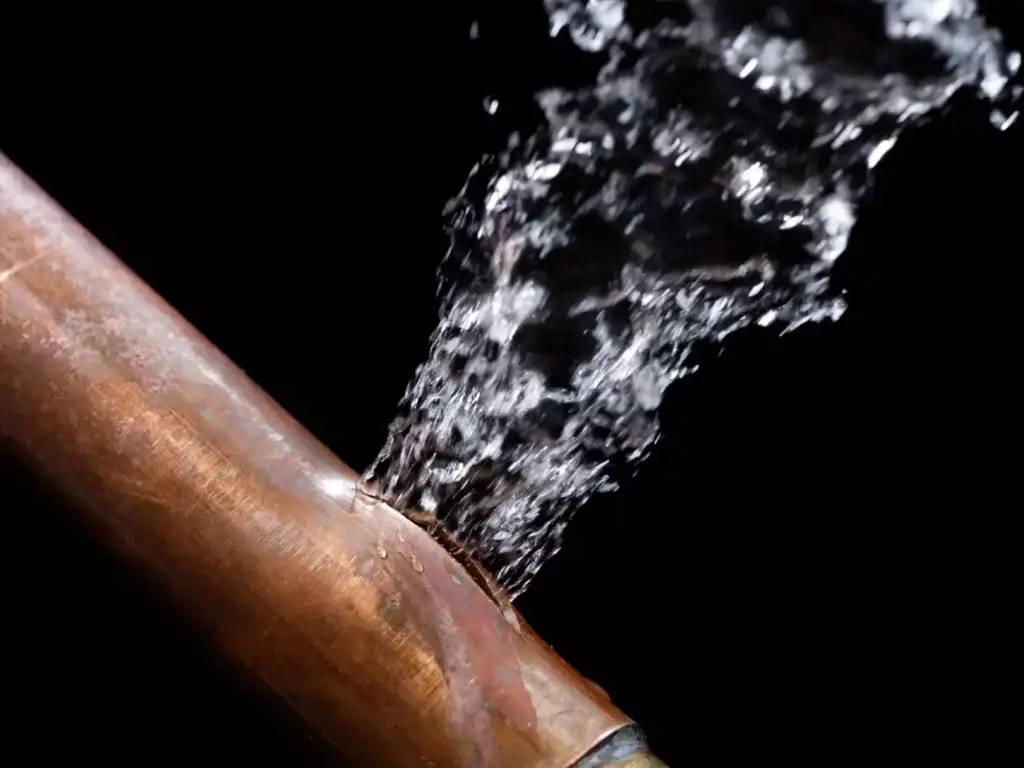
Water damage is measured in minutes, not hours. The exact sequence to follow from the moment you hear water where it shouldn’t be.
A mains-pressure burst can put hundreds of litres into your home in the time it takes to search "emergency plumber near me". This checklist exists so that the searching happens after the water stops.
Minute one: stop the water
Go straight to the internal stop tap, under the kitchen sink or where the mains enters, and close it fully, clockwise. If it is seized or you cannot reach it, use the outside stop valve at the property boundary (the small cover marked "W" in the footpath). If you do not know where either is, read our stop tap guide, ideally today, not mid-flood.
Minutes two to three: dump the pressure
Closing the stop tap stops new water entering, but the pipework is still full. Open every cold tap in the house, sink, bath, outside tap, and let them run dry. The flow from the burst drops within a minute or two. Flush toilets once to empty cisterns feeding from any tank.
Minute four: protect the electrics
If water has reached, or could reach, sockets, light fittings or the consumer unit: switch off the affected circuits, all of them if in doubt. Wet electrics are the part of a flood that can hurt you.
Minutes five to six: kill the heating
Switch the boiler off. If the burst is on the heating circuit rather than the mains, the sealed system will be dumping its water too. If you have a hot-water cylinder and the burst appears to be on the hot side, close the gate valve on the cylinder's cold feed if you can identify it.
Minutes seven to ten: contain and record
- Buckets and towels under active drips; a bin bag taped as a crude funnel can redirect a ceiling leak into a bucket.
- Move electronics, rugs and furniture out of the water path. Foil or blocks under furniture legs you cannot move.
- Pierce a bulging ceiling at its lowest point, with a bucket underneath, rather than waiting for it to choose its own moment.
- Photograph everything as you go. Your insurance claim starts with these pictures.
Then call, with the right information
An emergency plumber can move faster when the booking includes: where the water was coming from, whether the stop tap is closed and holding, what kind of pipe (copper/plastic) if visible, and a photo. That determines the parts on the van.
First, is this actually an emergency?
Worth thirty seconds, because the answer decides whether you pay an out of hours rate tonight or a standard rate tomorrow, and the difference is real money.
It is an emergency while water is escaping and you cannot stop it. If the flow continues after the stopcock is closed, if water is reaching electrics, if it is coming through a ceiling, or if it is running into a neighbouring property, that needs attending now and the cost of waiting exceeds the cost of the call-out.
It is not an emergency once the water is off and nothing is still spreading. A stain that is no longer growing, a slow weep into a bucket, or a boiler losing pressure with no visible water, are all problems for the morning. Booking them at the emergency rate buys you nothing except a larger invoice, and any firm worth using will tell you so on the phone rather than dispatching a van.
The one caveat: "the water is off" has to mean the flow has actually stopped. Water already sitting in a floor or ceiling void keeps arriving for a while after the supply is isolated, so give it fifteen minutes before concluding the stopcock did not work.
What emergency leak repair costs, and what changes it
Emergency and out of hours attendance is from £220 an hour, confirmed as an exact figure when you book rather than after the visit. Standard hours work is £160 an hour for repair labour and internal detection, and £180 for a buried supply pipe. Parts and making good are quoted separately once the fault is exposed. There is no separate call-out charge: the clock starts when the engineer starts work, not when the van leaves. Full rates are on our pricing page.
Three things move the final figure more than the hourly rate does. Where the pipe runs, because an exposed pipe is an hour and one cast into a screed floor is a different order of work. How long it ran, since the repair costs the same either way but the drying and making good does not. And what it reached: plaster, flooring and electrics are separate trades, and they are usually the part an insurance claim is actually for.
If the water is going into a neighbour's property
Tell them immediately, before you do anything else about the repair. In a London flat the person below often knows before you do, and the ones who end up in a dispute are almost always the ones who found out late.
After that: photograph your side before anything is cleaned up, tell the managing agent or freeholder if it is a block, and be careful about accepting liability on the doorstep. Liability turns on negligence rather than on whose flat the water came from, and a pipe that failed without warning is generally not negligence. Our guide to a leak from the flat above covers how that is usually settled.
What to record while it is still happening
This is the part everyone skips and later wishes they had not, and it takes two minutes.
- Photograph the water at its worst, before any mopping, with something in shot for scale.
- Photograph the source if you can see it, and keep the failed part if one is replaced. A split flexible hose is physical evidence of a sudden failure.
- Note the time you first noticed it and the time the water was isolated. Insurers ask, and a prompt response supports the claim.
- Photograph the meter reading, which matters if you later apply for a leakage allowance on the bill.
- Write down what was already wet before anyone walked through it.
Once a ceiling is repaired and a floor is dry, the evidence of what happened is gone, and what is left is your word against an assumption.
What a proper repair looks like
The damaged section should be cut out and replaced full-bore in a permanent burst pipe repair, not wrapped in tape or squeezed with a temporary clamp and left. Expect the system to be refilled, pressure-checked and inspected at the repair and nearby joints. Ask what caused the burst: freeze damage, corrosion, or mechanical stress. One pinhole in a corroded run is rarely alone, and honest advice now beats a repeat emergency at the next cold snap. If the failure hints at wider pipework problems, a follow-up detection survey maps what else is near failure.
After the plumber: drying and insurance
Escape of water is one of the most common UK home insurance claims. Notify your insurer promptly, keep the photos and the plumber's notes on cause, and take drying seriously, soaked floors and walls need weeks, and sealed-in moisture becomes mould. For significant soakings, insurers will often fund professional drying equipment; use it.
How we help with this
If the article describes a problem you actually have, these are the visits that deal with it.
- leak detection in London
Finding a hidden leak without opening the property up first.
- burst pipe repair
A split or burst pipe isolated and repaired, day or night.
- our full guide to leak detection
How each method works, what it costs and when it is the wrong tool.
Not sure which one applies? Describe the symptom on the phone and you will be told which survey it is, the hourly rate and roughly how long it takes, before anything is booked. 020 7123 8560
Frequently asked questions
Is a water leak an emergency?
It is while water is escaping and you cannot stop it, or where it is reaching electrics, coming through a ceiling, or running into a neighbouring property. Once the supply is isolated and nothing is still spreading, it is a problem for normal working hours, and booking it out of hours costs more without getting you a better repair.
How much does emergency leak repair cost in London?
Emergency and out of hours attendance is from £220 an hour, given as an exact figure when you book. Standard hours repair and internal detection are £160 an hour, and buried supply pipe work is £180. There is no separate call-out fee, and parts and making good are quoted once the fault is exposed.
Should I wait until morning to call someone?
If the water is genuinely off and nothing is still spreading, yes, and you will pay the standard rate instead of the emergency one. If the flow has not stopped, or water is near electrics or reaching another property, do not wait. Give it fifteen minutes after closing the stopcock before deciding, because water already in a floor or ceiling void keeps arriving for a while.
Why did my pipe burst in cold weather?
Water expands about 9% on freezing. Ice forming in an uninsulated pipe seals the bore and pressurises the trapped water between the ice plug and a closed tap until the pipe splits. The flood arrives at thaw. Lagging exposed pipework and leaving heating on low in hard frost prevents most of these.
The burst stopped by itself, am I safe?
No, either the ice plug re-froze, pressure dropped, or the water found another path. The defect is still there. Keep the supply isolated and have it repaired before restoring pressure.
Do plumbers charge more for emergency call-outs?
Out-of-hours work costs more everywhere; what varies is honesty about it. We quote the call-out and first-hour rate when you book, before we travel, the price you hear is the price you pay.