Damp Patch on the Ceiling: What to Do First (And What Not to Do)
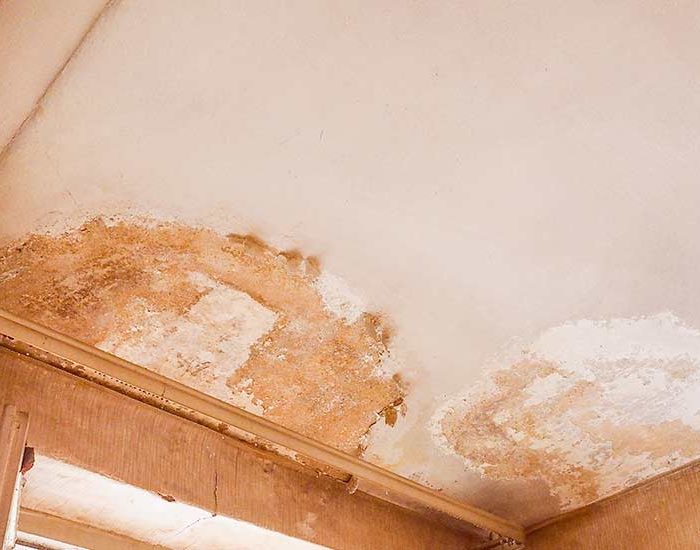
The stain is rarely under the leak. Here is how to read a ceiling patch, make it safe, and find the true source.
A brown ring on the ceiling is one of the most misread symptoms in a home. The instinct is to look directly above the stain, but water travels. It runs along joists, pipes and the top of plasterboard, then drops at a joint or a light fitting that may be a metre or more from the actual leak.
First: safety and containment
- If the ceiling is bulging with water, do not poke it over your head. Place a bucket, then pierce the lowest point of the bulge from the side with a screwdriver to release the water in a controlled way. A controlled drain beats an uncontrolled collapse. If water is already coming through, our guide to water coming through the ceiling sets out the first steps in order.
- If water is near any light fitting or electrics, switch off the affected circuit at the consumer unit before anything else.
- If the flow is active and significant, close the internal stop tap and open cold taps to drain the pipework down.
Reading the stain
The pattern of the patch is diagnostic if you look closely:
- Grows when it rains, dries in between → roof, flashing, gutter or external wall, not plumbing.
- Grows when the bath or shower above is used → failed sealant, a leaking waste trap or shower tray. Run the shower deliberately for ten minutes and watch.
- Grows steadily regardless of weather or usage → a pressurised pipe (mains or heating) leaking continuously. These never fix themselves.
- Appeared once, dried, never returned → probably a one-off overflow or spill; monitor, but do not panic.
The tests worth running before opening anything
- Usage test: run each fixture above in turn, bath, shower, basin, toilet, for several minutes each, checking below between runs.
- Meter test: everything off, watch the water meter. Movement means a live mains-side leak.
- Boiler gauge test: if pressure drops overnight with the heating off, the wet ceiling and the tired boiler probably share a cause.
Flats: the awkward version
In conversions and blocks, the water above your ceiling is usually someone else's. Knock upstairs, check their bathroom floor and under their sink, and note what you find in writing. If the source is not obvious, an independent detection report establishes the origin, which is exactly what both sets of insurers will ask for. Our trace and access reports are written to settle precisely this question.
Is the ceiling leaking, or is it damp?
These are different problems with different answers, and the stain alone will not tell you which you have. What does tell you is how it behaves over a few days.
| What you observe | What it usually is |
|---|---|
| Grows after someone showers or runs a bath upstairs, stable otherwise | A waste, a seal or a shower tray above. Very common, and frequently not covered by insurance because a perished seal counts as maintenance. |
| Grows steadily whether the property above is used or not | A pressurised pipe. Mains or heating, and it will not stop on its own. |
| Darkens after rain, dries back in between | The building fabric. A roof, a flashing, a gutter or a blocked outlet, not plumbing at all. |
| Worst in cold weather, on an outside wall or under a flat roof, with mould at the edges | Condensation. The ceiling is cold, not leaking. |
| A sharp brown ring that is dry to the touch | An old leak that has already stopped. Worth confirming before anyone opens anything. |
Write down the size of the stain and the date, and photograph it against something for scale. A week of that is the most useful evidence anyone can bring to the problem, and it costs nothing.
When a leaking ceiling is actually dangerous
Most ceiling stains are a nuisance. A few are not, and it is worth knowing which is which.
Stop using the room and get everyone out if the ceiling is bulging, sagging or holding water. Plasterboard absorbs a great deal of water before it fails, and when it fails it comes down in one piece rather than gradually. A bulge is water sitting on top of the board.
Turn off the electricity at the consumer unit if water is near a light fitting, and do not switch anything in that room on or off until it has been checked. Downlights in particular give water a direct route into the ceiling void and into the wiring.
Some people deliberately pierce a bulging ceiling with a screwdriver to release the water into a bucket, on the basis that a controlled release beats an uncontrolled collapse. It does work. It also means standing under a loaded ceiling, so if you are in any doubt, leave the room and have it done by someone with the right access equipment.
If the water is coming from the flat above
This is the most common version in London, and it turns into a dispute more often than it needs to. The order that works:
- Tell the neighbour before you tell anyone else. In most cases they do not know. A leak that is obvious in your ceiling can be invisible in their floor.
- Ask them to turn off the water at the stopcock if it is running rather than seeping, and to stop using the bathroom above until it is looked at.
- Tell the managing agent or freeholder if it is a block, because the building is usually insured under a single policy and they hold it.
- Photograph everything before it is cleaned up. Once a ceiling is repaired, the evidence of what happened is gone.
- Get the cause established. Liability turns on cause, not on whose flat the water came out of. A pipe that failed without warning is generally not negligence; a known problem that was ignored can be.
We cover the money side in detail in our guides to a leak from the flat above and to a bathroom leak insurance claim.
Why the leak is rarely above the stain
This is the single most useful thing to understand before anyone lifts a floor. Water leaving a pipe does not fall straight down. It runs along the top of the ceiling board, along joists, and down the first thing that will carry it, which might be several metres from where it escaped. The stain marks where the water finally came through, not where it came from.
That is why opening the ceiling directly under the mark so often finds dry timber and nothing else, and why a survey that isolates and pressure tests each system in turn is cheaper than a second hole.
What it costs to find
A standard detection visit is £160 an hour and a ceiling leak is usually at the shorter end, because the area to test is defined. Where the survey is for an insurance claim and a report is needed, trace and access work is £200 an hour with the report written inside the hours worked. The rate is agreed before anyone travels, and if we attend a confirmed live leak and cannot locate it, the detection time is not charged. Full rates are on our pricing page.
What not to do
- Do not paint over it. Stain block on an active leak buys weeks of looking better while the structure keeps soaking.
- Do not cut the ceiling open on a guess. If the source is not proven, you may open the wrong spot, and you have destroyed the evidence pattern a professional would have read.
- Do not wait for it to "settle down". Continuous stains mean continuous water.
When the source is not findable from above, non-invasive leak detection traces it through moisture mapping, thermal imaging and acoustic survey, and the ceiling gets opened once, in the right place, or often not at all.
How we help with this
If the article describes a problem you actually have, these are the visits that deal with it.
- damp and moisture surveys
Moisture mapping that separates a leak from condensation or damp.
- our full guide to leak detection
How each method works, what it costs and when it is the wrong tool.
- thermal imaging surveys
Infrared showing where warm or cold water tracks behind a surface.
Not sure which one applies? Describe the symptom on the phone and you will be told which survey it is, the hourly rate and roughly how long it takes, before anything is booked. 020 7123 8560
Frequently asked questions
Why is my ceiling leaking?
Water is arriving from above, and the usual sources are a waste or seal in a bathroom overhead, a pressurised mains or heating pipe in the floor void, or the building fabric where there is a roof above. How the stain behaves separates them: growing only after the bathroom above is used points at a seal or waste, growing steadily regardless points at a pressurised pipe, and darkening after rain points at the roof rather than plumbing.
Is a leaking ceiling dangerous?
Usually not, but stop using the room if the ceiling is bulging, sagging or visibly holding water, because saturated plasterboard fails suddenly rather than gradually. Turn the electricity off at the consumer unit if water is near a light fitting or a downlight, and leave it off until it has been checked.
How long can I leave a wet patch on the ceiling?
Not long, and the reason is cost rather than drama. Every extra week widens the area that has to dry and be made good, and on a claim insurers look at how promptly you acted once you knew. If the stain is dry and unchanged over a fortnight it is an old leak that has stopped, which is a different situation, but confirm that rather than assume it.
Whose insurance pays when a flat above leaks into mine?
Generally, your own contents/buildings policy handles your damage, and insurers settle between themselves based on origin and negligence. Everything moves faster with an independent report establishing where the water came from, without one, the dispute can outlast the damp.
How long does a ceiling take to dry after a leak is fixed?
Plasterboard typically needs two to four weeks of natural drying per soaking, longer for lath-and-plaster. Repaint only after a moisture meter confirms it is dry, sealed-in moisture blisters paint and breeds mould.
Is a dried-out brown stain safe to ignore?
A stain that never grows again is cosmetic. But confirm the cause was fixed or one-off before decorating over it, the stain is your early-warning system, and painting it away removes the warning.