Leak Detection Specialist vs Plumber: What the Difference Buys You
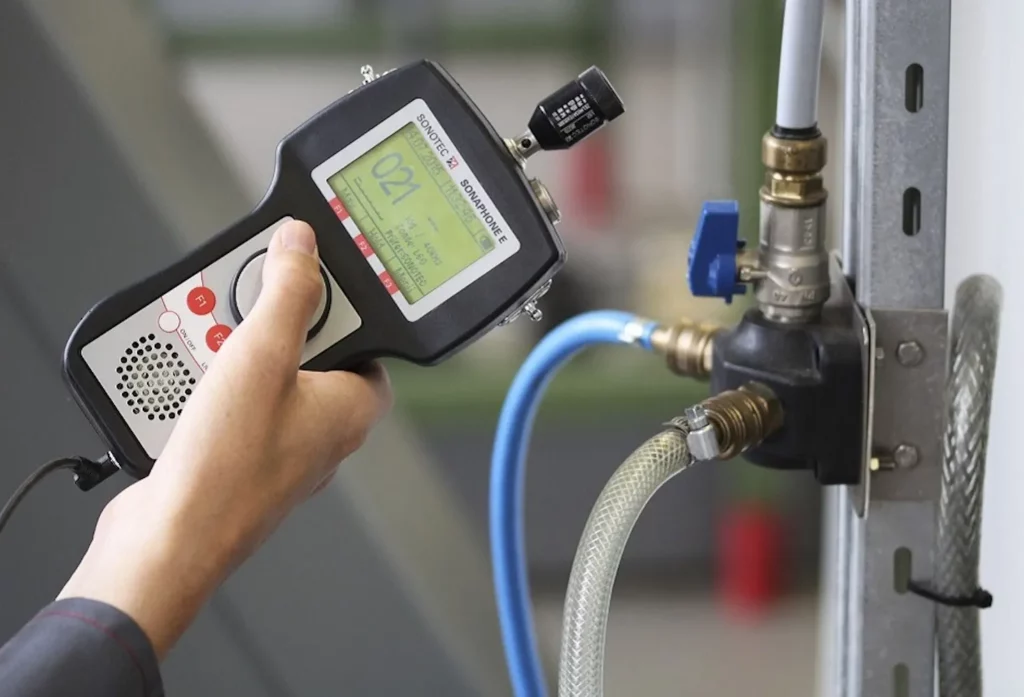
A leak detection specialist and a plumber are not competing trades, one finds the leak, the other fixes the pipe. What the instruments actually do, what no find no fee covers, what an insurer needs in the report, and the cases where calling a specialist is the wrong move.
The word specialist gets used loosely in this trade, so it is worth being precise about what it buys you and when it is a waste of your money. A leak detection specialist and a plumber are not competing trades. They solve different halves of the same problem: one finds the leak, the other fixes the pipe. Most jobs need both, and plenty of jobs need only the second.
This page explains the actual difference, in equipment, in method, in what you are charged for and in the paperwork you end up holding. We are a leak detection company, so read this knowing where our interest lies; we have tried to be equally clear about the cases where calling us is the wrong move.
What a plumber does when they cannot see the leak
A good plumber is excellent at repairing pipework they can reach. Where the trade struggles is diagnosis of a leak with no visible source, a stain spreading across a ceiling, a meter turning with every tap closed, a boiler losing pressure overnight. The pipe is somewhere under a floor, behind tiling or buried in a garden, and nothing on the surface says where.
Faced with that, a plumber has three honest options: lift the most likely floor and look, refer you on, or guess. The first is what most people encounter, and it is where the cost quietly escalates. Exploratory access is destructive by definition, boards up, tiles off, plaster out, and if the first opening is wrong, the second one is on you too, along with the making good. None of that is bad workmanship. It is the correct response to being asked to solve a problem with the wrong tools.
The distinction is not skill. It is that finding a concealed leak is an instrumentation problem, and instruments are expensive enough that a general plumbing business has no reason to carry them.
The equipment a specialist carries that a plumber does not
Four methods do most of the work, and the reason a specialist carries all four is that each one fails on a different kind of leak.
- Acoustic detection. Ground microphones and correlators listen for the sound a pressurised leak makes as water escapes. Strong on mains and supply pipes. Useless on a leak that is not under pressure, such as a waste pipe.
- Thermal imaging. A camera reads surface temperature, not water, so it shows the pattern that escaping water leaves behind. Excellent on heating circuits and underfloor pipework, where the leak is warm. Much weaker on a cold-water leak in a cold floor.
- Tracer gas. A safe hydrogen-nitrogen mix is introduced into the drained pipe and detected where it surfaces. This is what finds the leaks the other two miss, unpressurised, buried, or in a run too noisy to listen to.
- Moisture mapping. Meters and hygrometry establish where water actually is and how far it has travelled, which is what separates a live leak from a historic one, and a leak from rising or penetrating damp.
The point is the combination, not any single instrument. An operator with one tool can only find the leaks that tool suits, and will keep looking confidently in the wrong place on the others. That is the single most common reason a second firm finds a leak the first one missed.
No find, no fee, what it covers and what to read
Detection is a diagnosis, so it carries diagnostic risk, and the honest way to price it is to put that risk on the firm rather than on you. That is what no find, no fee means: if we attend a confirmed live leak and cannot locate it, you are not charged for the detection time, however long we spent looking.
The phrase is widely used and unevenly honoured, so ask one direct question before booking anyone: if you do not find the leak today, what do I owe you? A genuine promise answers "nothing" without qualification. Watch for the escape hatches, a call-out charge that survives the outcome, an "investigation time" line billed regardless, or a definition of found loose enough that almost anything qualifies.
Ours works alongside a fixed hourly rate: you are quoted the rate before we travel and it is not exceeded, whatever the property turns out to be. The two together are the part that matters. A cheap hourly rate with no no-find-no-fee behind it means the clock earns whether or not anyone finds your leak. Our current rates are on the pricing page.
When you genuinely only need a plumber
Plenty of the time, and we would rather say so than take the booking. Call a plumber, not a specialist, when:
- You can see the leak. A dripping trap under a sink, a weeping radiator valve, a visible joint. There is nothing to detect. Detection here is a fee for confirming what your eyes already did.
- It is a tap, cistern or overflow. Visible, accessible, and a standard repair.
- The meter is still when everything is off. No movement usually means no leak on your metered side, whatever a damp patch elsewhere suggests. That points to damp, condensation or a waste pipe used only intermittently.
- A pipe has already been exposed. If a floor is up and the failure is in view, you need a repair, not a survey.
The rule of thumb is simple. If you can point at the water, you need a plumber. If the water is arriving from somewhere nobody can point at, that is when instruments earn their keep.
Reports: what a specialist gives you that an insurer will accept
This is the part homeowners discover late, usually after a claim is questioned. Most buildings policies include trace and access cover, which reimburses the reasonable cost of finding a leak and opening up to reach it. What the insurer needs in return is evidence, in a form they recognise.
A report that satisfies an adjuster generally identifies the leak and its location, names the methods used to find it, carries supporting evidence such as thermal images and moisture readings, and sets out the access required to repair it. A note on an invoice saying found leak under floor is not that, and it is where claims stall.
There is a second reason the documentation matters. If a hidden leak has been inflating a metered bill, a water company leak allowance is assessed on paperwork too, the same report that supports the insurance claim also supports the refund. We cover that separately in our guide to the Thames Water leak allowance.
So which do you need?
Ask what the actual obstacle is. If the obstacle is a broken pipe, that is a plumbing job. If the obstacle is not knowing which pipe, or where along it, that is a detection job, and paying a plumber to find out by opening the floor is usually the more expensive route to the same answer.
Our engineers are both, which is why the honest version of this page had a section telling you when not to call us. We work across all 32 London boroughs, the City of London and out to the M25, carry all four methods on every van, and quote the repair separately once the leak is marked, so the diagnosis is never a sales pitch for the fix. We also publish no customer reviews on this site, because we have not collected any we could evidence, a claim we would rather not make than fake.
How we help with this
If the article describes a problem you actually have, these are the visits that deal with it.
- our full guide to leak detection
How each method works, what it costs and when it is the wrong tool.
- leak detection in London
Finding a hidden leak without opening the property up first.
- an emergency plumber in London
Attendance when water is running and damage is still spreading.
Not sure which one applies? Describe the symptom on the phone and you will be told which survey it is, the hourly rate and roughly how long it takes, before anything is booked. 020 7123 8560
Frequently asked questions
What is the difference between a leak detection specialist and a plumber?
A plumber repairs pipework they can reach; a specialist locates pipework nobody can see. The practical difference is instrumentation. A specialist carries acoustic detection, thermal imaging, tracer gas and moisture mapping, because each method fails on a different kind of leak. A plumber facing a concealed leak has to open up and look, which is destructive and expensive if the first opening is in the wrong place. Most jobs end up needing both trades: one to find it, one to fix it.
Do I need a leak detection specialist, or will a plumber do?
If you can see where the water is coming from, you need a plumber, there is nothing to detect. If your meter turns with everything switched off, a ceiling is staining with no visible source, or a boiler loses pressure overnight, the leak is concealed and that is a detection job. A useful test: if you can point at the water, call a plumber. If nobody can point at it, instruments will be cheaper than exploratory access.
What equipment does a leak detection specialist use?
Four methods cover most cases. Acoustic detection listens for pressurised leaks on mains and supply pipes. Thermal imaging reads the temperature pattern escaping water leaves, which suits heating and underfloor circuits. Tracer gas finds unpressurised and buried leaks the other two miss. Moisture mapping establishes where water actually is and whether it is a live leak or historic damp. Carrying all four matters more than any one of them, because a single-method operator can only find the leaks their one tool suits.
Does no find, no fee really mean I pay nothing?
With a genuine promise, yes, if the firm attends a confirmed live leak and cannot locate it, you owe nothing for the detection time. The phrase is unevenly honoured, so ask directly what you owe if nothing is found. A qualified answer mentioning a call-out charge, a minimum charge or investigation time means the risk still sits with you. Ours is unqualified, and it sits alongside an hourly rate fixed before we travel so the rate cannot rise on the day either.
Will my insurance pay for leak detection?
Often, through trace and access cover, which most buildings policies include. It reimburses the reasonable cost of finding the leak and opening up to reach it. What it depends on is evidence: a report identifying the leak and its location, naming the methods used, carrying thermal images and moisture readings, and setting out the access needed for repair. A line on an invoice saying a leak was found under the floor is not enough, and that is where claims usually stall.
Can a leak detection specialist repair the leak as well?
Ours can, and the repair is quoted separately once the leak is marked, so the diagnosis never doubles as a sales pitch for the fix. Not every detection firm repairs, and it is worth asking before booking, a detect-only firm will find the leak and then hand you back to a plumber, which means a second visit, a second call-out and a gap during which the water keeps escaping.