24 Hour Emergency Plumber in London: When to Call and What to Expect
A burst pipe at 2am or water pouring through a ceiling can't wait for morning. Here is when to call a 24 hour emergency plumber in London, how quickly you can realistically get help, how out-of-hours pricing works, and the steps to limit damage before anyone arrives.
Plumbing emergencies rarely keep office hours. A pipe bursts on the coldest night of the year, a tank overflows while you sleep, or water starts coming through a ceiling on a Sunday evening. In those moments what you need is honest information fast: is this actually an emergency, how quickly can someone realistically get to you in London, what will it cost out of hours, and what can you do right now to stop the damage getting worse while help is on the way.
This guide answers those questions plainly. We cover all 32 London boroughs and out to the M25, and attend genuine emergencies around the clock, but just as importantly we are straight about what counts as an emergency, what does not, and how out-of-hours work is priced, because the last thing you need at 2am is a company that overpromises on the phone and surprises you at the door.
What counts as a genuine plumbing emergency?
Not every plumbing problem needs a middle-of-the-night callout, and treating a minor drip as a crisis wastes money on out-of-hours rates you did not need. A genuine emergency is a problem that is actively causing damage, threatening safety, or leaving you without an essential service you cannot manage without until morning. The clearest signal is water arriving where it should not, pouring through a ceiling, pooling on floors, running down walls, or spraying from a burst pipe.
- A burst or split pipe, or water spraying from a joint.
- Water coming through a ceiling or a light fitting.
- A leak you cannot stop even at the stopcock.
- Flooding that is spreading and threatening electrics or belongings.
- No water at all, or a total loss of heating and hot water in cold weather, especially with vulnerable occupants.
- A blocked or overflowing toilet in a home with only one, or sewage backing up.
By contrast, a dripping tap, a slightly running toilet, low pressure at one tap, or a small stain that is not spreading can almost always wait for a normal daytime appointment at a lower cost. If you are unsure, the deciding question is whether damage is actively getting worse; if it is, treat it as urgent.
How fast can a 24 hour plumber actually reach me?
For genuine emergencies in London we aim to attend as quickly as possible, often within a few hours, but we will not quote a flat arrival time on the phone that we cannot keep. London traffic, the time of night, the distance across the capital and how many jobs are already live all change what is honest, so we give you a realistic window and tell you if it shifts, rather than an impressive-sounding promise that falls apart.
That honesty matters most in the first hour, because the most valuable thing usually is not shaving minutes off the arrival, it is getting the water stopped. If we can talk you through isolating the supply the moment you call, the leak effectively stops doing damage straight away, which takes the pressure off the exact arrival time. A well-planned visit with the water already off beats a frantic dash where the leak has run for another two hours because nobody told the customer where the stop tap was.
What should I do while I wait?
The single most useful thing you can do is stop the water. Find your internal stop tap, usually under the kitchen sink, in a downstairs cupboard, or where the mains enters the property, and turn it clockwise to close it. For a heating or hot-water leak, closing the isolating valves on the affected appliance or radiator may be enough without shutting off the whole house. Once the water is off, the emergency is largely contained.
Then reduce the electrical risk and protect the room. If water is near lights, sockets or the consumer unit, keep clear and switch off the affected circuit at the fuse board if it is safe to reach. Move valuables out of the wet area, catch drips in buckets, and photograph the damage before you mop up, because your insurer will want to see it. Our water leak emergency checklist and what to do first in a flooded house walk through these steps in more detail.
- Close the internal stop tap (turn clockwise) or the relevant isolating valves.
- Switch off affected electrics at the consumer unit if water is nearby and it is safe.
- Move valuables clear and catch drips in buckets and bowls.
- Photograph and film the damage before cleaning up, for your insurer.
How does out-of-hours pricing work?
Emergency and out-of-hours work costs more than a routine daytime visit, and it is fairer to be upfront about that than to bury it. Evenings, weekends and bank holidays carry an uplift because of when the work happens, not because of who is calling. What should never happen is a price that only appears at the door. Our rule is that the callout cost is agreed with you before we travel, so you decide with the numbers in front of you rather than under pressure at midnight.
Where the situation is a hidden leak rather than an obvious burst, our detection is offered on a no find, no fee basis, so if we cannot locate the leak you are not charged for the search. Any repair is quoted and agreed separately once the problem is confirmed. Treat any figures you see online as typical UK trade cost-guide ranges rather than a fixed quote, the real price depends on the job, the time and the access, but insist, always, on a total you can see before anyone sets off.
Emergency plumber, or leak detection?
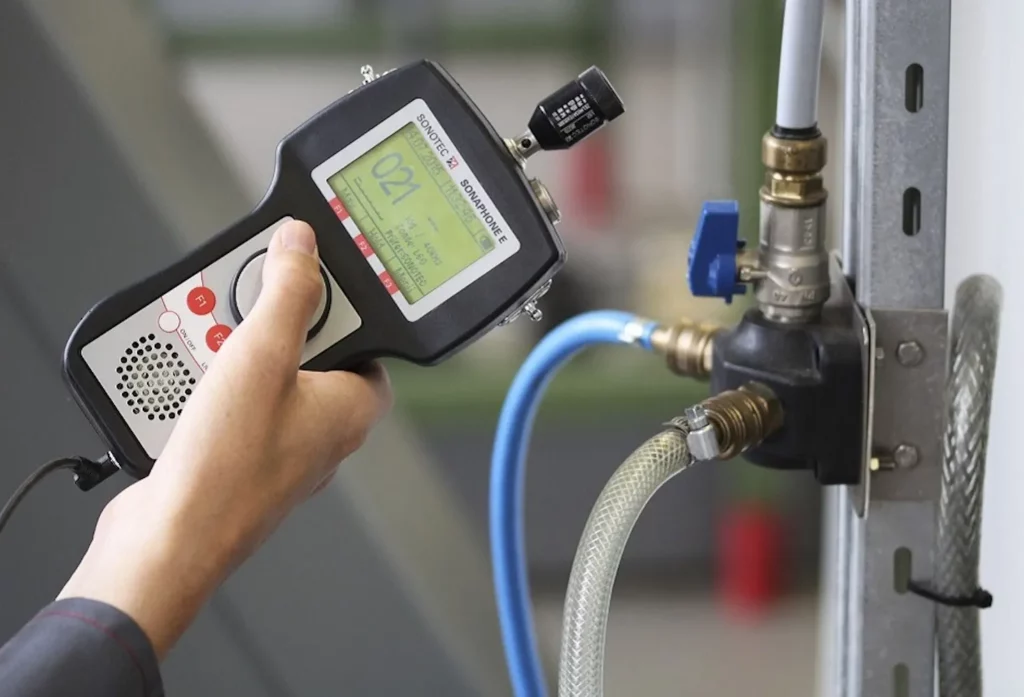
An obvious burst or a blocked toilet is a job for an emergency plumber who can make it safe and repair it. A hidden leak, water appearing with no visible source, a ceiling stain spreading, a meter that keeps running, is really an emergency leak detection job first, because until the source is pinpointed there is nothing definite to repair. Our engineers are qualified plumbers who carry detection equipment, so an emergency callout can flip smoothly from making safe to finding the hidden source to repairing it, without needing a second visit from a different trade.
The honest summary is this: call for a genuine emergency, not a minor drip; stop the water yourself first if you can; expect a realistic arrival window rather than an impossible promise; and get the callout price agreed before anyone travels. Handled that way, a 2am plumbing crisis becomes a contained problem rather than a runaway disaster. If water is coming through a ceiling specifically, our guide on water leaking through the ceiling covers exactly what to do.
How we help with this
If the article describes a problem you actually have, these are the visits that deal with it.
- an emergency plumber in London
Attendance when water is running and damage is still spreading.
- burst pipe repair
A split or burst pipe isolated and repaired, day or night.
- our full guide to leak detection
How each method works, what it costs and when it is the wrong tool.
Not sure which one applies? Describe the symptom on the phone and you will be told which survey it is, the hourly rate and roughly how long it takes, before anything is booked. 020 7123 8560
Frequently asked questions
What counts as a plumbing emergency worth a 24 hour callout?
A genuine emergency is a problem actively causing damage, threatening safety, or leaving you without an essential service until morning: a burst or spraying pipe, water coming through a ceiling, unstoppable flooding, sewage backing up, or a total loss of water or heating in cold weather with vulnerable occupants. A dripping tap, a slightly running toilet or a small non-spreading stain can usually wait for a cheaper daytime appointment.
How quickly can a 24 hour emergency plumber reach me in London?
For genuine emergencies we aim to attend as fast as possible, often within a few hours, and we give you a realistic arrival window rather than a flat promise we cannot keep, because London traffic, the time of night and current jobs all affect it. The most valuable step is usually stopping the water immediately, if we talk you through isolating the supply on the call, the damage stops straight away.
What should I do before the plumber arrives?
Stop the water: close the internal stop tap by turning it clockwise, usually under the kitchen sink or where the mains enters, or shut the isolating valves for a heating leak. Then switch off affected electrics at the fuse board if water is nearby and safe to reach, move valuables clear, catch drips in buckets, and photograph the damage before mopping up for your insurer.
Why does an out-of-hours plumber cost more?
Evenings, weekends and bank holidays carry an uplift because of when the work is done, not who is calling. That is normal across the trade. What should not happen is a price appearing only at the door, the callout cost should be agreed before the plumber travels so you decide with the numbers in front of you. For a hidden leak, detection on a no find, no fee basis means you are not charged if the leak is not located.
Do I need an emergency plumber or leak detection?
An obvious burst or blocked toilet is an emergency plumbing job. A hidden leak, water with no visible source, a spreading ceiling stain, a meter that keeps running, is a detection job first, because there is nothing definite to repair until the source is found. Our engineers are qualified plumbers carrying detection equipment, so one callout can go from making safe to finding the source to repairing it.
Can you attend at night and at weekends?
Yes, we attend genuine emergencies around the clock across London and out to the M25, including nights, weekends and bank holidays. Out-of-hours work carries an uplift, which we agree with you before travelling. For non-urgent problems such as a dripping tap or minor running toilet, booking a normal daytime visit is cheaper and perfectly adequate.