How to Find a Water Leak Under the Floor (Before Ripping It Up)
Under the floor and underground are different problems. One free test tells you which you have, and it changes the method, the price and who is liable.
A leak under the floor is the most disruptive kind to imagine and, handled properly, one of the least disruptive to fix. The trick is knowing what the floor is telling you before anyone reaches for a crowbar.
The warning signs, in order of reliability
No single symptom proves an under-floor leak, but the combination usually does:
- Your boiler keeps losing pressure. A sealed heating system that needs topping up weekly is losing water somewhere, and buried heating pipes are a prime suspect.
- A warm patch on the floor. If one section of tile or timber is noticeably warmer than the rest and you don't have underfloor heating, a hot-water pipe below may be leaking.
- The water meter moves with everything off. Turn off every tap and appliance, note the meter reading, wait an hour, check again. Movement means a live leak on your side of the meter.
- Swollen or lifting flooring. Timber cups and laminate lifts at the edges long before you feel moisture.
- Musty smell or mould at skirting level. Damp trapped under a floor migrates to the edges of a room first.
- A water bill that jumped without explanation. Compare like-for-like quarters; a 20–30% unexplained rise deserves investigation.
The DIY checks worth doing
1. The meter test
This is the single most useful check a homeowner can run. Close the internal stop tap. If the meter keeps moving, the leak sits between the meter and your house, an underground supply pipe issue. If it stops, reopen the stop tap, turn everything inside off, and watch again: movement now points to internal plumbing.
2. The pressure gauge test
For heating leaks: repressurise your boiler to 1.5 bar with the system cold, then leave the heating off overnight. A drop by morning means the sealed system is leaking, in the boiler, a radiator, or the pipework between them.
3. The listening test
At night, with the house silent, put your ear to the floor near suspect areas. A pressurised leak often produces a faint, continuous hiss. Crude, but it has pointed many of our customers to the right room before we arrived.
Under the floor or underground? One test settles it
These get treated as the same question and they are not. A leak under the floor is inside your building, on the pipework serving your taps and radiators. A leak underground is outside it, on the buried supply pipe between the water main and the house. Different equipment finds them, the prices differ, and on the underground side part of the pipe may not even be your responsibility.
The test takes half an hour and costs nothing.
- Turn off every tap and appliance that uses water.
- Find and close the internal stopcock, usually under the kitchen sink.
- Read the water meter, including the small dials, and write it down.
- Wait thirty minutes without touching anything, then read it again.
If the meter still moved with the stopcock closed, water is escaping between the meter and that stop valve. That is the buried supply pipe, and you need an underground trace rather than an internal survey.
If the meter stopped, reopen the stopcock and repeat the test with everything inside turned off. Movement now means the leak is on the internal pipework, which is the under-the-floor case.
Knowing which one you have before you call changes what you should be booking, and it is the single most useful thing you can bring to the conversation.
How a water leak underground is found
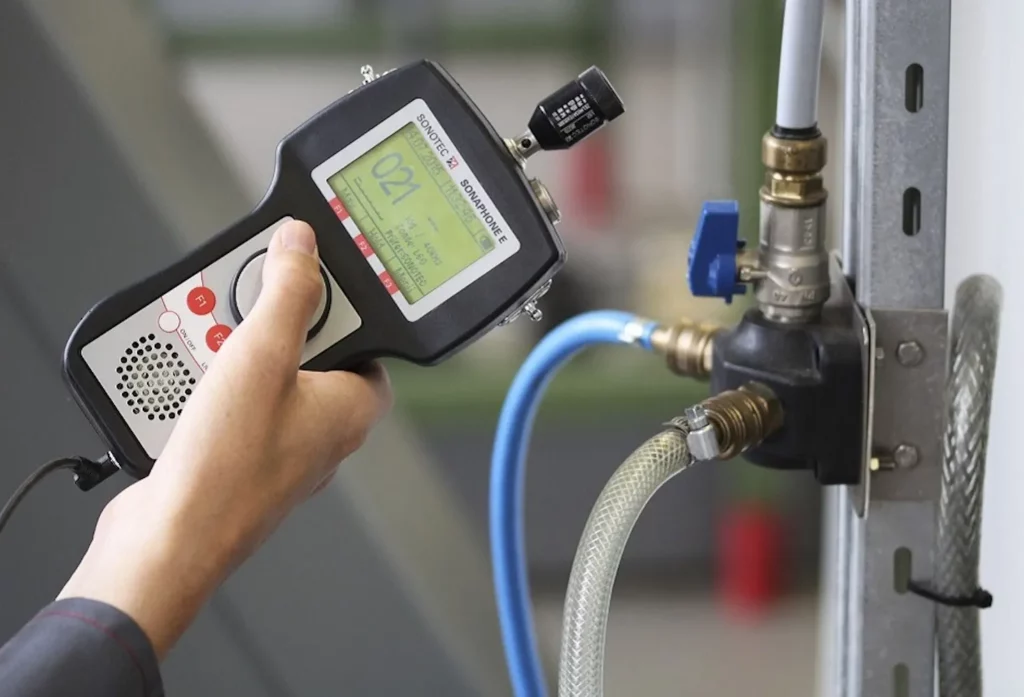
A buried supply pipe leaking under pressure makes a continuous noise where water is forced into the surrounding ground. That noise is what the survey listens for.
Ground microphones are moved across the surface above the suspected run, and the point where the sound is loudest is usually close to the fault. On a long run, two sensors are clamped to contact points at either end and a correlator calculates the position from the difference in arrival time of the same sound at each. That is how a leak under a resin driveway gets marked without lifting any of it.
Where sound alone will not do it, because the pipe is plastic, the run is deep, or the site is too noisy, a safe hydrogen and nitrogen mix is introduced into the isolated pipe. It rises through the ground and is picked up at the surface with a gas probe. This is the method that works when nothing else does, and it is the reason a survey should not be booked as "acoustic" before anyone has seen the site.
What you should get is a marked position, not an area. A conclusion that the leak is somewhere along the drive has not saved you any excavation.
Who is responsible for an underground leak
Broadly, the pipe from the boundary stop tap to your property is the property owner's, and the pipe in the road before it belongs to the water company. So an underground leak is often your cost even though the pipe is buried outside your walls.
Two things worth knowing. Thames Water runs a scheme that can contribute to replacing a leaking supply pipe, and a leakage allowance can usually be applied to the bill once the repair is done, so the water you lost is not necessarily all chargeable. And where one supply pipe serves more than one property, responsibility for the shared section is shared, which is why a trace that establishes the leak is past your boundary can save you paying for somebody else's pipe.
Finding a leak under concrete or screed
A solid floor is the hardest case and the one people most fear, because the imagined fix is a broken floor. In practice it is the case where non-invasive work pays for itself most clearly.
With the heating run hot, a thermal camera reads the pipe runs through the surface of the screed, and a leak shows as a bloom of heat the wrong shape for a pipe. Where the floor is thick, tiled, or carries insulation that defeats the camera, acoustic equipment listens through the slab, and tracer gas into the drained circuit is the fallback that works regardless of construction.
The reason this matters: the stain or damp patch is almost never above the leak. Water runs along the top of the slab, along the line of the pipe trench, and surfaces wherever it finds a way up. Opening the floor where it looks wet is how people end up with two holes instead of one.
What it costs
Internal detection is £160 an hour and most domestic surveys run two to four hours, so £320 to £640 in total. Underground and supply pipe work is £180 an hour. The rate is agreed before anyone travels and does not change on the day, and if we attend a confirmed live leak and cannot locate it, the detection time is not charged. Full rates are on our pricing page, and our underground water leak detection page covers the external work in more detail.
What professionals do differently
Professional leak detection is a process of elimination with the right instruments at each step:
- Isolate and pressure-test each circuit, mains, heating, hot water, to establish which system is losing water and roughly how fast.
- Thermal imaging, with the heating running, an infrared camera shows the buried pipe runs through the floor surface. A leak appears as a bloom that spreads beyond the pipe line.
- Acoustic detection, ground microphones follow the hiss of escaping water through screed and concrete to its loudest point.
- Tracer gas, for the stubborn cases: the pipe is drained and charged with a safe hydrogen mix that rises through the floor at the exact failure point.
The outcome is a marked spot, typically accurate to centimetres. The floor is opened once, at the right place, and the pipe is repaired and retested.
What it costs to get wrong
The expensive version of this story is always the same: exploratory demolition. Lifting a floor room by room costs more than professional detection, and every unnecessary opening is a repair bill of its own. Water damage compounds too, a leak that soaks a joist for three extra months turns a plumbing job into a carpentry job.
If the checks above point to a leak under your floor, book a detection visit. We locate it without the crowbar, on a no find, no fee basis.
How we help with this
If the article describes a problem you actually have, these are the visits that deal with it.
- leak detection in London
Finding a hidden leak without opening the property up first.
- our full guide to leak detection
How each method works, what it costs and when it is the wrong tool.
- underfloor heating leak detection
Loop by loop testing without lifting the whole floor.
Not sure which one applies? Describe the symptom on the phone and you will be told which survey it is, the hourly rate and roughly how long it takes, before anything is booked. 020 7123 8560
Frequently asked questions
How do you find a water leak underground?
By listening for it. A buried pipe leaking under pressure makes a continuous noise, which ground microphones pick up through the surface, and a correlator placed at two contact points calculates the position from the difference in arrival time. Where the pipe is plastic or deep, tracer gas is introduced into the isolated pipe and detected where it rises at the surface. The leak is then marked so only that spot is dug.
How do I know if the leak is under the floor or underground?
Close the internal stopcock with everything turned off and watch the meter for thirty minutes. If it still moves, the leak is on the buried supply pipe outside. If it stops, reopen the stopcock and watch again with everything off; movement now means the leak is on the internal pipework under the floor. That one test decides which survey you need.
Can you find a leak under a concrete floor without digging it up?
In most cases yes. Thermal imaging reads the pipe runs through the screed when the heating is hot and shows a leak as a bloom of heat the wrong shape for a pipe, acoustic equipment listens through the slab, and tracer gas works regardless of the construction. The floor is opened at the marked position afterwards, not to search.
Can a leak under the floor dry up on its own?
No. A pressurised pipe leak only ever gets worse, because water pressure works on the weakness continuously. What can happen is the water finding a new escape path, which moves the visible symptoms and makes the leak harder to trace later.
How accurate is professional leak detection under floors?
With acoustic, thermal and tracer gas methods combined, a leak under a domestic floor is normally located to within a dinner-plate-sized area, meaning one small, targeted opening rather than a lifted floor.
Should I turn my water off if I suspect an under-floor leak?
If the leak is significant, visible damage spreading, meter spinning quickly, yes, isolate the supply at the stop tap and call for an urgent visit. For a slow leak, keep the system running normally until the detection visit; a live leak is far easier to find than a dried-out one.