Boiler Losing Pressure? The Real Causes (And When It Means a Hidden Leak)
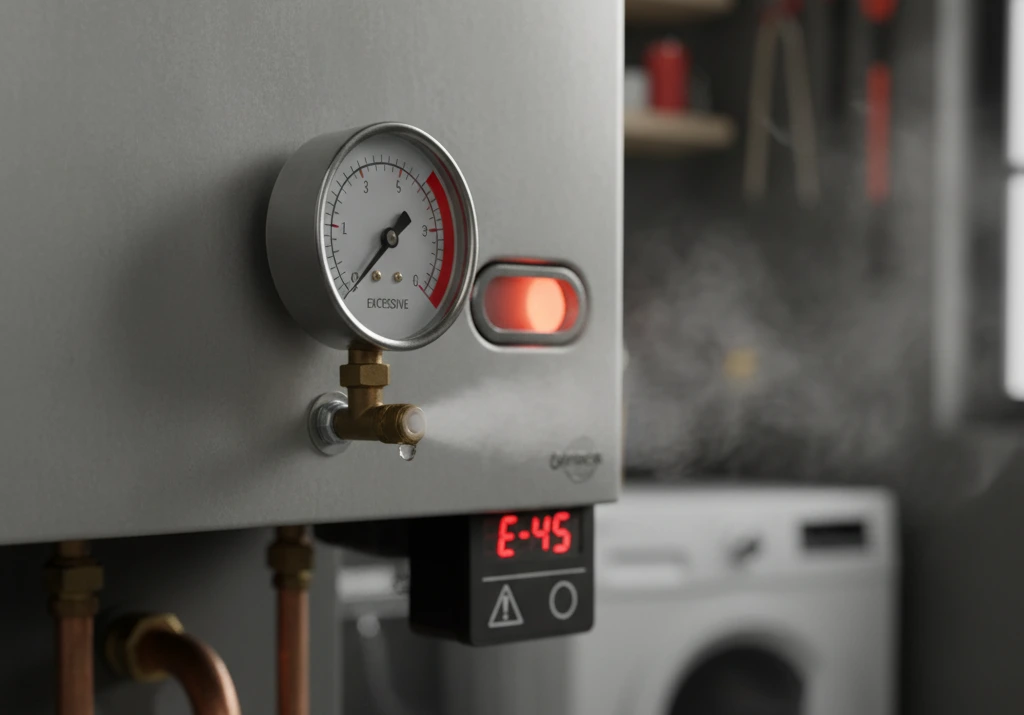
Topping up the boiler every few days is not maintenance, it is a symptom. How fast the gauge falls tells you which of the four causes you have.
Every combi boiler owner knows the ritual: pressure gauge drifting down, a fiddle with the filling loop, back to 1.5 bar, repeat next week. The ritual is so common that people forget what it means, sealed heating systems are sealed. If pressure keeps dropping, water is leaving the system. Every time.
The short answer: a sealed heating system that loses pressure is losing water, and how fast it falls tells you roughly where from. A drop over hours points at the pressure relief valve or a leak under pressure. A drop over a week or two points at a weeping radiator joint. A gauge that swings high when hot and low when cold is the expansion vessel rather than a leak at all. The tests below separate them in about a day, most of them without tools.
Where the water goes: four suspects
1. Radiator valves and joints
The most common and cheapest culprit. Check every radiator: valve bodies, gland nuts, and the connections into the radiator itself. Look for weeping, a slight wetness or crust of scale rather than a drip. Bleed points can also seep. A towel run around each joint on a warm system finds most of these.
2. The pressure relief valve (PRV)
The PRV discharges water outside through a copper pipe on your external wall if system pressure climbs too high, and once a PRV has operated, it often never reseals perfectly. Check the discharge pipe outside: dripping or staining means the valve is passing water continuously. The gauge behaviour that goes with this is pressure that drops and a valve that dumps water when the system heats up.
3. The expansion vessel
The expansion vessel absorbs the volume change as heating water warms and cools. When its internal air charge is lost, pressure swings wildly, high when hot, low when cold, and the PRV starts discharging the excess. The classic signature: you top up to 1.2 bar cold, the gauge hits 2.5+ bar hot, and by next morning it is below 1 again. This is a component fix, not a leak, but it causes real water loss through the PRV.
4. A hidden leak on the heating pipework
When the boiler components check out and the radiators are dry, what remains is the pipework you cannot see, under floors, in walls, buried in screed. A pinhole in a buried heating pipe can pass litres a day when the system is hot and pressurised, and the first visible symptom is often nothing more than the dropping gauge. By the time a damp patch appears, the leak has usually been running for months.
Diagnosing in the right order
- Cold overnight test. Pressurise to 1.5 bar, heating off, check in the morning. A drop with the system cold and PRV dry points firmly at a pipework leak.
- Check the PRV discharge pipe outside for drips and staining.
- Inspect every radiator joint with the system warm.
- Test the expansion vessel, a job for an engineer with a gauge, and often just a recharge.
- If all clear: trace the pipework. This is where central heating leak detection comes in, thermal imaging with the system hot paints the buried pipe runs through the floor and shows the leak as a spreading warm bloom.
How fast the pressure drops tells you which one it is
This is the single most useful thing you can observe before anyone visits, and it costs nothing. Top up to 1.5 bar with the system cold, write down the time and the reading, and watch the gauge over the next few days.
| What the gauge does | What that usually means |
|---|---|
| Falls noticeably within hours, heating on | Water is leaving under pressure. Either the PRV is discharging outside, or there is a leak on the pipework big enough to see on a gauge in an afternoon. |
| Falls over a week or two, steadily | A slow weep. Radiator valve glands, a towel rail connection or a bleed point are the usual sources, and they are the cheapest to put right. |
| High when hot, low when cold, every cycle | The expansion vessel has lost its air charge. This is a component fault, not a leak, although it makes the PRV dump water and so causes real loss. |
| Falls only when the heating is running, never in summer | Points at the heating circuit rather than the boiler. Buried pipework expands and leaks more when hot, which is why a heating leak can vanish for months and return in October. |
| Falls with the heating off and the PRV dry | The most serious pattern. Something is leaking that does not need the system running, and it is almost always pipework you cannot see. |
Note the last one carefully. People often top up, turn the heating off for a couple of days, and take a stable gauge as good news. A system that holds pressure cold and loses it hot has not passed the test, it has only been asked an easier question.
Boiler losing pressure with no visible leak anywhere
This is the situation that brings most people to this page, and it is not a contradiction. Three things explain almost all of it.
The water is going outside. The PRV discharge pipe ends on an external wall, often high up or behind a downpipe where nobody looks. A valve passing steadily can lose the contents of the system over a few weeks without a drop appearing indoors. Go outside on a cold morning and look at the end of that copper pipe.
The leak is being dried by the thing that is leaking. Heating pipes run hot. A pinhole in a pipe buried in screed sits in a warm, ventilated pocket, and the water evaporates almost as fast as it escapes. That is why a heating leak can run for a year before a floor shows anything, and why pressure loss is usually the only symptom you get.
It is going into the ground or a void. Under a suspended floor, water drops away into the subfloor. In a flat, it tracks along a joist and appears in a neighbour's ceiling before yours.
Testing the expansion vessel, the cause most often missed
Worth singling out because it is common, it is cheap to fix, and it is frequently misdiagnosed as a leak that then gets chased under floors at considerable expense.
The vessel is a sealed container with a rubber diaphragm and a charge of air on one side. As water in the system heats and expands, the diaphragm compresses that air and absorbs the extra volume. Lose the air charge and there is nowhere for the expansion to go, so pressure spikes when hot, the PRV opens to protect the system, and the water it dumps is gone for good. Cold pressure is then low again by morning.
The test needs an engineer with a gauge: the system is drained of pressure and the vessel's charge is checked at the schrader valve, which should read close to the system's cold fill pressure. A vessel that will not hold a recharge has a failed diaphragm and is replaced. Either way it is a component job, and importantly it is a job that stops the losses without anybody lifting a floor.
The reason this matters commercially is simple. Every pound spent tracing pipework on a system whose real problem is a flat expansion vessel is a pound wasted, which is why a competent leak detection visit checks the vessel and the PRV before it reaches for a thermal camera.
When it is a hidden leak, and how it gets found
Once the radiators are dry, the PRV is not passing and the vessel holds its charge, what is left is the pipework under the floor or in the walls. Finding it is a process rather than a single instrument.
The circuit is isolated and pressure tested on its own, which separates the heating from the mains and the hot water and tells you whether the loss is really on the heating at all. With the system run hot, a thermal camera paints the buried pipe runs through the floor surface, and a leak shows as a bloom of heat that is the wrong shape for a pipe. Where the floor construction defeats the camera, acoustic equipment listens for the escape, and tracer gas introduced into the drained circuit is the method that works when the others do not.
What you should expect at the end is a marked spot, not a suspicion. A survey that concludes there is probably a leak somewhere under the hall has not earned its fee.
What it costs to find
Heating leak detection is £200 an hour and a typical survey runs two to four hours, so £400 to £800 in total, with the rate agreed before anyone travels. If we attend a confirmed live leak and cannot locate it, the detection time is not charged. Full rates are on our pricing page.
Set that against the alternative. A system topped up weekly is drawing fresh oxygenated water into pipework designed never to see any, and the corrosion and sludge that follows shortens the life of the boiler and the radiators together. If the cause is a buried leak, the same top-ups are quietly soaking the floor structure for as long as it takes.
Why "just keep topping it up" is expensive advice
Fresh water brings fresh oxygen and minerals into a system designed to run on the same deoxygenated water for years. Constant topping up accelerates internal corrosion, breeds sludge, shortens boiler life, and if the cause is a buried leak, it finances the slow soaking of your floor structure. The top-up is not the fix; it is the meter running.
If your gauge will not hold for a week, book a diagnosis. We check the boiler components first and only go looking under floors when the evidence says so.
How we help with this
If the article describes a problem you actually have, these are the visits that deal with it.
- central heating leak detection
For a boiler losing pressure or a circuit that will not hold.
- leak detection in London
Finding a hidden leak without opening the property up first.
- acoustic leak detection
Ground microphones and correlators on a pressurised pipe.
Not sure which one applies? Describe the symptom on the phone and you will be told which survey it is, the hourly rate and roughly how long it takes, before anything is booked. 020 7123 8560
Frequently asked questions
What pressure should my boiler be at?
Typically 1.0–1.5 bar when the system is cold, rising by up to about 0.5 bar when hot. Check the manual for your model. Below 0.5 bar most boilers lock out; persistently above 2.5 bar when hot suggests an expansion vessel problem.
How often is “normal” for topping up a boiler?
A healthy sealed system should hold its pressure for months. Topping up more than two or three times a year means something is passing water and deserves investigation.
Why does my boiler keep losing pressure?
Because a sealed system is losing water. The four causes are a weeping radiator valve or joint, a pressure relief valve discharging outside, an expansion vessel that has lost its air charge, or a leak on pipework under a floor or in a wall. How quickly the gauge falls narrows it down: hours means water leaving under pressure, a week or two means a slow weep, and a gauge that swings high when hot and low when cold is the expansion vessel rather than a leak.
Why is my boiler pressure dropping with no visible leak?
Usually because the water is not going anywhere you would look. The pressure relief valve discharges through a pipe on an outside wall, often out of sight. A leak on a hot heating pipe buried in screed largely evaporates as it escapes, so the floor stays dry for months. Under a suspended floor the water simply falls away into the subfloor. Pressure loss is frequently the only symptom a heating leak gives you.
Is a boiler losing pressure dangerous?
Low pressure itself is not dangerous. The boiler will lock out below roughly 0.5 bar rather than run unsafely. What does the damage is the cause being left: constant topping up corrodes the system from the inside, and if the cause is a buried leak it is soaking the floor structure the whole time. It is a problem to diagnose rather than an emergency to panic about, unless water is visibly escaping.
Can a heating leak exist with no damp patch anywhere?
Easily, and it is the norm rather than the exception. Heated pipes dry the area around a small leak, and screed or concrete absorbs substantial water before anything shows at the surface. Pressure loss is often the only early symptom.