How to Find the Stopcock (Water Shut-Off) in a Flat or Apartment
Where the internal stop tap and isolation valves usually live in London flats, how they differ from the communal mains valve, and exactly what to do when water is pouring and you cannot find the shut-off.
When water is running where it should not be, the single most useful thing you can do is stop the flow at its source. In a house that usually means one clearly located internal stop tap. In a flat or apartment it is rarely that simple. Flats have layers of valves: your own internal stop tap, individual isolation valves on appliances and taps, and a communal or mains valve that may sit outside your front door entirely. Knowing which one to reach for, and where it hides, can be the difference between a damp cupboard and a ceiling coming down into the flat below.
This guide walks through where these valves typically live in London flats, how they relate to one another, what to do if a valve is seized or missing, and how to prepare now so that a future leak is a five-minute problem rather than a five-figure one. It is written for the reality of London housing stock, which ranges from Victorian conversions with pipework threaded through three previous refurbishments, to purpose-built blocks with tidy riser cupboards, to new-build apartments with manifolds and pressure-reducing valves. The principles are the same even when the plumbing is not.
Stop tap, isolation valve, communal valve: knowing the difference
Before you go hunting, it helps to understand what you are actually looking for, because the words get used loosely and the wrong valve wastes precious minutes.
Your internal stop tap
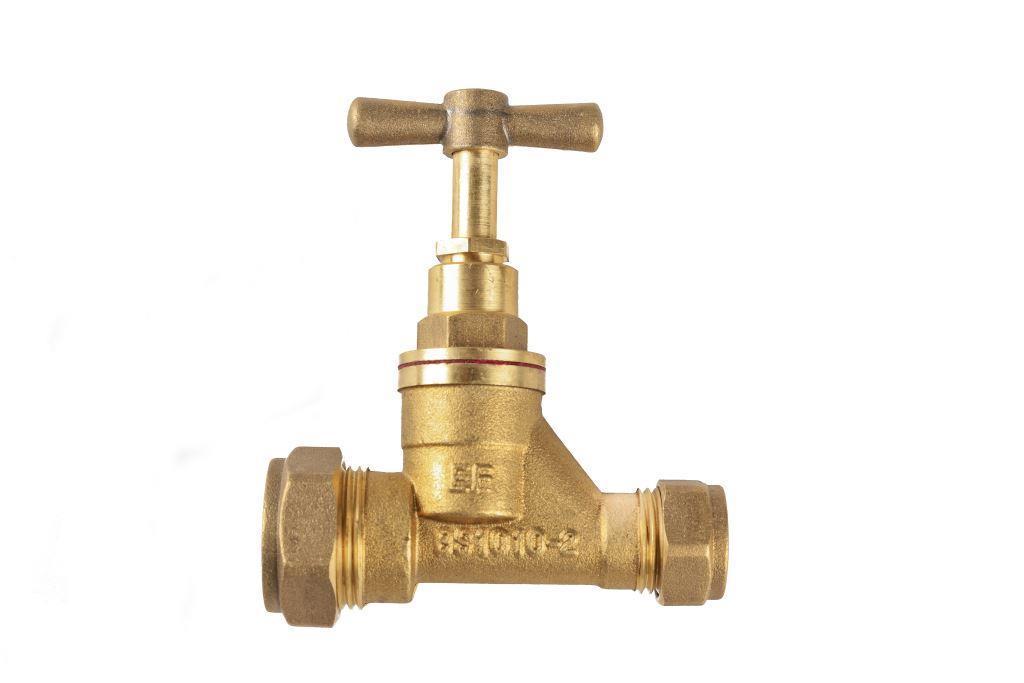
Your internal stop tap (also called the water stopcock or stop valve) is the master control for the water supply into your flat. Turn it off and, in theory, every cold tap, toilet cistern and appliance fed from the mains inside your flat loses its supply. It usually looks like a brass tap with a round metal or plastic handle, or on newer installations a quarter-turn lever. This is the valve you want in most emergencies, because it isolates your flat without affecting your neighbours.
Isolation valves on appliances and fittings
Isolation valves are small, local shut-offs fitted on the pipe feeding a single fitting: a tap, a toilet, a washing machine, a dishwasher, a boiler. Most are the compact chrome or brass type with a slotted screw in the middle that you turn a quarter-turn with a flat-head screwdriver. When the leak is clearly coming from one appliance, an isolation valve lets you stop that one item and keep the rest of your water on. They are your first choice for a contained leak and your friend when the main stop tap turns out to be seized.
The communal or mains valve
In many blocks there is a valve upstream of your flat that controls the supply to your unit or to a group of flats, often in a shared riser cupboard, a landing, a basement plant room or an external boundary chamber. This is not usually yours to operate casually. In some blocks a single valve serves multiple flats, so shutting it off affects your neighbours, and in others it is locked or managed by the building manager or managing agent. You reach for the communal valve only when your own internal stop tap cannot do the job, and ideally in coordination with whoever manages the building.
Location and what it controls, at a glance
| Where you find it | What it typically controls | Who normally operates it |
|---|---|---|
| Under the kitchen sink (stop tap) | The whole cold supply into your flat | You |
| Utility or airing cupboard (stop tap) | The whole supply into your flat, near boiler or cylinder | You |
| Hallway or entrance riser cupboard (stop tap or meter valve) | Your flat's supply, sometimes next to the meter | You |
| Isolation valve on a tap | A single hot or cold tap | You |
| Isolation valve behind a toilet | The supply filling that one cistern | You |
| Isolation valve behind or beside an appliance | Washing machine, dishwasher, or boiler feed | You |
| Communal riser cupboard valve | Your flat, or several flats on a stack | Building manager, sometimes you |
| Basement plant room or boundary chamber | The block's mains supply | Building manager or water supplier |
Isolation valves: your first move for a contained leak
If the leak is obviously coming from one place, you often do not need the main stop tap at all. A dripping tap, a running toilet, a weeping washing machine hose or a leak under a specific appliance can usually be isolated at the fitting itself, which keeps the rest of your water on and limits disruption.
Look for a small valve on the flexible or copper pipe feeding the offending item. Toilets have one on the pipe entering the cistern, usually low down behind or beside the pan. Basin and sink taps often have a pair of isolation valves in the cupboard below, one for hot and one for cold. Washing machines and dishwashers have valves where the hoses connect, sometimes a lever type, sometimes the screwdriver type. Turn the screw so the slot sits across the pipe (a quarter-turn) and the flow to that fitting stops.
The practical value of isolation valves is that they turn a whole-flat emergency into a single-appliance inconvenience. If you can stop a leak at the toilet or the washing machine, you can keep drinking water and a working kitchen while you arrange a repair. It is worth spending ten minutes on a calm afternoon locating and gently testing the isolation valves you already have, so you know they are there and that they turn.
Coordinating with the building manager for communal isolation
Communal water arrangements are where flats differ most from houses, and where getting it wrong causes the most friction. In many London blocks the valve upstream of your flat is shared, locked, or the responsibility of the managing agent. Shutting off a communal valve without warning can leave neighbours without water and, in some systems, cause airlocks or pressure issues when supply is restored.
The sensible approach is to sort this out before you ever need it. Ask your managing agent or building manager three questions: where is my flat isolated from the communal supply, is that valve something I am permitted to operate, and who do I call out of hours if I need the block's mains shut off. Many blocks have an emergency contact or a caretaker with access to plant rooms and locked riser cupboards. Keeping that number to hand alongside your own stop tap location turns a communal shut-off from a scramble into a phone call.
During an actual emergency, the order of preference is clear. Use your own internal stop tap or an isolation valve first, because that stops your leak without involving anyone else. Only escalate to a communal valve when your own controls cannot stop the flow, and tell the building manager as soon as you reasonably can so neighbours are not left mystified by a dry tap.
How to prepare before an emergency
Almost every water emergency is made worse by not knowing where the shut-off is. Ten minutes of preparation now removes that problem entirely. On a quiet afternoon, walk through the following.
- Find your internal stop tap and label it. A luggage tag or a strip of tape reading "MAINS STOP TAP" means anyone in the flat can find it in the dark.
- Turn it off and on again gently. A stop tap that is exercised occasionally is far less likely to seize. Close it, confirm the kitchen cold tap runs dry after a moment, then reopen it and turn it back a quarter-turn so it does not stick open.
- Locate every isolation valve. Under sinks, behind the toilet, at the washing machine and dishwasher, and near the boiler. Note where they are so you can reach the right one instantly.
- Confirm the communal arrangement. Ask the building manager where your flat is isolated upstream and who to call out of hours.
- Keep a few basics to hand. A flat-head screwdriver for isolation valves, a torch, and a couple of old towels near the kitchen. Simple things that save minutes.
- Write it down. Note the stop tap location, isolation valve positions and the building emergency number somewhere everyone in the household can see, such as inside a kitchen cupboard door.
If you would like the detail on operating the valve itself, our guide on how to turn off the water at the stop tap in London walks through the mechanics step by step. It pairs well with our water leak emergency checklist, which sets out what to do in the first few minutes of a leak so nothing gets forgotten under pressure.
When it is already an emergency
If water is actively coming through and you cannot stop it, the priority order is straightforward. Protect anything electrical by staying clear of light fittings and sockets where water is present, and switch off at the consumer unit if water is near the electrics. Isolate the leaking item at its own valve if you can identify it. If not, close your internal stop tap. If that is seized or missing, move to the communal valve and contact the building manager. Then catch and contain what you can with towels and buckets, and get the leak assessed.
We are a London plumbing service and we deal with this constantly, so if you are standing in a flat with water coming through and no idea which valve to touch, calling early helps. We give honest arrival windows rather than promises we cannot keep, and while you wait we will talk you through isolating the water over the phone, valve by valve, so the flow is stopped before anyone even arrives. In many cases getting the water off quickly is what limits the damage, and that part can start the moment you call. You can read more about how we work on our emergency plumber in London page.
A note on costs
Because people ask, it helps to set rough expectations. As a general guide, replacing a seized or failed stop tap and fitting a new isolation valve are small jobs, and typical UK trade cost-guide ranges put this kind of work in the low hundreds of pounds depending on access, the state of the surrounding pipework and whether it is done during normal hours or as an out-of-hours callout. Locating and labelling your valves is a much smaller job again. These are ranges to plan around rather than quotes, and the exact figure depends on your specific flat. The wider point is that fixing a tired valve in advance is always cheaper than dealing with the water damage it causes when it fails at the worst possible moment.
The takeaway is simple. In a flat you have more than one way to stop the water, and the best time to learn where those controls are is now, while everything is dry and calm. Find your internal stop tap, know your isolation valves, understand your building's communal arrangement, and write it all down. When a leak does come, and in London flats it eventually does for most people, you will handle it in minutes rather than watching it spread.
How we help with this
If the article describes a problem you actually have, these are the visits that deal with it.
- leak detection in London
Finding a hidden leak without opening the property up first.
- our full guide to leak detection
How each method works, what it costs and when it is the wrong tool.
- underground water leak detection
Supply pipe leaks under drives, gardens and pavements.
Not sure which one applies? Describe the symptom on the phone and you will be told which survey it is, the hourly rate and roughly how long it takes, before anything is booked. 020 7123 8560
Frequently asked questions
Is the water stopcock in a flat the same as the one for the whole building?
No. Your internal stop tap controls only the water supply into your flat and is usually under the kitchen sink or in a nearby cupboard. The building also has a communal or mains valve, often in a riser cupboard, basement plant room or boundary chamber, which may serve several flats. Use your own stop tap first, and only involve the communal valve when your own controls cannot stop the flow.
What do I do if the stopcock in my flat is stuck and won't turn?
Do not force it with a wrench, because old brass valves can shear and make the leak far worse. Try steady hand pressure, turning clockwise to close. If it will not move, isolate the leaking item at its own isolation valve instead, and if nothing local works, move to the communal valve and contact the building manager. Once the emergency is over, have the seized valve replaced so it works next time.
Can I shut off the communal water valve myself?
Sometimes, but check first. In many blocks a single communal valve serves multiple flats or is locked and managed by the building manager or managing agent, so shutting it off affects neighbours and can cause airlocks when supply is restored. Ask your building manager in advance where your flat is isolated and whether you are permitted to operate that valve, and keep the out-of-hours emergency number to hand.
How can I stop a leak from one appliance without turning off all my water?
Use the isolation valve for that fitting. Toilets, taps, washing machines, dishwashers and boilers usually have a small local valve on the pipe feeding them. Turn the slotted screw a quarter-turn with a flat-head screwdriver so the slot sits across the pipe, and the flow to that one item stops while the rest of your water stays on.
I can't find the water stopcock anywhere in my flat. What now?
Check your tenancy or purchase paperwork, ask the building manager or managing agent, and ask a neighbour in an identical flat, since flats on the same stack are often plumbed alike. You can also trace the cold feed to your kitchen tap back towards where it enters the flat. If it stays hidden, a plumber can locate, test and clearly label it in a short visit.
What should I do to prepare before a water emergency happens?
Find and label your internal stop tap, gently turn it off and on so it does not seize, and locate every isolation valve under sinks, behind the toilet and at your appliances. Confirm with your building manager where your flat is isolated upstream and who to call out of hours, keep a flat-head screwdriver and a torch handy, and write it all down where everyone in the household can see it.