Is High Water Pressure Bad? Signs, Risks and How to Fix It
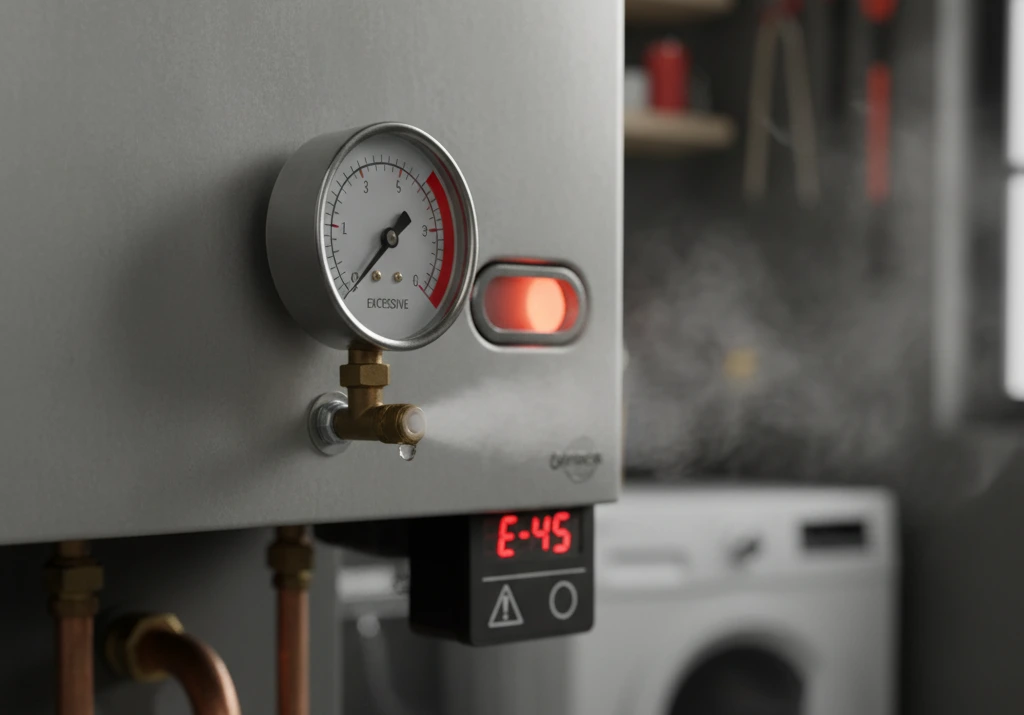
Most people worry about weak water pressure, but pressure that runs too high quietly stresses your pipework and appliances until something drips, bangs or bursts. Here is how to spot high mains pressure, how it is measured, and how a pressure reducing valve fixes it for good.
Ask most households in London about their water and the complaint is nearly always the same: not enough of it, or not enough force behind it. Weak flow is annoying and obvious, so it gets all the attention. High water pressure is the opposite. It rarely announces itself, it often feels like a good thing, and yet it is quietly one of the more common reasons we get called out to dripping taps, weeping joints and, occasionally, a burst flexible hose that has emptied itself under a kitchen unit overnight.
If your mains pressure is running higher than your plumbing was designed for, you are effectively living with a slow, constant strain on every valve, washer, joint and appliance in the house. This article explains why excessive pressure is a problem, the signs that point to it, how it is actually measured, what a pressure reducing valve does, and when high pressure is the real cause behind leaks you keep patching up. If your issue is the reverse, our companion guide on low water pressure in the house and its causes covers the other end of the scale.
What counts as high water pressure?
Water pressure is usually expressed in bar. One bar is roughly the pressure needed to push water up to about ten metres in height. For a typical home, most fittings, mixer taps, showers and appliances are designed to work comfortably somewhere in the region of one to three bar. Many manufacturers of taps, thermostatic showers and combi boilers specify a maximum working pressure, and a common figure quoted is around three bar, with some products asking for no more than about four or five bar at the absolute limit.
The water regulations require a mains supply capable of delivering a certain minimum flow, but there is no neat upper cap that guarantees your incoming pressure will be gentle. In parts of London, particularly properties lower down in a supply zone or close to a pumping arrangement, static mains pressure can sit well above three bar and occasionally push towards five or six bar, especially at night when demand across the network drops and pressure rises. That overnight peak is exactly when a tired washing-machine hose or an ageing joint is most likely to let go, because nobody is awake to hear it or turn it off.
So the short answer to the question in the title is: yes, water pressure that is too high for your fittings is bad. Not dramatically, not overnight in most cases, but cumulatively. It shortens the life of components that would otherwise have lasted for years.
Why excessive pressure causes problems
Everything in your plumbing is a balance between the force of the water and the strength of whatever is holding it back: a tap washer, a ceramic cartridge, a compression joint, a rubber seal on a flexible hose, the diaphragm inside a fill valve. Raise the force and you shift that balance. The components still work, but they work harder, and they wear out faster.
Water hammer and banging pipes
High pressure makes water hammer worse. When a tap or a solenoid valve inside an appliance shuts quickly, the moving column of water is brought to a sudden stop. That energy has to go somewhere, and it travels back through the pipework as a shockwave, producing the bang or thud people describe as knocking or hammering. The higher the pressure, the harder that shockwave hits, and the more likely it is to loosen joints and fittings over time. We cover the mechanics and the fixes in detail in our guide to banging and noisy pipes and water hammer, but the important point here is that high static pressure is one of the underlying conditions that makes hammer more damaging.
Dripping taps and failing washers
A tap that drips shortly after you have had the washer or cartridge replaced is a classic sign of pressure that is too high. The seal is being asked to hold back more force than it comfortably can, so it deforms, weeps, and fails again sooner than it should. If you find yourself changing washers or cartridges far more often than seems reasonable, the pressure behind them is worth checking before you keep replacing parts.
Stressed joints and weeping fittings
Compression joints, push-fit connectors and soldered elbows all have a working tolerance. Sustained high pressure, particularly combined with the repeated hammer of appliances cycling on and off, gradually works at these connections. A joint that would have stayed dry for decades at two bar may start to weep at five. These are often the slow, hidden leaks that show up as a stain on a ceiling or a damp patch in a cupboard long after the drip began.
Appliance hoses that leak or burst
The braided flexible hoses feeding washing machines, dishwashers, basins and toilets are, in our experience, the single most common component to fail under high pressure. The rubber core sits inside a stainless braid, and under constant elevated pressure the rubber perishes and the connection at the crimped end weakens. When one of these lets go it does not drip, it sprays, and because so many of them sit hidden under kitchen units or behind appliances, a failure can flood a room before anyone notices. This is the kind of call that turns into an emergency plumber in London job at two in the morning.
Noisy system and running-on appliances
High pressure also makes the whole system louder. Taps hiss and splutter, fill valves in toilet cisterns whistle or take a long time to shut off cleanly, and showers can feel harsh rather than pleasant. A cistern that keeps trickling or a fill valve that never quite seats properly is often struggling against more pressure than it was built for.
Signs your water pressure may be too high
No single symptom proves the pressure is high, but when several appear together the picture becomes fairly clear. Look out for:
- Taps that drip again soon after new washers or cartridges have been fitted.
- Banging, knocking or hammering noises when taps close or when the washing machine or dishwasher changes cycle.
- Toilet fill valves that whistle, hiss loudly or are slow to shut off.
- Showers and taps that spray forcefully, splutter, or feel unusually harsh.
- Recurring weeping at joints under sinks or behind appliances.
- A history of burst or leaking flexible hoses.
- Water that seems to gush rather than flow when you first open a tap, especially in the early morning.
- A combi boiler or thermostatic shower that repeatedly complains, cuts out or has short-lived cartridges.
Below is a quick reference linking common symptoms to what high pressure is doing behind them.
| Symptom you notice | Likely cause when pressure is high |
|---|---|
| Tap drips again soon after a washer change | Seal cannot hold back the elevated force; washer deforms and fails early |
| Banging or knocking when a tap or appliance shuts | Water hammer amplified by high static pressure |
| Toilet fill valve whistles or is slow to stop | Valve struggling to seat against pressure above its design range |
| Weeping compression or push-fit joints | Sustained pressure working at connections beyond comfortable tolerance |
| Burst or spraying washing-machine or basin hose | Perished rubber core failing under constant elevated pressure |
| Harsh, splashy taps and showers | Flow rate driven higher than fittings are designed to deliver |
| Worse noise and gushing overnight | Network demand drops at night, so mains pressure peaks |
The pressure reducing valve (PRV)
The standard, permanent fix for genuinely high mains pressure is a pressure reducing valve, usually shortened to PRV. It is a compact brass valve fitted onto the incoming mains supply, typically close to the stopcock where the water enters the property. Inside, a spring-and-diaphragm mechanism throttles the incoming pressure down to a lower, steadier outgoing pressure that you set.
The benefit is that everything downstream of the valve, meaning your entire household plumbing, then lives at a sensible, consistent pressure regardless of what the street main is doing. The overnight peaks are flattened, water hammer is reduced, taps and seals last longer, and the risk of a hose or joint failing under pressure drops considerably. Many modern PRVs are adjustable, so the outgoing pressure can be dialled to suit your fittings, commonly to somewhere around three bar, though the right figure depends on your specific appliances and layout.
Fitting a PRV is not usually a large job for a competent plumber. It involves isolating the mains, cutting into the incoming pipe, fitting the valve the correct way round with the flow arrow in the right direction, and setting and checking the outgoing pressure with a gauge. Where access to the stopcock is awkward, or where the existing pipework is old and needs a section replacing, the work takes longer. As a rough guide, supply and fit of a domestic PRV tends to fall within the range you would expect for a straightforward half-day plumbing job at typical UK trade cost-guide rates, with the valve itself being a modest part of the total and labour and access being the main variables. Any firm quoting should look at the actual pipework first, because the honest answer to cost always depends on what they find at the stopcock.
A couple of practical notes. A PRV is not the same as a stopcock and does not replace it; you still want a working isolation valve. And a PRV should be checked occasionally, because like any valve it can wear or seize over years of service, at which point pressure can start creeping back up. If you had one fitted long ago and your symptoms have returned, the valve itself may have reached the end of its life.
When to call a plumber
Plenty of pressure investigation is well within a confident homeowner's reach. Buying a gauge, screwing it onto an outside tap and reading the number is genuinely worth doing yourself, and it will tell you quickly whether you have a problem at all. Beyond measurement, though, the balance tips towards a professional in a few clear situations:
- Your static pressure reads well above the working range of your fittings and you want a PRV fitted correctly and set to the right figure.
- You have a leak that keeps coming back despite being repaired, and you want the underlying cause diagnosed rather than the symptom patched again.
- A flexible hose or joint has failed and water is escaping now; this is an emergency, and the first step is to close the stopcock and stop the flow.
- Water hammer is severe enough to shake the pipework, and you want it assessed alongside the pressure rather than treated in isolation.
- An existing PRV appears to have failed and pressure has crept back up.
When you do call us, the way we work is straightforward. We give honest arrival windows rather than a vague promise to turn up sometime, and the price is agreed before we travel, so there is no meter running in your head while you wait. For a pressure problem specifically, that usually means we talk through the symptoms, and if it is not an active flood we can often plan a proper diagnostic visit rather than an emergency call-out, which keeps the cost sensible. If a hose has burst and water is coming through the ceiling, that is a different matter, and getting the supply isolated is the priority before anything else.
The bottom line
High water pressure is easy to dismiss because a forceful tap feels like a luxury, not a fault. But pressure that exceeds what your fittings were built for is a slow tax on the whole system, paid in early-failing washers, weeping joints, whistling cisterns, banging pipes and the occasional burst hose that turns a quiet night into a flood. The good news is that it is one of the more measurable and more fixable problems in a home. A cheap gauge tells you whether you have it, and a properly fitted PRV solves it permanently. If your leaks keep coming back no matter how many times they are repaired, do not keep patching, measure the pressure, because the answer may have been sitting in the mains all along.
How we help with this
If the article describes a problem you actually have, these are the visits that deal with it.
- our full guide to leak detection
How each method works, what it costs and when it is the wrong tool.
- leak detection in London
Finding a hidden leak without opening the property up first.
- acoustic leak detection
Ground microphones and correlators on a pressurised pipe.
Not sure which one applies? Describe the symptom on the phone and you will be told which survey it is, the hourly rate and roughly how long it takes, before anything is booked. 020 7123 8560
Frequently asked questions
What is considered too high for domestic water pressure?
Most household taps, showers, combi boilers and appliances are designed to work comfortably in the region of one to three bar, with many products quoting a maximum working pressure of around three bar. If your static mains pressure is reading well above the maximum figure printed in your tap or boiler instructions, it is worth acting on. The only reliable way to know is to measure it with a gauge rather than judging by how forceful a tap feels.
Can high water pressure really cause leaks?
Yes. Every seal, washer, joint and flexible hose has a working tolerance, and sustained pressure above that range makes them wear out and fail sooner. High pressure is one of the most common reasons behind taps that drip again soon after a repair, joints that keep weeping, and braided appliance hoses that eventually leak or burst. If a leak keeps returning despite being fixed, high pressure is a prime suspect worth measuring for.
How do I check my water pressure at home?
The simplest method is a screw-on pressure gauge fitted to an outside tap or a washing-machine valve. Close all other outlets to read the static pressure, then open some taps to see the dynamic pressure while water flows. Inexpensive gauges are widely available, and a version with a maximum-reading pointer is useful because it captures the overnight peak, when network demand drops and mains pressure tends to rise highest.
What is a pressure reducing valve and do I need one?
A PRV is a compact brass valve fitted to your incoming mains supply that throttles high street pressure down to a steadier, lower level for the whole house. You need one if your measured static pressure sits well above what your fittings are rated for, particularly if you are dealing with recurring leaks, water hammer or repeated hose failures. Many PRVs are adjustable so the outgoing pressure can be set to suit your appliances.
How much does it cost to fit a PRV?
Supply and fit of a domestic PRV typically falls within the range of a straightforward half-day plumbing job at usual UK trade cost-guide rates, with the valve itself being a modest part of the total and labour plus access being the main variables. Awkward access to the stopcock or old pipework that needs a section replacing will push it higher. Any honest quote depends on a plumber seeing the actual pipework first, and with us the price is agreed before we travel.
Why is my water pressure higher and noisier at night?
Across the supply network, water demand falls at night when most people are asleep, and lower demand generally means higher pressure in the mains. That overnight peak is when systems tend to be noisiest and when a tired hose or ageing joint is most likely to fail, because there is no one awake to hear it or shut off the supply. A maximum-reading gauge left on overnight will reveal how high your pressure actually climbs.