Leak Detection in Listed and Period Buildings in London: A Non-Destructive Guide
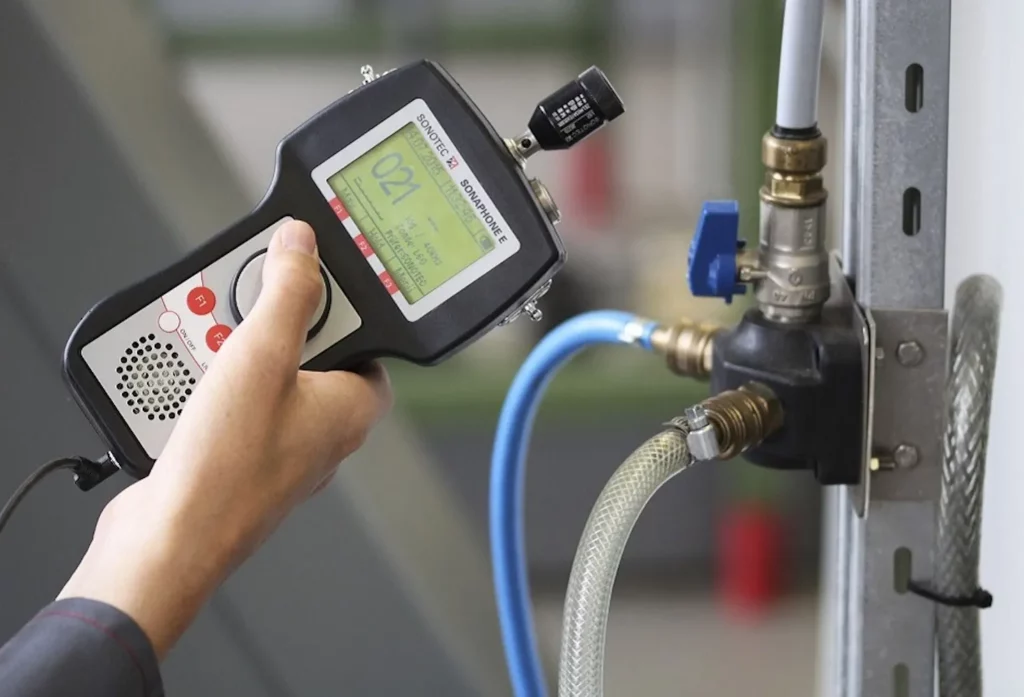
Georgian, Victorian and stucco-fronted homes hide their pipework behind irreplaceable fabric. Here is how non-destructive leak detection traces the source without lifting original floors or hacking off historic plaster, and how it fits around listed-building consent.
London holds one of the largest concentrations of historic housing in the country. From Georgian terraces in Islington and Bloomsbury to Victorian villas in Wandsworth and stucco-fronted mansions in Kensington and Notting Hill, a large share of the capital's homes are decades or centuries old. Many are listed, and many more sit within conservation areas where the original fabric carries real value. When a leak appears in one of these properties, the instinct to start lifting boards and opening walls is exactly the instinct that causes lasting damage.
The fabric of a period building is not just decoration. Original pine floorboards, lime plaster, ceiling roses, parquet, marble hearths and encaustic tiles are difficult or impossible to replace like for like. A clumsy leak investigation can do more harm than the leak itself. This guide explains why period and listed homes need a non-destructive approach, where leaks tend to hide in old pipework, how acoustic, thermal and tracer gas methods find the source without tearing the place apart, and how the work fits around conservation constraints and managing agents.
Why period and listed buildings need a different approach
In a modern build, a plumber can often lift a section of chipboard, cut into plasterboard and make good in an afternoon. The materials are standard and cheap. In a period property none of that holds true. The floors may be solid timber laid over joists a century ago, the walls may be lath and lime plaster, and the finishes may be protected by the building's listing or by conservation-area rules. Every exploratory hole is a decision with consequences.
There is also a legal dimension. If a building is listed, altering, damaging or removing historic fabric can require listed-building consent, and carrying out unauthorised works to a listed building is a criminal offence. That does not mean you need consent to trace a leak, because non-destructive detection touches nothing structural. It does mean that the destructive alternative, opening up floors and walls on spec, is precisely the sort of activity that can stray into consent territory if it disturbs protected fabric. The safest path is to locate the leak precisely first, so that any access is surgical and limited to a known point.
What is actually at risk
The value in a period home is concentrated in materials that do not tolerate rough handling:
- Original floorboards, wide pine or oak boards, often face-nailed, that split when levered and rarely match if replaced.
- Lime plaster and lath, flexible historic plaster that cracks and delaminates once disturbed, and cannot be patched convincingly with modern gypsum.
- Parquet and wood-block flooring, laid in bitumen, easily lifted in the wrong place and hard to re-lay to the original pattern.
- Marble and stone, hearths, thresholds and slabs that chip and stain and cannot be sourced to match.
- Cornicing, ceiling roses and decorative plaster, hand-run mouldings that a water stain damages and a careless access hole destroys.
The whole point of modern leak detection is to protect these things by finding the leak without gambling on where it might be.
Where leaks hide in old London pipework
Period properties were plumbed and re-plumbed across many decades, so a single house can contain lead, cast iron, galvanised steel, copper and modern plastic all at once. Each generation of material has its own failure habits, and knowing them helps narrow a search quickly.
Lead and iron rising mains
Many older London homes still have a lead or iron rising main, or lead supply pipework buried in solid floors and chased into walls. Lead is soft and corrodes and fatigues over time, and joints wiped decades ago eventually weep. Cast iron and galvanised steel corrode from the inside, thinning until a pinhole forms. Because these runs are often buried in solid ground floors or behind original plaster, a leak here is exactly the kind that tempts destructive digging.
Back-additions and later extensions
The Victorian back-addition, the narrow rear wing housing the original scullery and later the kitchen and bathroom, is a classic trouble spot. Pipework here has usually been altered many times, with runs threaded through solid floors, buried in screed and boxed into awkward corners. Waste and supply pipes cross each other, and the junction between the back-addition and the main house often sees movement, settlement and cracked joints.
Common failure points
| Material / location | Typical age | How it tends to fail |
|---|---|---|
| Lead supply and rising main | Pre-1970s | Corrosion, fatigue and weeping wiped joints |
| Cast iron and galvanised steel | Early to mid 20th century | Internal corrosion, pinholes, scale build-up |
| Copper under solid floors | Mid to late 20th century | Pinholing where chased into screed or in contact with lime |
| Push-fit and plastic in later work | Recent refurbishments | Failed joints, poorly supported runs behind boxing |
| Central heating in old floors | Retrofitted over decades | Slow weeps at buried joints, pinhole corrosion |
The takeaway is that a period home rarely has one pipe system to check. Tracing the leak by method, rather than assuming its location, is what keeps the investigation non-destructive.
How non-destructive methods find the leak
No single instrument locates every leak. The right approach in an old building is multi-method: use several complementary techniques, cross-check what each one shows, and only pinpoint once the evidence agrees. This matters more in period homes than anywhere else, because the cost of guessing wrong is measured in irreplaceable fabric.
Acoustic leak detection
Pressurised water escaping from a pipe makes a sound. Acoustic leak detection uses sensitive ground microphones and correlators to listen for that noise through floors and walls, then triangulate the loudest point to locate the source. In a period home this is invaluable because it works through solid floors and original finishes without touching them. It is particularly effective on the pressurised supply and heating pipework where lead and copper failures occur. Our full approach is set out on our leak detection in London and acoustic leak detection pages.
Thermal imaging
A thermal camera reads surface temperature. A hot-water or heating leak warms the surrounding floor or wall, and a fresh-water leak often cools it, creating a temperature pattern the camera can see. Thermal imaging is entirely contactless, which makes it well suited to surveying original floorboards, plaster and ceilings without laying a finger on them. It is excellent for mapping the extent of moisture and narrowing the search area before any pinpointing, and it pairs naturally with acoustic work. More detail is on our thermal imaging leak detection page.
Tracer gas
When a leak is small, intermittent or on a depressurised system, tracer gas comes into its own. A safe, inert gas mixture, typically hydrogen in nitrogen, is introduced into the pipe. Being far lighter than air, the gas rises through the smallest fault and up through the floor or wall covering, where a sensitive detector picks it up at the surface. It pinpoints the exact exit point without breaking anything, which is exactly what a listed floor needs. Tracer gas is often the deciding method on buried lead and iron runs where acoustic signal is weak.
Moisture mapping and inspection
Calibrated moisture meters and, where access allows, borescope cameras through existing gaps complete the picture. Moisture mapping confirms the spread of water and helps distinguish an active leak from historic staining, penetrating damp or condensation, which old buildings suffer from routinely. Distinguishing these is important, because not every damp patch in a Victorian house is a plumbing leak, and opening a floor to chase condensation helps nobody.
Working within conservation constraints
Detection itself is non-destructive and does not require consent, because it alters nothing. The care comes afterwards, when the leak has been found and access is needed for the repair. In a listed building, even a small opening in a protected floor or a historic ceiling may need to be discussed with the local authority conservation officer, and the repair should be carried out with matching materials and methods. This is where locating the leak precisely pays for itself: a single, minimal, well-placed access point is far easier to justify and to make good than exploratory demolition.
A sensible sequence for a period or listed home looks like this:
- Trace and pinpoint the leak using non-destructive methods, so its exact position is known.
- Record findings, including images and moisture readings, in a written report.
- Where the property is listed, check whether the proposed access needs consent or conservation officer input before opening anything.
- Make a single, minimal access point at the pinpointed location.
- Repair and reinstate using appropriate materials, lime rather than gypsum where the original was lime, and salvaged or matched timber for boards.
Managing agents, freeholders and shared responsibility
Many period homes in London are flats within converted houses or mansion blocks, which adds a layer of shared responsibility. A leak in a flat can originate in a neighbour's property, in a communal riser or in the roof, and the lease usually divides responsibility between leaseholder and freeholder. Managing agents frequently need a clear, independent report from a commercial leak detection survey before they will authorise access to a neighbouring flat or communal area, or before an insurer will engage. A precise, method-based survey that names the source and its location gives everyone the evidence they need to act, and avoids the standoffs where each party assumes the leak is someone else's problem.
What non-destructive detection typically costs
Pricing varies with the property, the number of methods needed and the complexity of access. Rather than quote figures that pretend to be exact, it is more honest to point to typical UK trade cost-guide ranges, which put a professional leak detection survey broadly in the region of a few hundred pounds, with more complex multi-method investigations in larger or harder-to-access properties sitting higher. Treat these as general guidance rather than a quote for your home.
Our own positioning is deliberately straightforward. We work non-invasively and multi-method, combining acoustic, thermal and tracer gas so the source is confirmed from more than one angle before anything is opened. We operate on a no find, no fee basis, so if we do not locate the leak you do not pay the detection charge. The fee is fixed at the point of booking, so there is no meter running and no surprise on the invoice. And every survey comes with an insurer-ready written report documenting the source, its location and the evidence, which is what managing agents and insurers need to authorise access and settle claims. This approach exists specifically to protect the irreplaceable fabric of London's older homes.
Frequently asked questions
Below are the questions homeowners and managing agents most often ask about leaks in period and listed buildings.
How we help with this
If the article describes a problem you actually have, these are the visits that deal with it.
- leak detection in London
Finding a hidden leak without opening the property up first.
- our full guide to leak detection
How each method works, what it costs and when it is the wrong tool.
Not sure which one applies? Describe the symptom on the phone and you will be told which survey it is, the hourly rate and roughly how long it takes, before anything is booked. 020 7123 8560
Frequently asked questions
Do I need listed-building consent to have a leak detected?
No. Non-destructive detection using acoustic, thermal and tracer gas methods touches nothing structural and alters no historic fabric, so it does not require consent. Consent may become relevant later if the repair means opening up a protected floor, wall or ceiling. That is exactly why we pinpoint the leak first, so any access is minimal and can be discussed with your conservation officer before work begins.
Will you have to lift my original floorboards or hack off plaster?
Detection itself involves no lifting or cutting. We locate the leak through solid floors, boards and lime plaster using sound, heat and gas. Only once the exact position is confirmed is a single, minimal access point needed for the repair, at the pinpointed spot rather than on guesswork. This keeps original floorboards, parquet, marble and decorative plaster intact wherever possible.
My Victorian house has a damp patch. Is it definitely a leak?
Not necessarily. Old buildings commonly suffer condensation, penetrating damp and historic staining that look like plumbing leaks but need entirely different remedies. We use moisture mapping and thermal imaging to distinguish an active leak from other causes before recommending any access, so you do not open a floor to chase a problem that turns out to be condensation or failed pointing.
Where do leaks usually occur in old London pipework?
Common points are ageing lead and cast iron rising mains, galvanised steel that corrodes internally, and copper chased into solid floors. The Victorian back-addition is a frequent trouble spot because pipework there has often been altered many times and buried in screed. Because a period home can contain several pipe materials at once, we trace by method rather than assuming the location.
I am a managing agent dealing with a leak between flats. Can you help?
Yes. Leaks in converted period houses and mansion blocks often cross between flats or into communal risers, and responsibility can be unclear. We provide an independent, written report that names the source and its exact location, which gives leaseholders, freeholders and insurers the evidence needed to authorise access to a neighbouring flat and to progress a claim without disputes over who is responsible.
How much does leak detection cost and how are you priced?
Typical UK trade cost-guide ranges put a professional survey broadly in the region of a few hundred pounds, with complex multi-method jobs higher. We fix the fee at the point of booking so there are no surprises, and we work on a no find, no fee basis, so if we do not locate the leak you do not pay the detection charge. Every survey includes an insurer-ready report.