Conservatory Roof Leak and Extension Leaks: How They Are Traced
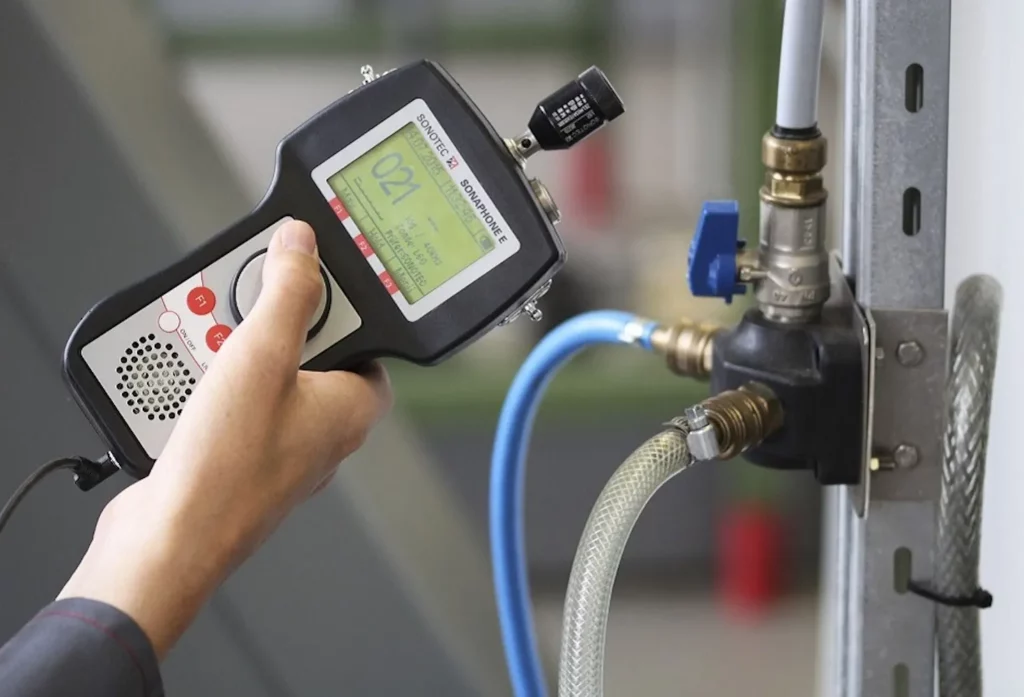
A leak in a conservatory or extension roof rarely shows up where the water is getting in. Here is how the common failure points work, how to tell a rainwater leak from a hidden pipe, and how the source is confirmed before anyone starts cutting into your roof.
A conservatory or single-storey extension is one of the most common places in a London home to find an unexplained damp patch, a drip during heavy rain, or a slow brown stain creeping across the ceiling. These structures sit at the join between old and new building work, they carry a lot of glass and flat roofing, and they often hide plumbing and heating pipes under their floors. That combination gives water plenty of ways in and plenty of routes to travel before it appears.
The frustrating part for most homeowners is that the wet patch almost never marks the actual fault. Water follows the path of least resistance along timber, plasterboard, cabling and steel before it drops, so the stain you can see may be a metre or more from where the water first entered. This article explains what causes a conservatory roof leak or an extension roof leak, how to tell a roof or rainwater leak apart from a pipe leak, the safe checks you can do yourself, and how a professional confirms the true cause before any repair begins.
Common conservatory roof leak and extension leak points
Most leaks in these structures come from a fairly short list of weak points. Knowing them helps you describe the problem accurately and understand what a tracing survey will be checking.
Flat-roof and rubber membrane failures
Many modern extensions use a flat or low-pitch roof finished in a rubber (EPDM), felt, or single-ply membrane. These systems are reliable when installed well, but they fail at predictable spots: at seams and welds, around rooflights and pipe penetrations, at upstands where the membrane turns up against a wall, and wherever ponding water sits for long periods. A small split, a lifted seam, or a perished bond around a rooflight kerb lets water under the membrane, where it can travel a long way across the deck before finding a way through.
Box gutters and internal gutters
Where an extension roof meets the main house, or where two roof slopes meet, there is often a box gutter or a hidden internal gutter. These are one of the single most common causes of persistent extension leaks. They collect a large volume of water, they are prone to blockage from leaves and debris, and their joints and outlets are hard to inspect. When a box gutter overflows or its lining fails, water pours directly into the wall junction, frequently appearing inside as a damp patch high on the party wall.
Glazing seals and gaskets
Conservatories and glass-roofed extensions rely on rubber gaskets, glazing tape, and sealant beads to keep water out at every glass-to-frame joint. Over years of thermal movement and UV exposure these seals shrink, harden and pull away. Failed glazing seals typically produce leaks that track down internal glazing bars and drip from the underside of the roof, and they often get worse with age rather than suddenly.
Flashing where the extension meets the house
The junction between a new roof and the existing house wall is sealed with flashing, usually lead or a proprietary flashing system, dressed into the brickwork. This is a classic failure point. Flashing can lift, the mortar joint it sits in can perish, or it may have been poorly installed in the first place. Because this join sits directly above an internal wall, a flashing failure often shows as damp at the top of that wall or as a stain running down from the ceiling-wall corner.
Polycarbonate roof seams
Older and budget conservatory roofs are commonly finished in polycarbonate sheeting. Water gets in where the sheets meet the glazing bars, where the end caps and closures have degraded, and through the open flutes of the sheet if the breather tape has failed. Polycarbonate leaks tend to be diffuse and weather-dependent, often only appearing in wind-driven rain.
Hidden plumbing and heating under extension floors
Not every leak in an extension comes from above. Extensions frequently contain the runs for radiators, hot and cold feeds to a kitchen or utility, and increasingly underfloor heating buried in screed. A pipe joint that weeps under a solid floor produces damp that rises into skirtings and the base of walls, and it does so regardless of the weather. This is the category most often confused with a roof leak, and distinguishing the two is the single most important first step.
Leak point to likely cause at a glance
| Where you see it | Likely source | Typical underlying cause |
|---|---|---|
| Damp high on the wall where extension meets house | Roof or rainwater | Failed flashing or overflowing box gutter at the junction |
| Drip from a flat-roof ceiling, worse in heavy rain | Roof or rainwater | Split membrane, failed seam, or perished seal around a rooflight |
| Water running down internal glazing bars | Roof or rainwater | Perished glazing gaskets or sealant on a glass or polycarbonate roof |
| Leak only in wind-driven rain | Roof or rainwater | Polycarbonate seam, end cap, or closure failure |
| Damp skirtings or floor, no link to rain | Plumbing or heating | Weeping joint or pipe under a solid or screeded floor |
| Warm damp patch on the floor, higher heating use | Plumbing or heating | Underfloor heating circuit or hot feed leaking in the screed |
| Staining around a ceiling light or fitting | Either | Water tracking to the lowest exit point; source is elsewhere |
Roof and rainwater leak, or a pipe leak? How to tell them apart
The most useful thing you can establish before calling anyone is whether the water is linked to rain or not. It changes who you need and what the repair looks like. A few simple observations point you in the right direction.
- Does it track the weather? A leak that appears or worsens during and shortly after rain, then dries up in settled weather, is almost always a roof or rainwater problem. A leak that continues through dry spells is far more likely to be plumbing or heating.
- Where does it appear? Damp that starts high, at ceiling level or the top of a wall, generally comes from above. Damp that starts low, at skirtings or the floor, more often comes from a pipe.
- Is the water warm? A warm or persistently damp floor, especially alongside a jump in heating use or a boiler that keeps losing pressure, strongly suggests a heating or hot-water leak rather than rain.
- Is it constant or intermittent? Rainwater leaks are intermittent by nature. A steady, unchanging weep regardless of conditions is a plumbing signature.
- Does the boiler pressure drop? If your combi boiler pressure gauge keeps falling and needs topping up, there is very likely a leak somewhere on the heating circuit, which in an extension may well be under the floor.
These are indicators, not proof. Plenty of real cases are mixed or ambiguous, and it is entirely possible to have a roof problem and a plumbing problem at the same time. But sorting the leak into rain-linked or not-rain-linked tells you whether you are likely dealing with roofing and rainwater goods or with pipework, and it stops you spending money on the wrong trade.
Safe checks you can do yourself
There are a number of low-risk checks a homeowner can carry out to gather useful information. The guiding rule is to stay safe: do not climb onto a fragile or wet roof, do not lean out of upstairs windows, and do not go poking at electrics near a damp ceiling.
- Watch and record. Note exactly when the leak appears, whether it lines up with rain, wind direction, and how quickly it dries. A short log over a couple of weeks is genuinely valuable to whoever surveys it.
- Check the gutters and downpipes from the ground. Overflowing or blocked gutters are a common and cheap cause. Look for water spilling over the front edge during rain, or plants growing in the gutter run.
- Look at visible seals and flashing from ground level. Binoculars help. You are looking for obviously lifted flashing, gaps at the wall junction, or perished sealant along glazing bars.
- Feel and photograph the damp. Is the patch cold and weather-linked, or warm? Take dated photos so you can see whether it is spreading.
- Check your boiler pressure. A falling gauge that needs regular topping up is a strong clue toward a heating leak.
- Do a simple no-rain test. If the leak keeps appearing during a genuinely dry, still spell, rainwater is unlikely to be the cause and pipework moves up the list.
What these checks will not do is confirm the exact entry point behind the plaster or under the floor. They narrow it down, which is exactly what they are for. Cutting into ceilings or lifting floors on a guess is where a lot of money gets wasted.
How professionals confirm the cause before repairing
The value of a proper leak-tracing survey is that it identifies the source before anyone starts breaking into the structure. A good approach layers several methods rather than relying on one, and it works from the least invasive option upward. Where a plumbing or heating leak is suspected under a floor, non-invasive detection is used specifically to avoid lifting screed or flooring until the location is confirmed.
The typical toolkit used to pinpoint conservatory and extension leaks includes:
- Controlled water testing. Sections of a roof, glazing, or gutter are wetted in a deliberate sequence so the source can be isolated one area at a time, rather than being left to guess after the next downpour.
- Moisture mapping. Moisture meters and probes map how far the damp extends behind surfaces, which helps trace the water back from the visible stain toward its origin.
- Thermal imaging. A thermal camera can reveal temperature differences caused by trapped moisture or by a warm underfloor-heating leak, showing patterns the eye cannot see.
- Acoustic and tracer methods for pipework. Where a pressurised pipe or heating circuit is suspected, acoustic listening equipment and tracer gas can locate a buried leak to within a small area without lifting the whole floor.
- Pressure testing of heating and plumbing. Isolating and pressure-testing a circuit confirms whether a suspected pipe leak is real and roughly where it sits.
The point of combining methods is confidence. Confirming the cause with more than one line of evidence means the repair is aimed at the right place the first time, which is far cheaper than the trial-and-error approach of opening up the roof or floor and hoping. If you want to understand the wider process, our leak detection in London service explains how a survey is structured, and for confirmed pipe faults our water leak repair in London page covers what happens next. Where a warm floor or falling boiler pressure points at a buried heating circuit, our underfloor heating leak detection in London service uses non-invasive methods to locate the fault before any screed is disturbed.
What it typically costs
Prices vary with access, the size of the structure and the method needed, so treat the following as typical UK trade cost-guide ranges rather than a quote. A focused leak-detection survey on a conservatory or extension commonly falls somewhere in the region of a few hundred pounds, with more complex jobs involving extensive thermal imaging or tracer-gas work sitting higher. Roofing and rainwater repairs, such as re-dressing flashing, clearing and relining a box gutter, or replacing failed glazing seals, are usually separate and priced once the cause is known. Underfloor and buried plumbing repairs depend heavily on where the fault sits and how much floor has to be accessed.
We work on a fixed hourly rate agreed at the time of booking, so you know the rate before we start, with no open-ended hourly meter. Where a plumbing leak is suspected, we offer non-invasive detection and a no find, no fee basis, meaning if we cannot locate the leak you are not charged for the detection. That structure exists precisely because these leaks are hard, and it keeps the risk of an unclear diagnosis on us rather than on you.
When to act
A slow conservatory or extension leak is easy to ignore while it is only a small stain, but the damage rarely stays small. Persistent damp rots roof timbers and the batten behind flashing, saturates insulation so it stops working, lifts and stains plaster, and where it reaches electrics near a light fitting it becomes a safety issue. A hidden heating leak under a floor can also quietly waste water and energy for months. Tracing the cause early, before it spreads, is almost always cheaper than dealing with the secondary damage later. If you have a damp patch you cannot explain, the sensible first move is to establish whether it tracks the rain, and then get the source confirmed properly rather than sealed on a guess.
How we help with this
If the article describes a problem you actually have, these are the visits that deal with it.
- our full guide to leak detection
How each method works, what it costs and when it is the wrong tool.
Not sure which one applies? Describe the symptom on the phone and you will be told which survey it is, the hourly rate and roughly how long it takes, before anything is booked. 020 7123 8560
Frequently asked questions
Why does the water appear in the middle of my extension ceiling when the roof looks fine there?
Because water rarely drops straight down from where it enters. It runs along the underside of the membrane, down a rafter, or along cabling and pipes until it reaches the lowest point, which is often a light fitting or a ceiling joint. The visible stain marks the exit, not the entry. This is exactly why chasing the stain with sealant usually fails and why the source needs to be traced back rather than guessed.
How can I tell if it is a roof leak or a plumbing leak?
The quickest test is whether it tracks the weather. A leak that appears or worsens with rain and dries up in settled spells is almost always a roof or rainwater problem. A leak that continues through dry weather, shows as a warm or persistently damp floor, or coincides with your boiler losing pressure is far more likely to be plumbing or heating. These are indicators rather than proof, and it is possible to have both at once, but sorting it into rain-linked or not tells you which trade you need.
Is a box gutter really a common cause of extension leaks?
Yes. Where an extension roof meets the house there is often a box or internal gutter that collects a large volume of water. They block easily with leaves and debris, their joints and outlets are hard to inspect, and when they overflow or the lining fails the water pours straight into the wall junction. That typically shows up inside as damp high on the wall between the extension and the house, which people often mistake for a wall or flashing fault.
Do I need to lift the floor or open the ceiling to find the leak?
Not as a first step. Where a buried pipe or heating circuit is suspected, non-invasive methods such as thermal imaging, acoustic listening and tracer gas can locate the fault to a small area before anything is opened up. The whole point of a tracing survey is to confirm the source first, so any cutting or lifting is aimed at the right spot rather than done on a guess.
What does a conservatory roof leak survey cost?
As a typical UK trade cost-guide range, a focused leak-detection survey usually sits in the region of a few hundred pounds, with more complex jobs involving extensive thermal imaging or tracer-gas work priced higher. The roofing or plumbing repair is separate and quoted once the cause is confirmed. We work on a fixed hourly rate agreed at booking, and where a plumbing leak is suspected we offer non-invasive detection on a no find, no fee basis.
The leak only happens in windy rain. What does that suggest?
Wind-driven rain leaks point strongly toward the roof rather than plumbing, and often toward glazing or polycarbonate. Wind pushes water sideways into seams, end caps, closures and glazing gaskets that shed straight rain perfectly well. Noting the wind direction when it leaks is genuinely useful information for a survey, as it helps narrow down which side or joint of the roof to test first.