Old Pipes in London Homes: Lead, Galvanised Steel and Ageing Copper (and the Leaks They Cause)
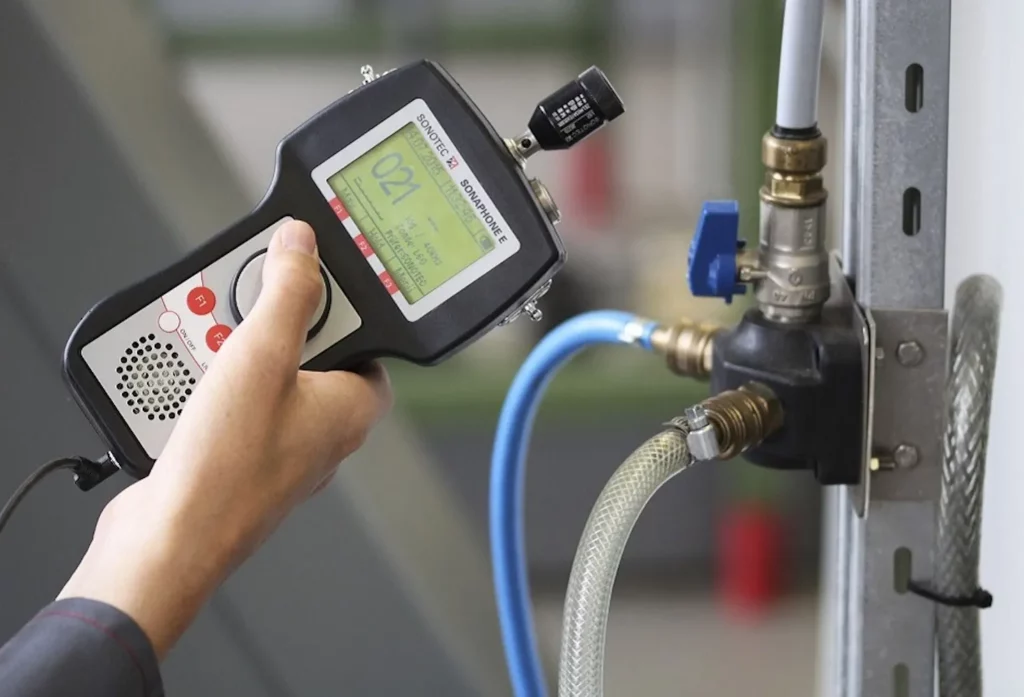
Victorian terraces and post-war flats across London still run water through lead, galvanised steel and decades-old copper. Here is why each material fails, the tell-tale signs, and how detection finds the failure point before you re-pipe the whole house.
London has some of the oldest housing stock in the country. Walk down any street in Islington, Hackney, Wandsworth or Ealing and you are looking at homes that were plumbed when the pipework was expected to last a generation, not a century. Much of that original plumbing is still in the walls, under the floors and buried in the garden. It is doing a job it was never designed to do for this long, and it is starting to show.
If you own or rent a period property, the pipes carrying water to your taps may be lead, galvanised steel, early copper, or some patchwork of all three joined together by successive owners and trades over the decades. Each material fails in its own way, and each produces a leak that behaves differently. Understanding what is likely to be behind your walls helps you make sense of the damp patch that will not dry, the water bill that keeps climbing, or the pressure that has quietly dropped over the years.
This guide walks through the pipe materials found in older London homes, why they leak, the signs to watch for, and why so many of these failures hide under solid floors where nothing is visible until the damage is done. It also explains how modern leak detection in London pinpoints the exact failure point, so you can fix what is actually broken rather than tearing out sound pipework alongside it.
Why London's Pipes Are a Special Case
Two things make London homes distinctive. First, the age of the housing. Large parts of the city were built between the 1850s and the 1930s, and a great deal of the original service pipework was never fully replaced, only added to. Second, London's water is hard. It is rich in dissolved calcium and other minerals, and while hard water is not dangerous, it interacts with metal pipes in ways that matter over decades. It furs up bores, changes the chemistry at the pipe wall, and in some conditions accelerates corrosion.
The result is a housing stock full of mixed-metal plumbing systems that have been quietly ageing for fifty, eighty, sometimes a hundred years. When one of these pipes finally gives way, the leak is rarely dramatic. More often it is slow, hidden and expensive precisely because it stays out of sight for so long.
Lead Pipes: The Original Service Pipe
Lead was the standard material for water pipes in Britain for a very long time. It is soft, easy to bend around obstacles, and it does not rust. That is exactly why so much of it went into the ground and into the walls of Victorian and Edwardian homes. In many older London properties the supply pipe running from the street stopcock into the house is still lead, and internal runs to kitchen and bathroom taps can be lead too.
There are two separate concerns with lead. The first is health. Lead can dissolve into drinking water, particularly where water sits still in the pipe overnight and where the water is soft or acidic. London's hard water tends to build a protective scale on the inside of lead pipes that reduces this, but it does not eliminate it, and the health guidance is unambiguous that there is no completely safe level of lead in drinking water. This is why replacing lead supply pipes is encouraged, and why it is a common upgrade during renovations.
The second concern, and the one relevant to detection, is leaks. Lead is soft. Over decades it can develop splits, pinholes and weeping joints, especially at bends and where it has been disturbed by ground movement, nearby building work, or freeze-thaw cycles. Old lead joints were often wiped by hand with a lead-tin solder, and those joints can weep. Because lead supply pipes frequently run underground from the boundary and then under the floor into the house, a lead leak often shows up as a permanently damp patch of ground, an unexplained rise in water usage, or water tracking under a floor with no obvious source.
Signs of a lead pipe problem
- A supply pipe that is dull grey, soft enough to mark with a coin, and swells at the joints rather than being threaded or soldered like copper.
- Persistently damp ground near the boundary or along the likely path of the incoming main.
- Water usage that has crept up with no change in household habits.
- Reduced flow at the kitchen tap, where the incoming main usually feeds first.
Galvanised Pipes: Rusting From the Inside Out
Galvanised steel pipe was widely used through the mid twentieth century, and it turns up in a lot of post-war London homes and in later additions to older properties. It is steel pipe coated with a layer of zinc to protect it from rust. The problem is that the protection is temporary. The zinc layer gradually erodes, and once it is gone the steel underneath begins to corrode.
Critically, galvanised steel corrodes from the inside. Water flowing through the pipe wears away the zinc, then attacks the steel, and rust and mineral scale build up on the inner wall. For years the outside of the pipe can look completely sound while the bore is silting up and the wall is thinning. This is why galvanised pipes are so deceptive. By the time they leak, they have usually been failing invisibly for a long time.
Two things tend to give it away before a full leak. The first is falling water pressure and flow, as the internal rust and scale narrow the bore until only a trickle gets through. The second is discoloured water, often a brown or rusty tinge when a tap is first turned on after standing overnight. When galvanised pipe finally fails, it commonly does so as a pinhole or a weeping seam, frequently at threaded joints where the wall is thinnest and corrosion concentrates.
Signs of failing galvanised pipes
- Gradually worsening water pressure across the whole house rather than at a single tap.
- Brown or rusty water, particularly first thing in the morning.
- Visible rust staining or flaking at pipe joints where accessible.
- Threaded grey metal pipe, magnetic to a fridge magnet, unlike copper or lead.
Ageing Copper: Reliable, But Not Forever
Copper replaced lead and galvanised steel as the standard from roughly the mid twentieth century onward, and it is genuinely good pipework. It is durable, does not shed harmful material into the water, and a well-installed copper system can last many decades. But copper is not immortal, and a great deal of the copper in London homes is now old enough that it is reaching the end of its comfortable life.
Copper's characteristic failure is the pinhole leak. These are tiny perforations, often no bigger than a pinprick, that develop in the pipe wall and weep continuously. They have several causes, and in older London properties usually more than one is at play. Water chemistry matters: aggressive or unusually soft water, and certain patterns of mineral content, can pit the copper from the inside. Erosion corrosion is another cause, where water moving too fast or turbulently, often at tight bends or where a pipe was reduced in diameter, physically wears the inner wall thin. Poor original workmanship contributes too, with excess flux left inside a joint slowly eating away at the copper for years afterward.
The frustrating thing about copper pinholes is that they are small, so the leak is slow, so it hides for a long time before anyone notices. A single pinhole can weep for months into a wall cavity or under a floor, doing steady damage to plaster, joists and screed long before a stain appears. We cover this failure mode in depth in our guide to pinhole leaks in copper pipes, because it is one of the most common calls we get in London's ageing housing.
Signs of an ageing copper problem
- A small, persistent damp patch that returns no matter how often it dries.
- Green or blue-green staining on copper pipework, or white mineral crust at a weep point.
- The sound of running or trickling water when all taps are off.
- A boiler or heating system that loses pressure and needs topping up repeatedly.
Old Joints: Where Mixed Systems Give Way
In practice, most failures in older homes happen not in the middle of a pipe run but at the joints, and mixed-material systems are full of joints that were never ideal to begin with. Over a century of alterations, a single London home might have lead joined to copper, copper joined to galvanised steel, and old compression fittings tightened and loosened by successive plumbers.
Joining dissimilar metals directly, such as copper straight onto galvanised steel, sets up galvanic corrosion, where one metal sacrifices itself to protect the other and corrodes far faster than it otherwise would. Old soldered joints can develop hairline cracks as the building moves and as pipes expand and contract with temperature. Compression fittings that have been disturbed can weep. And decades-old joint compounds and washers simply perish. When you map the leaks in a period property, the joints are where you look first.
Material to Typical Failure: A Quick Reference
| Pipe material | Typical era | How it usually fails | Common warning sign |
|---|---|---|---|
| Lead | Victorian to mid 20th century | Splits, pinholes and weeping wiped joints; health concern from dissolved lead | Damp ground on the supply route, rising water use, soft grey pipe |
| Galvanised steel | Early to mid 20th century | Internal corrosion narrowing the bore, then pinholes and seam leaks at threads | Falling pressure, brown water in the morning, rust at joints |
| Ageing copper | Mid 20th century onward | Pinhole leaks from water chemistry, erosion and residual flux | Small returning damp patch, green staining, running-water sound |
| Old joints (mixed metals) | Any, especially altered systems | Galvanic corrosion, cracked solder, perished compression fittings | Localised weeping at connections, unexplained pressure loss |
Why These Leaks Hide Under Solid Floors
The single biggest reason old-pipe leaks in London go undetected for so long is the solid floor. Many period conversions and renovations put pipework in the screed beneath a concrete or tiled floor, or ran the incoming main under a solid ground-floor slab. Once a pipe is buried in or under solid flooring, there is no cavity for water to drip into visibly and no easy access to inspect it.
A pinhole in copper under a screed floor does not announce itself. The water tracks along the path of least resistance, following the slab, the underside of tiles, or the line of the pipe run, and can emerge metres away from the actual failure, or not emerge at all until it has saturated a large area. By the time a homeowner sees a lifting tile, a musty smell or a stain creeping up a skirting board, the leak may have been running for a very long time.
This is also why guesswork is so costly here. Without detection, the temptation is to break out the floor at the point where the damp appears, only to find the pipe there is sound and the real fault is somewhere else entirely. On a solid floor, an unnecessary excavation is expensive, disruptive and often pointless.
Health and Replacement Considerations
A few points are worth weighing when you are dealing with old pipes beyond the immediate leak. If your supply pipe is lead, replacing it is worth considering on health grounds alone, independent of whether it is currently leaking, and it is often most economical to do this while a floor or driveway is already up for other work. If your system is largely galvanised steel and pressure has been falling for years, a leak is a symptom of a system that is corroding throughout, and a staged replacement plan is usually wiser than repeated patching. If your copper is sound apart from an isolated pinhole, a targeted repair is entirely reasonable and there is no need to re-pipe.
The key is sequencing. Find the fault first, understand the condition of the wider system, then decide on repair versus replacement with the facts in front of you. Breaking out a solid floor should be the consequence of a confirmed diagnosis, not the method of making one.
How We Work
We focus on finding the problem accurately and honestly before anyone starts cutting into your home. Our detection is non-invasive and multi-method, combining acoustic, thermal, tracer gas and moisture techniques so the failure point is confirmed rather than assumed. We work on a no find, no fee basis, and the hourly rate is fixed and agreed at the point of booking, so there is no meter running and no surprise at the end. For older London homes with lead, galvanised or ageing copper pipework, that means you get a clear answer about what has failed and where, before you decide whether to repair a section or plan a larger replacement.
If you have a damp patch that will not dry, a water bill that keeps rising, or pressure that has quietly dropped away, the pipes in your period home are the first place to look. Pinpointing the failure is the step that saves the floor.
How we help with this
If the article describes a problem you actually have, these are the visits that deal with it.
- leak detection in London
Finding a hidden leak without opening the property up first.
- home leak detection
Flats and houses, at £160 an hour agreed before we travel.
Not sure which one applies? Describe the symptom on the phone and you will be told which survey it is, the hourly rate and roughly how long it takes, before anything is booked. 020 7123 8560
Frequently asked questions
How do I know whether my old pipes are lead, galvanised steel or copper?
Lead is dull grey, soft enough to mark with a coin, and swells at its joints rather than being threaded or neatly soldered. Galvanised steel is grey, threaded at the joints and magnetic, so a fridge magnet will stick to it. Copper is the familiar orange-brown metal, usually with soldered or compression joints, and is not magnetic. Many older London homes have a mixture of all three, often joined together where the system has been altered over the years.
Are lead water pipes dangerous?
Lead can dissolve into drinking water, and health guidance is clear that there is no completely safe level of lead in water. London's hard water tends to build a protective scale inside lead pipes that reduces this, but it does not remove the concern. Replacing a lead supply pipe is generally encouraged on health grounds, and it is often most economical to do so while a floor or driveway is already open for other work.
Why does my water pressure keep dropping in an older house?
Gradually falling pressure across the whole house is a classic sign of galvanised pipes corroding internally. The zinc coating erodes, the steel underneath rusts, and rust and scale build up on the inner wall until the bore narrows and only a trickle gets through. Brown or rusty water first thing in the morning often accompanies it. It usually means the system is corroding throughout rather than at a single point.
Why can't I see where the leak is coming from?
In many London homes the pipes run in the screed under a solid floor or beneath a ground-floor slab, so there is no cavity for water to drip into visibly. Water tracks along the slab or the pipe route and can emerge metres from the actual fault, or not surface at all until a large area is saturated. This is exactly why non-invasive detection is used to pinpoint the failure rather than breaking out the floor on a guess.
Do I need to re-pipe the whole house or can you just fix the leak?
It depends on the condition of the system, which is why finding the fault first matters. If detection confirms a single copper pinhole in otherwise sound pipework, a targeted repair is reasonable and no re-pipe is needed. If it shows a galvanised system corroded throughout with repeated leaks, a staged replacement is usually the better long-term choice. Detection gives you the evidence to decide, rather than guessing.
How much does leak detection cost and what if you don't find anything?
We work on a no find, no fee basis, and the hourly rate is fixed and agreed when you book, so there is no open-ended meter running. Wider plumbing and repair prices vary and are best treated as typical UK trade cost-guide ranges rather than fixed quotes, since the work depends on what the detection reveals and how accessible the pipe is. The detection rate itself is agreed up front so you know where you stand before we start.