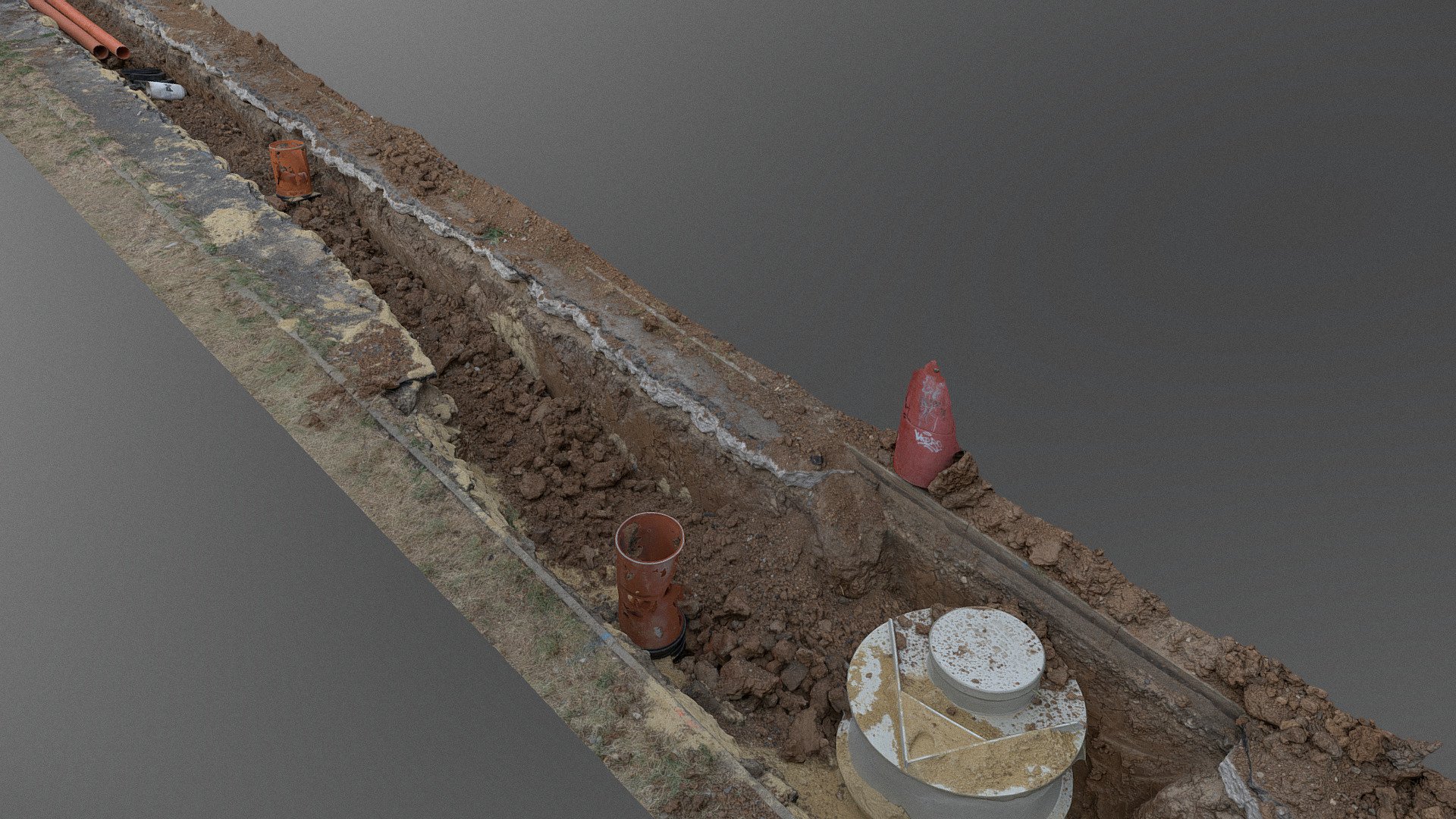
If a leak is on your private supply pipe rather than Thames Water's main, finding it is down to you. This is how underground supply pipe leak detection works in London, the signs to watch for, the non-invasive methods used, and how to avoid digging up the whole run on a guess.
Once you have established that a leak sits on your side of the Thames Water boundary, on the private supply pipe that runs from the pavement, across your garden or drive and into the house, the job of finding it becomes yours. That pipe is buried, often a metre or more down, sometimes under a concrete drive or a lawn, and the water it loses can travel a long way underground before it surfaces, if it surfaces at all. Digging up the whole run to look for the leak is exactly the expensive, destructive approach that professional detection exists to avoid.
This guide explains how supply pipe leak detection actually works in London: the signs that point to a buried supply leak rather than an internal one, the non-invasive methods a good engineer uses to pinpoint it, and why locating it precisely saves both the pipe and your garden. We are an independent London detection company, not connected to Thames Water; we handle the private, customer-side pipework that the water company will not.
What are the signs of a supply pipe leak?
A leak on the buried supply pipe often shows itself differently from an internal one, because the water escapes underground. Classic signs include an unexplained rise in a metered water bill, a water meter that keeps turning when everything inside is switched off, a patch of grass that stays greener or boggier than the rest of the garden, water seeping up through a drive or path, or a persistent damp area near where the pipe is likely to run. In colder months you might notice an area of ground that is slow to frost over, warmed slightly by water movement.
A drop in water pressure at the taps can also point to a supply pipe problem, especially if it has worsened gradually. None of these on its own proves a supply leak, but two or more together, combined with the boundary stop-valve and meter checks, build a strong case. The earlier you act, the less water is wasted and the less chance the escaping water has to undermine paving or foundations.
- Water bill rising with no change in how much you use.
- The meter still turning with every tap and appliance off.
- A greener, boggier or sunken patch of lawn, or damp seeping through a drive.
- Falling water pressure, particularly if it has crept down over time.
- An area of ground slow to frost in winter, warmed by moving water.
Why can't I just follow the wet patch to the leak?
Because water is a poor guide to its own source. A supply pipe runs under compacted ground, and when it leaks the water follows the path of least resistance, along the pipe trench, over a layer of clay, beside a foundation, before it emerges wherever it can. The wet patch on your drive can be several metres from the actual split in the pipe. Excavating under the wet patch frequently means digging in the wrong place, then digging again, which is how a modest repair turns into a wrecked drive and a large bill.
The whole point of detection is to convert that rough, misleading surface clue into a precise underground location, so the excavation is a small, targeted hole directly over the fault. That is what protects your garden, your paving and your budget.
How do engineers find a buried supply pipe leak?
Supply pipe detection uses several methods together, because no single technique works on every pipe material and depth. The starting point is usually a pressure test: isolating the supply pipe and watching a gauge proves the pipe is losing water and roughly how fast, confirming there is a leak to find before the search begins. From there the engineer chooses the methods that suit the ground and the pipe.
- Acoustic detection: sensitive ground microphones listen for the distinctive hiss or rumble of water escaping under pressure, moved along the suspected pipe route to find where the sound peaks.
- Leak noise correlation: sensors placed at two access points measure the tiny time difference in the leak sound reaching each, and calculate the leak's position between them, powerful on long buried runs.
- Tracer gas: a safe hydrogen and nitrogen mix is introduced into the drained pipe and rises through the ground to the surface at the leak, where a gas probe detects it, the fallback that finds quiet leaks the other methods struggle with.
- Thermal imaging and ground probing: used to read temperature differences and moisture where the pipe is shallow or enters the building.
Used in combination, these methods locate most supply pipe leaks to within a small area, so any excavation is precise. You can read more about the underlying techniques in our complete guide to leak detection and on our underground water leak detection service page.
What happens after the leak is found?
Once the exact spot is marked, the repair options depend on the pipe. A single failure on an otherwise sound pipe can often be repaired with a targeted excavation and a new section or coupling. Where the supply pipe is old, lead, or corroded galvanised steel common in older London homes, it can make more sense to replace the whole run, sometimes using a moling or pipe-bursting technique that pulls a new plastic pipe through with minimal digging. A good engineer will explain which is the sensible choice for your property rather than defaulting to the biggest job.
Because the private supply pipe is your responsibility, this is also the point to ask Thames Water about a leak allowance on your bill, and to keep the detection report and repair invoice. If the escaping water has caused damage inside or around the property, that documentation supports an insurance claim too. Our detection is offered on a no find, no fee basis and we cover all 32 boroughs and out to the M25, so wherever the pipe runs, the search starts from evidence rather than guesswork.
Old supply pipes and London's housing stock
London has a lot of ageing supply pipework, and the material matters. Older properties may still have a lead supply pipe or a galvanised steel one, both of which corrode and fail with age, and lead carries its own water-quality reasons to replace it. Newer pipes are usually blue MDPE plastic, which is durable but can still be damaged by ground movement, poor original jointing or accidental strikes during other works.
Knowing what your supply pipe is made of helps predict how it will have failed and how best to detect and repair it. During a survey the engineer can often identify the material at the point it enters the property, which informs whether a spot repair or a full replacement is the better long-term decision. Either way, the sequence is the same: confirm the leak is on your side, locate it precisely, then repair or replace with the least disruption possible.
How we help with this
If the article describes a problem you actually have, these are the visits that deal with it.
- leak detection in London
Finding a hidden leak without opening the property up first.
- a Thames Water leak notice
What the letter means and the four weeks it gives you.
- underground water leak detection
Supply pipe leaks under drives, gardens and pavements.
Not sure which one applies? Describe the symptom on the phone and you will be told which survey it is, the hourly rate and roughly how long it takes, before anything is booked. 020 7123 8560
Frequently asked questions
Does Thames Water detect leaks on my supply pipe?
Generally no. Thames Water is responsible for the main and the pipe up to your boundary, but the private supply pipe from the boundary into your home is yours to detect and repair. Finding a buried supply pipe leak is therefore usually down to you, which is where independent leak detection comes in. We are not connected to Thames Water and handle the customer-side pipework they do not cover.
How do you find a leak on a buried supply pipe without digging?
By combining non-invasive methods. A pressure test first confirms the pipe is losing water. Then acoustic microphones listen for the escaping water along the pipe route, leak noise correlation calculates the leak's position between two sensors, and tracer gas rises to the surface at the exact leak point. Together these locate the fault to a small area, so any excavation is a single targeted hole rather than lifting the whole run.
Why does water surface far from the actual leak?
Because underground water follows the path of least resistance. It travels along the pipe trench or over layers of clay before emerging wherever it can reach the surface, which may be several metres from the split in the pipe. That is why digging under the visible wet patch so often misses the leak, and why precise detection is needed to place the excavation directly over the fault.
Should I repair or replace an old supply pipe?
It depends on the pipe's condition and material. A single failure on a sound pipe can be spot-repaired with a small excavation. But an old lead or corroded galvanised pipe that has already failed once is likely to fail again, so replacing the whole run, often by moling or pipe-bursting a new plastic pipe through with minimal digging, can be the better long-term choice. A survey identifies the material and helps you decide.
Can I claim money back for water lost through a supply pipe leak?
You can usually apply to Thames Water for a leak allowance once the leak is repaired. If a hidden underground leak inflated your metered usage, they may credit part of the bill, subject to their conditions and proof of repair. Keep the detection report and repair invoice, both to support the allowance request and for any insurance claim if the water caused damage.
Do you charge if you can't find the supply pipe leak?
We work on a no find, no fee basis for detection, so if we attend a confirmed live leak and cannot locate it, you are not charged the detection fee. We confirm this before starting. Any repair or supply pipe replacement is quoted separately once the leak is pinpointed, so you know the cost before work begins.