Underground Water Supply Pipe Leak: Who's Responsible, You or Thames Water?
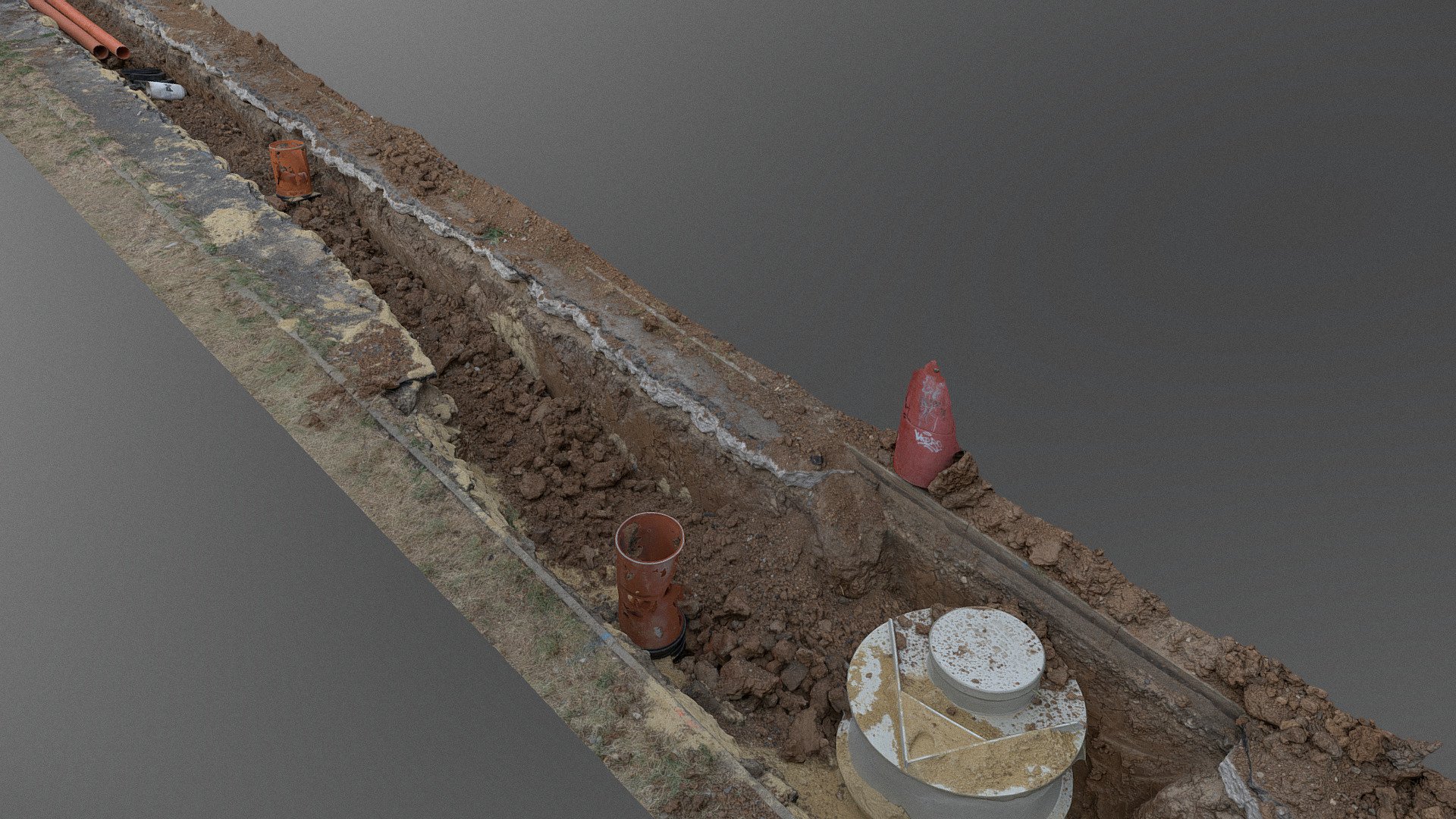
An underground leak between the water main and your home can waste thousands of litres and quietly inflate your bill. But whether it is your problem or Thames Water's depends entirely on where the pipe leaks. Here is how responsibility is split, how to spot a hidden supply-pipe leak, and how it is traced acoustically before anyone digs.
You have spotted a soggy patch on the driveway that never seems to dry, or your water meter is ticking over even though every tap in the house is off. Somewhere between the road and your home, an underground pipe is leaking. The first question almost everyone in London asks is a fair one: is this my problem to fix, or is it Thames Water's?
The honest answer is that it depends on exactly where the leak sits. There is a legal boundary, usually at the edge of your property, that splits an underground water pipe into two halves with two different owners. Get the boundary right and you know who to call, who pays, and whether you might be entitled to a free repair. Get it wrong and you could spend money digging up a pipe that was never yours to touch.
This guide explains where that boundary falls, why your water company often repairs or subsidises a first external leak for free, how to tell whether you actually have an underground leak at all, and how a leak is pinpointed acoustically so the digging is kept to a minimum. It applies whether your supplier is Thames Water, Affinity Water, SES Water or another company serving the capital.
The two halves of your underground pipe
Every home connected to the mains has a single pipe running from the water main in the street to a stop tap inside the property. That run is not one continuous responsibility. It is divided at a legal line called the boundary of the property, and the two sections have formal names.
The communication pipe (the water company's part)
The communication pipe is the section that runs from the water main in the road up to the boundary of your property, which is usually the edge of your garden, the pavement, or the outer face of the front wall. This length belongs to your water company. The external stop valve, often found under a small cover on the footpath or verge just outside your boundary, typically marks the end of the communication pipe.
If a leak is on the communication pipe, it is the water company's responsibility to repair it, and you should not be charged for that work. Because these pipes often sit under the public highway, the company also handles the permissions and reinstatement needed to dig there.
The supply pipe (your part)
The supply pipe is the section that runs from the boundary into your home, ending at the internal stop tap, which is commonly under the kitchen sink or in a downstairs cupboard. As the property owner, you own the supply pipe and you are responsible for maintaining and repairing it. This is true even where the pipe passes under your driveway, your front garden, or in some cases beneath a shared path.
This is the part that catches people out. The supply pipe is buried, out of sight, and easy to forget about, right up until it fails. Most underground leaks that homeowners deal with are on the supply pipe rather than the communication pipe, simply because the supply pipe is the part you own and the part running across your land.
Who is responsible: a quick reference
The table below sets out the general split. Your own supplier's terms are the final word, so always confirm with them, but this is how responsibility is usually allocated in London.
| Pipe section | Location | Who owns it | Who usually pays to repair |
|---|---|---|---|
| Water main | Under the road | Water company | Water company |
| Communication pipe | Main to property boundary | Water company | Water company |
| External stop valve | At or near the boundary | Water company | Water company |
| Supply pipe | Boundary to your home | Property owner | Property owner (but see free-repair schemes below) |
| Internal plumbing | Inside the house, past the internal stop tap | Property owner | Property owner |
The free repair most homeowners do not know about
Here is the part worth reading before you spend anything. Even though the supply pipe is legally your responsibility, Thames Water and several other suppliers operate schemes under which they will repair, or contribute towards repairing, a customer's first external supply-pipe leak at no charge or at a reduced cost.
These schemes exist because leaking supply pipes waste treated water on a large scale, and it is often cheaper for a water company to fix them than to keep pumping water into the ground. The details vary by company and change over time, but the common features tend to be:
- The offer usually applies to the first leak on an external, underground supply pipe, not to repeat repairs on the same run.
- It generally covers the pipe outside the house, not internal plumbing or leaks under the building's footprint.
- There are normally conditions around the type and condition of the pipe, and the company may reserve the right to decline where the pipe is in poor overall condition and needs full replacement rather than a repair.
- Some companies carry out the work themselves; others offer a fixed contribution towards a private repair.
The practical takeaway is simple and it can save you a lot of money: before you commission any survey or repair, ring your water company and ask what they will do. Report the suspected leak, confirm who your supplier is, and ask specifically whether their free or subsidised supply-pipe repair scheme applies to your situation. Even if they will not cover the tracing, they may cover the repair once the leak is found, which changes the maths on the whole job.
How to tell if you have an underground leak
Underground leaks are quiet. Unlike a burst under the sink, a supply-pipe leak can run for months with no obvious flood, because the water simply soaks away into the ground. That is exactly why they get expensive. Here are the signs that point to a hidden leak between the main and your home.
The water meter test
If you have a meter, it is the single most useful tool you have. Turn off every water-using appliance and tap in the property, then find your meter and watch the dial or the flow indicator. If it is still moving with everything off, water is passing through it and going somewhere. On many meters a small red triangle or star acts as a sensitive leak indicator that spins on the tiniest flow.
To narrow it down, turn off your internal stop tap and watch the meter again. If the meter keeps moving with the internal stop tap closed, the leak is very likely on the underground supply pipe between the meter and the house. If it stops, the leak is more likely inside the property. We cover this test in more detail in our guide to why your water meter keeps spinning.
Damp patches in the garden or driveway
Look for ground that stays wet, soft or muddy when the weather has been dry, particularly along the likely line of the pipe between your boundary and the house. Other tells include a patch of grass that is noticeably greener or grows faster than the rest of the lawn, moss or algae on a driveway, paving that has sunk or lifted, or water seeping up between block paving. In colder months, an area that is slow to frost over or the odd unexplained damp patch on a wall can also hint at an escape below ground.
A drop in water pressure
If your taps and shower have gradually lost pressure or flow, and neighbours on the same street are not affected, a leak on your supply pipe can be the cause, because water is escaping before it reaches your home. Pressure loss on its own is not proof, but combined with a moving meter it strengthens the case considerably.
Other clues
- An unexplained rise in a metered water bill with no change in how much water you use.
- The sound of running or trickling water when nothing is switched on.
- Air spluttering from taps, which can occur where a pipe draws in air through a fault.
If several of these line up, treat it as a probable underground leak and move on to tracing rather than digging speculatively.
How the leak is traced before anyone digs
The old approach to a supply-pipe leak was to guess the line of the pipe and dig a trench along it until water appeared. On a London driveway or a mature garden, that is slow, destructive and expensive, and it often misses. Modern leak detection avoids nearly all of that by locating the leak first and digging only once, in the right place.
Acoustic ground microphones
Water escaping under pressure from a buried pipe makes a noise. It is far too faint for the human ear, but a sensitive ground microphone placed on the surface can pick it up. A technician moves the microphone across the suspected area and listens for the point where the leak sound is loudest, which sits directly above the escape. This works on soil, block paving, tarmac and concrete.
Correlators
On longer runs, or where the pipe is deep or the ground is noisy, a leak-noise correlator is used. Two sensors are attached to the pipe at accessible points, such as the external stop valve and the internal stop tap. Both pick up the leak sound, and the device measures the tiny difference in the time the noise takes to reach each sensor. From that timing and the pipe details, it calculates the position of the leak along the run, often to within a small margin.
Supporting methods
Depending on the site, tracing can be backed up with tracer gas, where a safe gas is introduced into the isolated pipe and detected at the surface where it rises through the ground, and with pipe and cable locators that map the route and depth of the pipe so the excavation is planned accurately. The aim throughout is the same: confirm the leak position with more than one line of evidence before breaking any ground.
This non-invasive approach is the core of our underground water leak detection service in London, and it is why a correctly traced supply-pipe leak usually means one small, targeted excavation rather than a dug-up garden.
Flats, shared supplies and other complications
Responsibility is straightforward for a typical house on its own supply pipe. It gets more involved where a pipe is shared, which is common across London's converted houses and purpose-built blocks.
- Shared supply pipes. Where one pipe serves several properties, for example a single pipe branching to a terrace or a converted house split into flats, the owners connected to it usually share responsibility for the shared section. That can mean sharing the cost of tracing and repair, so it is worth establishing early who else is on the pipe.
- Flats and communal systems. In a purpose-built block, the pipework beyond the boundary is often the responsibility of the freeholder or the management company rather than an individual leaseholder, and the terms of your lease will set out who maintains what. A leak on communal pipework is generally not something a single flat owner should be arranging or paying for alone.
- Communication-pipe leaks. If the leak turns out to be on the water company's side of the boundary, it is their job regardless of the property type, which is another reason to have the leak accurately located first.
If your supply is shared or your home is a flat, check your deeds or lease and speak to the freeholder, managing agent or your neighbours before you commit to any work. Pinpointing the leak still matters, because knowing whether the escape is on the shared section or on your own branch determines who should be paying.
A sensible order of action
Putting it together, here is a level-headed sequence if you suspect an underground supply-pipe leak:
- Run the meter test, with everything off and then with the internal stop tap closed, to confirm the leak is likely underground and on your supply pipe.
- Ring your water company, report it, and ask whether their free or subsidised supply-pipe repair scheme applies to you.
- If the leak needs pinpointing, arrange a non-invasive acoustic survey to locate it precisely before any ground is opened.
- Once located, get the repair done, using the water company's scheme if it covers the work.
- If your supply is shared or you are in a flat, check the lease or deeds and involve the freeholder, managing agent or neighbours before paying for anything.
Our pricing on leak location is designed to fit this order of action. We work on a no find, no fee basis and agree a fixed hourly rate at the point of booking, so you know the rate up front and are not charged if we cannot locate a leak. We would always rather you rang your water company first, because if they will repair it for free, the smart move is to let them. Where you do need an independent trace, whether on the supply pipe or as part of wider leak detection in London, our job is to find the leak accurately so the fix is as small and as final as possible.
How we help with this
If the article describes a problem you actually have, these are the visits that deal with it.
- leak detection in London
Finding a hidden leak without opening the property up first.
- insurance leak claims
What escape of water cover pays for, and what it does not.
- underground water leak detection
Supply pipe leaks under drives, gardens and pavements.
Not sure which one applies? Describe the symptom on the phone and you will be told which survey it is, the hourly rate and roughly how long it takes, before anything is booked. 020 7123 8560
Frequently asked questions
Is an underground water leak my responsibility or Thames Water's?
It depends on which side of your property boundary the leak sits. The communication pipe, from the water main to your boundary, belongs to the water company and they repair it. The supply pipe, from the boundary into your home, belongs to you as the property owner, so leaks on that section are your responsibility. Locating the leak first tells you which side it is on and therefore who should pay.
Will Thames Water fix a supply-pipe leak for free?
Many suppliers, including Thames Water, run schemes that repair or subsidise a customer's first external supply-pipe leak at no or reduced cost, because leaking pipes waste treated water. The terms vary and can change, and they usually apply to the first leak on the outside underground pipe rather than internal plumbing. Always ring your water company and ask before commissioning any survey or repair of your own.
How can I tell if I have an underground leak?
The clearest test is the water meter. Turn off every tap and appliance and watch the meter. If it is still moving, water is escaping somewhere. Close the internal stop tap and watch again; if it keeps moving, the leak is likely on the underground supply pipe. Other signs include damp or unusually green patches in the garden or driveway, sunken paving, and a gradual drop in water pressure.
How is an underground leak found without digging up the garden?
Leaks are traced acoustically. A sensitive ground microphone picks up the faint noise of water escaping under pressure and pinpoints the spot where it is loudest, directly above the leak. On longer or deeper runs, a correlator uses two sensors on the pipe to calculate the leak position from the timing of the sound. This locates the escape so only one small, targeted excavation is needed rather than digging along the whole line.
Who is responsible for a leak on a shared supply pipe or in a block of flats?
Where one pipe serves several properties, the owners connected to the shared section usually share responsibility for repairing it. In a block of flats, pipework beyond the boundary is often the freeholder's or management company's responsibility rather than an individual leaseholder's, and your lease sets out who maintains what. Check your deeds or lease and speak to your neighbours, freeholder or managing agent before arranging any work.
What does a leak detection survey cost?
Independent leak location is typically priced within UK trade cost-guide ranges and depends on the site and pipe length. We agree a fixed hourly rate at the point of booking and work on a no find, no fee basis, so you know the rate up front and are not charged if no leak is located. Before booking, contact your water company, because if their free supply-pipe repair scheme applies, letting them handle it may be the cheaper route.