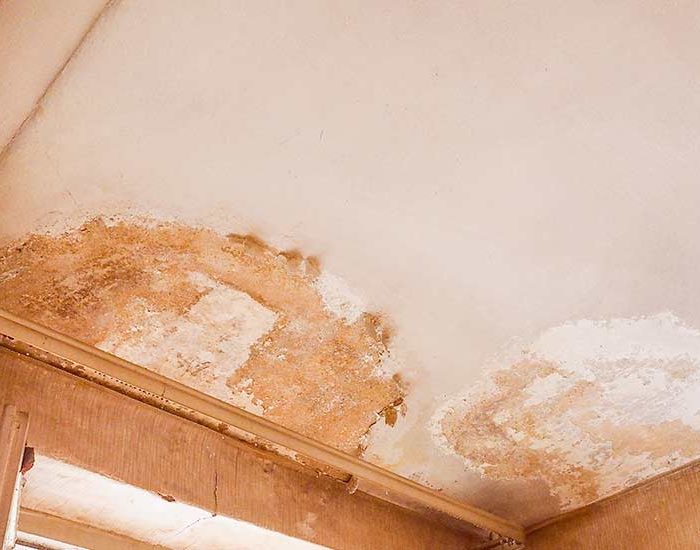
Water dripping or pouring through a ceiling is alarming, but the first few minutes matter more than the panic. Here is exactly what to do, in order, to stay safe and limit the damage.
Water coming through a ceiling is one of those problems that feels like an emergency the second you see it, and often it genuinely is. A brown ring that was not there this morning, a steady drip onto the landing carpet, or a patch of plaster starting to sag and glisten. Your first instinct is usually to grab a bucket and start mopping, but there are a couple of things that matter far more than the water on the floor, and the biggest one is electrical safety.
This guide walks you through what to do right now, in the order that keeps you safe and limits the damage. It is written for London homes and flats specifically, because so much of what goes wrong here involves the flat above, a shared roof, or pipework you cannot see. Work through it calmly. Most ceiling leaks are containable if you act in the right order, and you do not need to fix the plumbing yourself to stop the situation getting worse.
Find where the water is coming from
Now you can turn detective. The point where water appears on your ceiling is almost never directly below the source. Water runs along joists, pipes, and the top side of plasterboard before it finds a low point, a light fitting or a seam to drip through, so the wet patch can be a metre or more from the actual leak.
Think about what is directly above the affected area, and work through the likely causes in order of how common they are.
| Likely source | What is usually above | Typical signs |
|---|---|---|
| Bathroom or en-suite | Bath, shower, basin, toilet, or the pipes feeding them | Leak appears or worsens right after someone bathes, showers or flushes |
| Flat or maisonette above | A neighbour's kitchen, bathroom, washing machine or heating | Steady drip you cannot trace to your own use; the space above is not yours |
| Kitchen above | Sink waste, dishwasher, washing machine, boiler or its condensate | Damp linked to washing cycles or a running appliance |
| Central heating pipework | Pipes running under a floor to radiators | Ongoing damp with no link to water use; pressure dropping on a combi boiler |
| Roof, flat roof, or valley gutter | The outside, on a top-floor flat or a house | Leak appears or worsens during or just after heavy rain |
| A cold water tank or overflow | Loft or a cupboard tank | Continuous overflow, often with a trickle heard in the loft |
A quick test: if the leak got dramatically worse the moment someone upstairs used the shower or flushed the loo, you are almost certainly looking at bathroom pipework or a seal. If it only appears when it rains, look at the roof. If it drips steadily regardless of what anyone does, a supply or heating pipe under constant pressure is a strong candidate, and that is the kind of leak that needs isolating quickly because it will not stop on its own.
When the source is the flat above
In London, so many ceiling leaks come from a neighbouring flat that it is worth its own section. If nothing in your own home explains the water and the space above you belongs to someone else, your first move is to make contact. Knock on the door, ring, or message them. Often the person above has no idea anything is wrong, an overflowing bath, a failed washing machine hose or a slow leak under their kitchen sink can run for a while before they notice it on their own floor. Our longer guide to water coming through the ceiling in a London flat covers who is responsible in a block and how the source is traced.
Ask them to stop using water in the relevant room and, if they can, to turn off their stopcock. If you cannot reach them and water is actively pouring in, that becomes urgent. In a purpose-built block, the building manager, managing agent or a caretaker may be able to gain access or shut off a communal supply. Keep a note of times, who you spoke to and what was said. The question of who ultimately pays for a leak from the flat above can be genuinely involved, and depends on where the leak originated and what your leases and insurers say. We have written a separate guide on who pays when a leak comes from the flat above, and it is worth reading once the immediate emergency is under control. The dripping and staining you are seeing on the ceiling is also covered in more detail in our guide to what to do about a damp patch on your ceiling.
Isolate the water supply
Stopping the flow is the single most effective thing you can do, and you do not need to be a plumber to do it. The aim is to cut water to the source so nothing more can leak while you wait for help.
- Turn off the nearest isolation valve if there is one. Many modern taps, toilets and appliances have a small isolation valve on the pipe feeding them, a slotted screw you turn a quarter-turn with a flat screwdriver so the slot sits across the pipe. If your own bathroom or kitchen is the source, this can stop the leak on its own.
- Find and turn off your internal stopcock. This is the main shut-off for your home's cold supply. It is most often under the kitchen sink, but can be in a downstairs toilet, a utility area, an airing cupboard or near the front door in a flat. Turn it clockwise to close. If it is stiff, do not force it so hard that it snaps, ease it gently.
- If the leak is fed by a tank, drain the pressure off. In older systems with a loft tank, turning off the stopcock and then opening the cold taps and flushing the toilets can empty the tank and cut the supply to a leak more quickly.
- If the source is a neighbour's flat, the valve that matters is theirs, not yours. Turning off your own stopcock will not stop water arriving from above, which is why reaching the flat above or the building manager matters so much in that scenario.
If you have never located your stopcock, it is worth finding it now, before the next emergency, and making sure it actually turns. A stopcock seized solid is a common and frustrating discovery at exactly the wrong moment. When you call us about an active leak, one of the first things we will do is talk you through finding and closing the right valve while an engineer is on the way, so water stops before the van even arrives.
Is it an emergency, or urgent but not an emergency?
Not every ceiling leak needs someone out at two in the morning, and knowing the difference saves you money and stress. Use this rough guide.
| Treat as an emergency (act now) | Urgent, but can wait for a booked slot |
|---|---|
| Water pouring or running steadily, not just dripping | Occasional slow drip you have contained in a bucket |
| Water coming through or near a light fitting, or any electrical involvement | An old, dry stain that has reappeared faintly |
| A ceiling bulging or sagging with trapped water | A small damp patch that is not growing |
| You cannot isolate the supply and the flow will not stop | You have isolated the supply and the leak has stopped |
| A vulnerable person, or a flat below yours, is at risk | Cosmetic staining with the source already identified and stopped |
If you have managed to isolate the supply and the dripping has stopped, you have effectively downgraded the situation from an emergency to something that can be dealt with in daylight, which is usually cheaper and calmer. If you cannot stop the flow, or electrics are involved, or the ceiling is threatening to come down, that is when it is worth calling an emergency plumber in London straight away.
How an engineer traces an invisible source
Sometimes the water is obvious and the fix is simple. Other times you have stopped the flow but nobody can see where it was coming from, the ceiling is wet but the floor above looks bone dry, and there is no dramatic burst pipe to point at. This is where proper leak detection earns its keep, because the alternative, pulling up floors and cutting open ceilings at random, is expensive and destructive.
Our engineers are also emergency leak detection specialists, so tracing a hidden source is a large part of what we do rather than a guessing game. A typical investigation is non-invasive and works from the outside in.
- Thermal imaging reads temperature differences across a ceiling, wall or floor. A leak from a heating or hot pipe shows as a warm trail, and evaporating cold water shows as a cool patch, so the camera reveals the shape of the wet area behind intact plaster.
- Moisture meters map exactly how far the damp reaches and where it is most concentrated, which points back towards the origin rather than the spot where it happened to drip.
- Acoustic listening equipment picks up the sound of water escaping from a pressurised pipe, which lets an engineer pinpoint a buried supply leak to within a small area.
- Tracer gas or dye can be introduced into a suspect pipe or drain so its escape point can be found precisely, useful when a leak is intermittent or very small.
The goal of all of this is to find the one spot that needs opening up, rather than several that do not. You can read more about how this works on our dedicated leak detection in London page. Once the source is confirmed, the repair itself is usually far smaller than people fear, a single joint, a failed seal, a split in one length of pipe.
How we work, honestly
A few things we think are worth being straight about, because an emergency is exactly when people get taken advantage of. We give you an honest arrival window rather than a vague promise that someone is around the corner when they are not. The price is agreed before we travel, so there is no uncomfortable negotiation on your doorstep with water still coming through the ceiling. And while you wait, we will talk you through isolating your water on the phone, because the sooner the flow stops the less damage you are dealing with, whether or not we end up doing the repair.
Water through the ceiling is stressful, but the order of operations is what protects you: stay clear of anything electrical and kill the power, contain the water and stay out from under a bulging ceiling, work out what is above you, isolate the supply, and then get the source properly traced rather than guessed at. Do those things in that order and you have already handled the parts that matter most.
How we help with this
If the article describes a problem you actually have, these are the visits that deal with it.
- leak detection in London
Finding a hidden leak without opening the property up first.
- damp and moisture surveys
Moisture mapping that separates a leak from condensation or damp.
- an emergency plumber in London
Attendance when water is running and damage is still spreading.
Not sure which one applies? Describe the symptom on the phone and you will be told which survey it is, the hourly rate and roughly how long it takes, before anything is booked. 020 7123 8560
Frequently asked questions
Is it safe to turn the lights on if water is coming through the ceiling?
No. Water tracks along cables and can make switches and fittings live, so leave the light switch alone and do not touch any wet fitting. If you can safely reach a dry consumer unit, switch off the lighting circuit for that area, or the main switch if you are unsure which is which. Treat any water near a light fitting as an electrical hazard and keep clear until the power is off.
Should I burst a bulging ceiling to let the water out?
A ceiling holding a pocket of water can collapse, so never stand underneath it. Some people deliberately make a small hole with a long implement to drain the water in a controlled way into a bucket, standing to the side with the power to that area off. Only do this if you feel confident. If not, keep everyone out of the room, close the door and wait for an engineer.
The leak is coming from the flat above. What should I do first?
Contact your neighbour straight away and ask them to stop using water and turn off their stopcock, as many people have no idea a leak has started. If you cannot reach them and water is pouring in, contact the building manager or managing agent, who may be able to gain access or shut off a communal supply. Note times and conversations, and keep photos, as they help later when working out who pays.
Where is my stopcock and which way do I turn it?
The internal stopcock is the main shut-off for your cold supply and is most often under the kitchen sink, though it can be in a downstairs toilet, utility area, airing cupboard or near the front door in a flat. Turn it clockwise to close. If it is stiff, ease it gently rather than forcing it. Turning off your own stopcock will not stop water arriving from a neighbour's flat above you.
How much does emergency ceiling-leak help cost?
As a rough guide, typical UK trade cost-guide ranges for an emergency call-out and first hour tend to fall somewhere around £80 to £180, with leak detection often quoted separately depending on the equipment and time needed. Actual costs vary with the job, the time of day and access. We agree the price with you before we travel, so you are not negotiating on your doorstep with water still coming in.
Do I need leak detection, or can you just find it by looking?
Sometimes the source is obvious, but often the water spreads along joists and pipes and appears well away from where it started. Rather than opening ceilings and floors at random, our engineers, who are also leak-detection specialists, use thermal imaging, moisture meters, acoustic listening and tracer methods to pinpoint the source. That usually means one small area needs opening rather than several, which keeps the repair smaller and cheaper.