Case Study: Mould Through a Bathroom Ceiling in West Drayton UB7, and the Two Separate Leaks Behind It
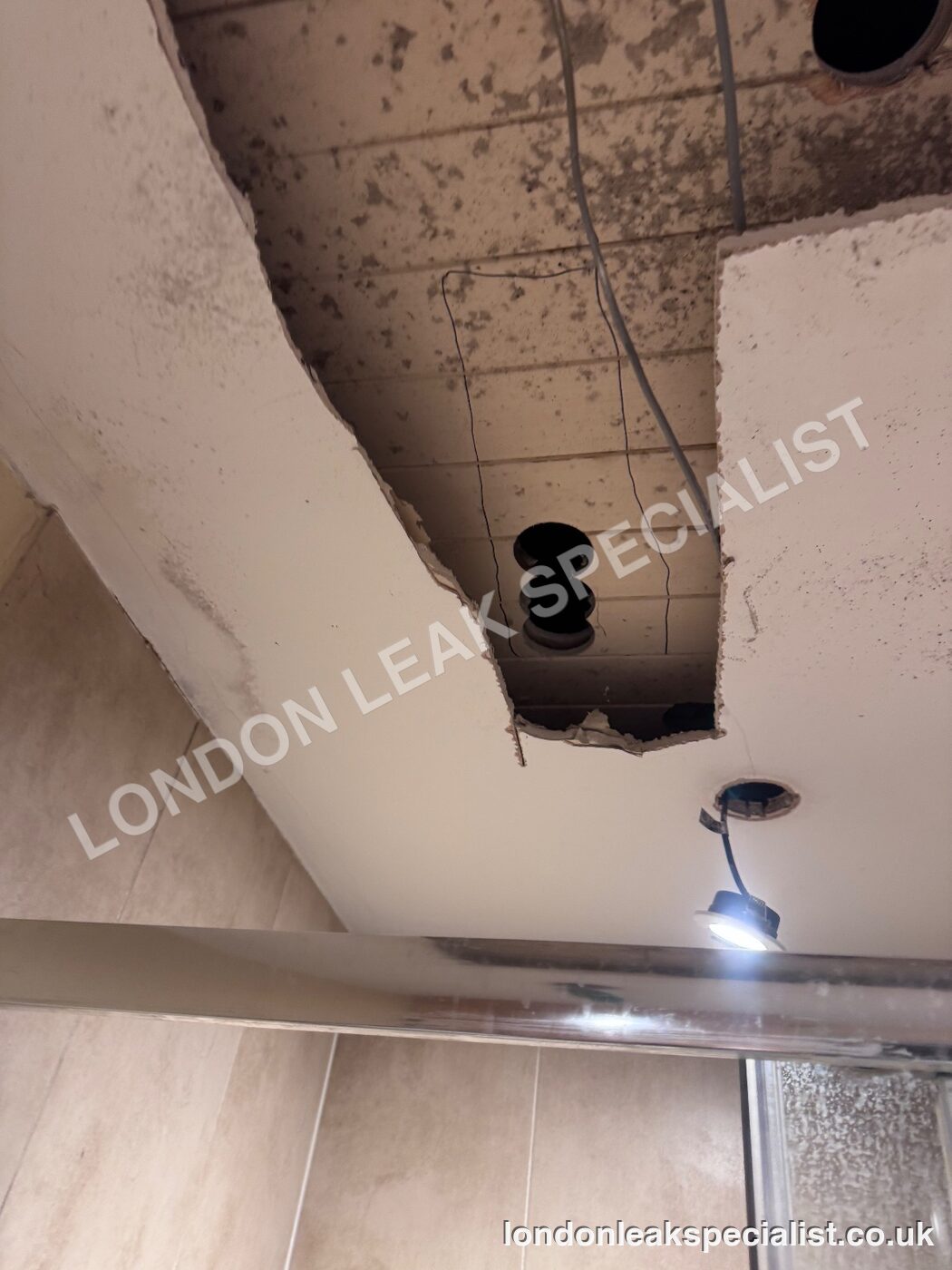
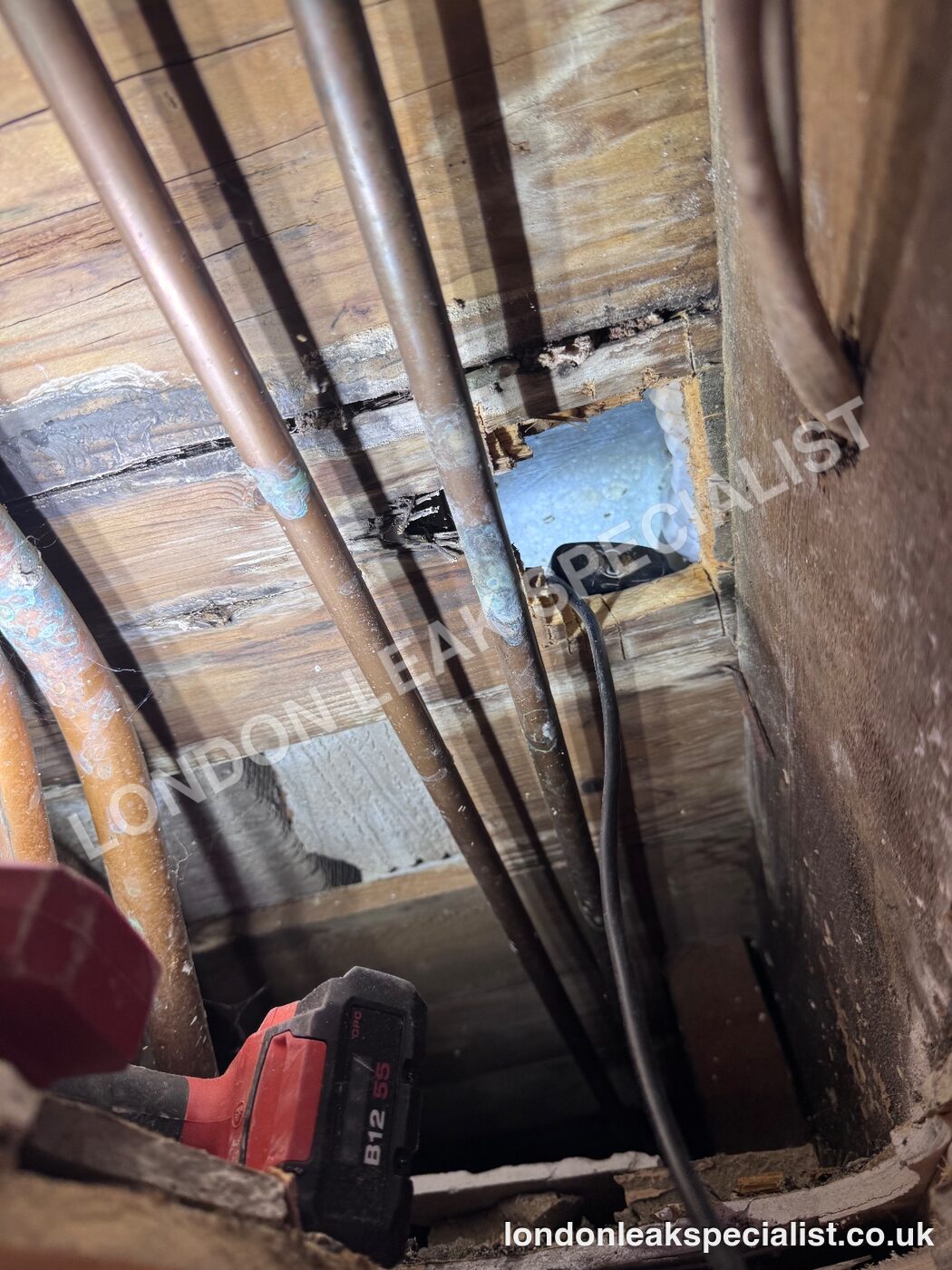
The opening cut in the ceiling below the upstairs shower, from a house in West Drayton, UB7.
Mould pushing through a ceiling, brown-stained bathroom units and a swollen floor in West Drayton, UB7. A shower test, a ceiling opening and a camera showed that two different leaks were feeding the damage, and that fixing one would not have been enough.
When a ceiling is growing mould and the floor in the room above has swollen, most people look for one leak. This job, a house in West Drayton, UB7, in the London Borough of Hillingdon, had two. They came from different fixtures, they behaved differently, and a repair to either one on its own would have left the bathroom wet.
It took two visits. The first confirmed the water was escaping and narrowed down where. The second was a repair visit, where we replaced what had failed and set out what still needed doing. We have removed the client, the address and every contact detail, and combined both reports into one redacted document: download the report as a PDF.
The brief: water damage in the room below
We were called to a rented house after reports of heavy water damage to the bathroom ceiling downstairs, below the upstairs bathroom. There was damp, staining and mould in the ceiling, some of it growing hard enough to push out through the surface. The carpet leading up towards the first-floor bathroom was also water damaged.
Upstairs, the bathroom units around the basin and toilet had turned from white to brown, and the floor tiling had begun to swell. That combination points to water that has been present for a long time, and not a one-off spill. Our job was to find the source or sources, prove it with a test and not guess.
What we ruled out, and how
We worked through the upstairs bathroom fixture by fixture, because each can leak in its own way and each needs its own test.
The shower seals
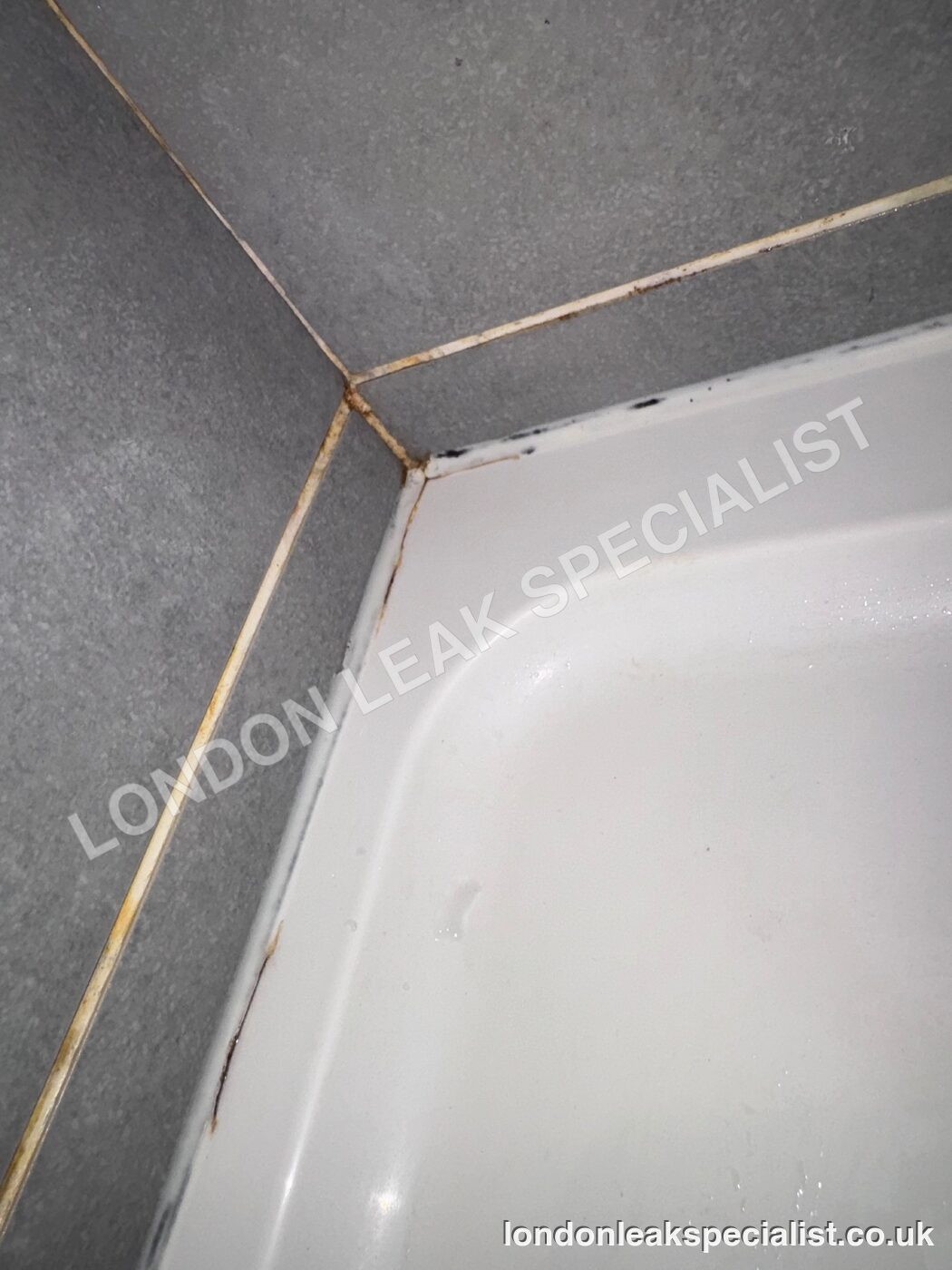
On the first visit, the visible grout and mastic around the shower looked reasonably satisfactory, with no obvious failure. That matters: it is a good reminder that a seal can look fine and still let water through. By the second visit the report records the silicone and grout as showing clear signs of deterioration. Appearance alone is not a test, so we ran one.
The basin and the bath
The basin and its visible pipework showed no leakage. The bath was tiled in, so we could not see under it, but the mastic around it looked sound. We recorded the bath as not found to be a source, with the limit of what we could see written into the report.
A controlled shower test
We ran the shower for roughly 15 to 20 minutes to copy normal use while watching the ceiling below. Water began to drip through. That is direct proof that water is leaving the upstairs shower area and entering the ceiling void, and it turns a suspicion into a finding.
Opening the ceiling, and looking with a camera
Because the leak was now confirmed, we opened an access hole in the downstairs ceiling, then a larger one, to see the underside of the shower area. A camera on a flexible cable, an endoscope, let us look into the void without taking the whole ceiling down. This is how we keep the damage to the smallest area that still answers the question.
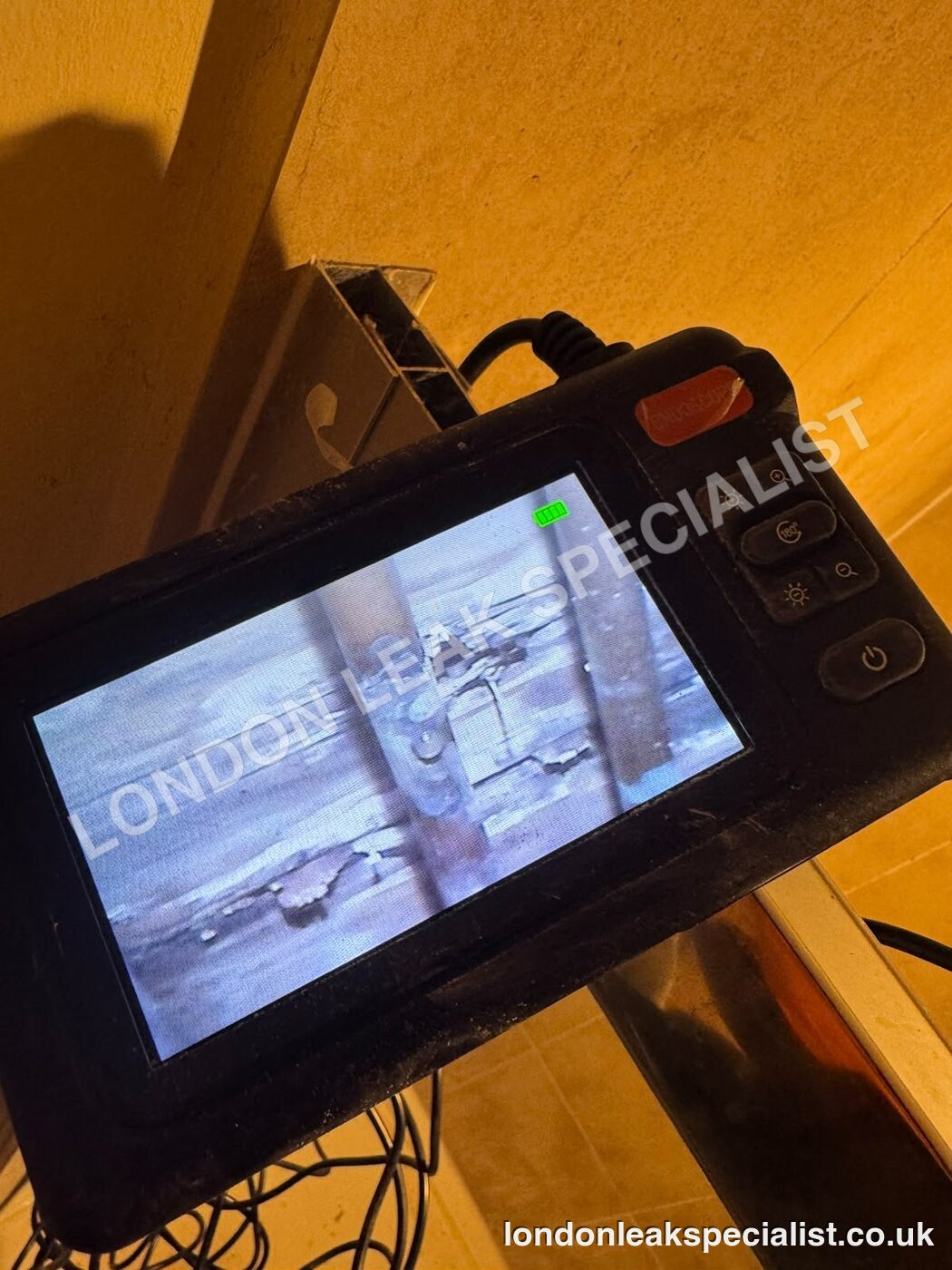
What we found
There were two separate leaks.
- Water through the shower. On the first visit, the evidence pointed towards the shower waste and the concealed pipework beneath the shower tray, and we could not expose the exact point of failure that night. On the second visit, with the shower tested and the area opened, the report attributes the shower ingress to failed or inadequate silicone and grout around the tray, letting water pass through the floor structure into the ceiling below. The later report does not record a waste pipe fault, so we have described the sealing as the confirmed cause and not claimed more.
- A leaking toilet connection. With the toilet panel removed there was a wet drip around the pan fixing and flush cone. Flushing the toilet several times reproduced it: water escaped from the flush cone connection each time.
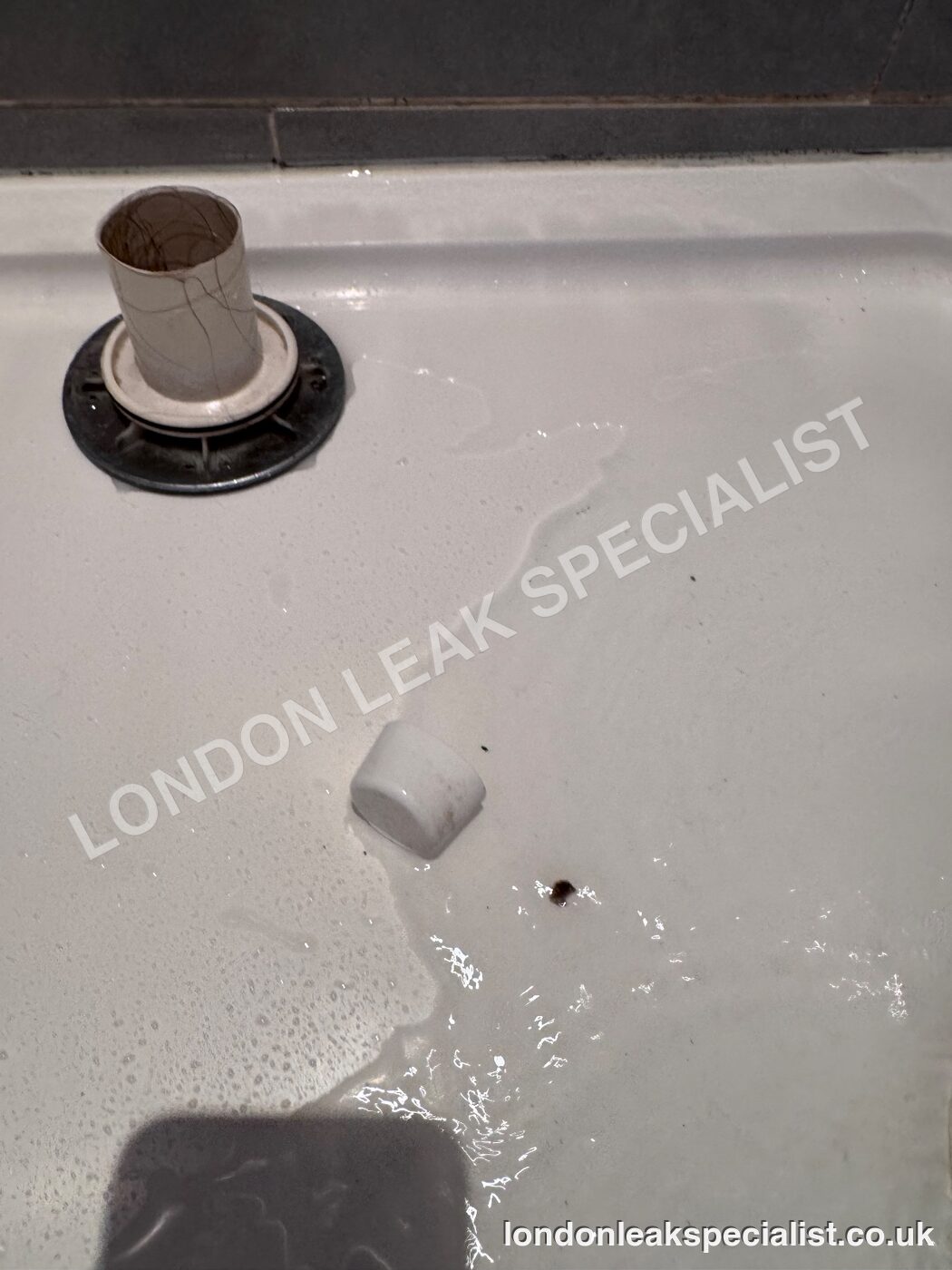
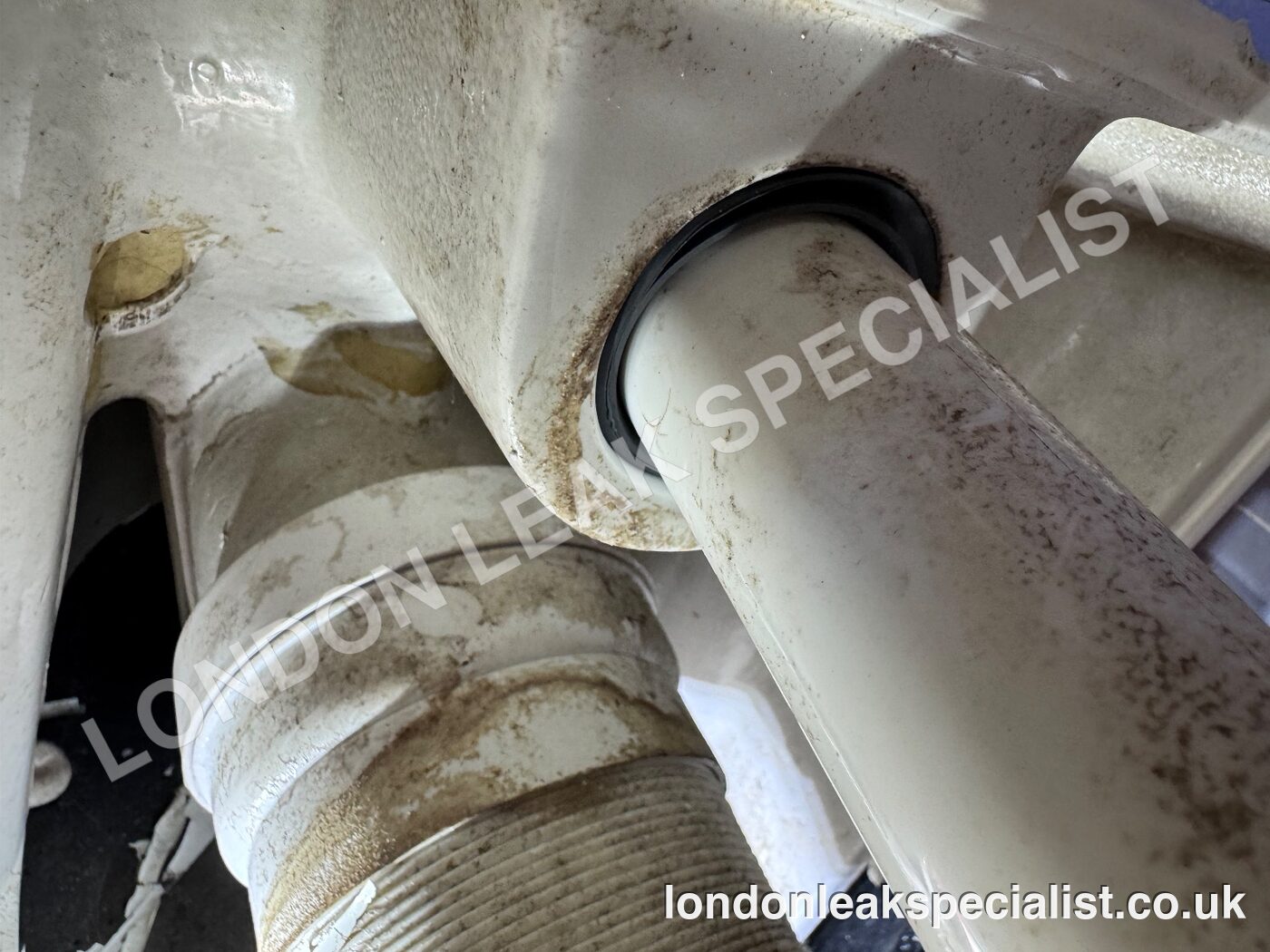
We also noted two further faults that were not leaks into the ceiling: a seized bath tap that the occupant had been turning with an adjustable spanner, and a downstairs clicker waste jammed shut. Both are recorded in the report so they do not get lost.
What we did on the day
On the first visit we confirmed the leak, opened the ceiling, wrote up the findings and recommended a daytime return, because the work that was left meant cutting more of the structure and it was late at night. Making that much noise in someone's home was not reasonable.
On the second visit we repaired what was in reach. We replaced the leaking flush cone and flushed the toilet repeatedly to test it: no further leak. We removed and renewed the silicone sealant round the shower, and told the occupant the shower must stay out of use for at least 24 hours while it cures.
What permanent repair is needed
The report is clear that the job was not finished at the end of the visit, and so are we. Fresh silicone over deteriorated grout is a good first fix and not the end of it. What remains:
- A qualified tiler to renew the grout joints around the shower.
- A normal-use shower test once the silicone has cured and the grout is done, to confirm no water escapes.
- Checking the ceiling void for residual moisture before it is closed up, because trapped water keeps causing damage.
- Reinstating the opened ceiling, then dealing with the mould, stained units, swollen floor and carpet once everything has dried.
- Replacing the seized bath tap and the jammed clicker waste.
We can quote the permanent repair and the make-good as one job, so the customer gets the bathroom back to like-new and not only a diagnosis. Our hourly rate and call-out terms are on the pricing page.
Why finding both leaks saved time and damage
The obvious route is to fix the first thing you find. Had we replaced the flush cone alone, the shower would have kept feeding the ceiling. Had we resealed the shower alone, the toilet connection would have kept dripping on every flush. Either way the mould would have come back and the renter, the landlord or the agent would have been told the leak was fixed when it was not. We are not putting a figure on the saving, because it would be invented. The saving is a second visit and a second round of damage avoided, plus a record that shows exactly which leak was which.
Leaks and damp in West Drayton, UB7
West Drayton, UB7, sits in the London Borough of Hillingdon, close to Heathrow. Much of the housing is post-war semis and terraces, with newer flats around the station. In any two-storey home, a leak in an upstairs bathroom goes straight into the rooms below. The job record does not say whether Hillingdon Council was involved, so we make no claim about that. If you rent and repairs are not being done, the council's environmental health or private housing team is the route for complaints. We cover leak detection across Hillingdon, including West Drayton.
The report, and what an insurer, agent or landlord looks for
In a rented house the question is usually who has to fix it. For most short tenancies in England and Wales, section 11 of the Landlord and Tenant Act 1985 makes the landlord responsible for keeping the water and sanitation installations, including baths, basins and sanitary conveniences, in repair and working order. A report that shows what leaked, how it was proved and what is outstanding gives a landlord, agent or insurer something concrete to act on. GOV.UK guidance on damp and mould also says the cause has to be found and fixed and not just the mould cleaned off.
On insurance, be careful. Trace and access cover is in many buildings policies, not all. Some exclude gradual wear or failed sealant, and a leak that has run for a long time may be treated differently from a sudden one. We cannot promise cover. Our report gives the insurer the evidence. See insurance leak claims and trace and access cover explained.
What you can check yourself
- Run the shower on its own, then the toilet on its own. Check the ceiling below after each. If only one produces drips you have separated the sources, and that is the quickest way to find out whether there is more than one.
- Look at the sealant with a torch. Check for gaps, black spots and sealant that has pulled away from the tray. Sealant that looks fine from a distance can still be letting water through, so press it gently and look for movement.
- Flush and watch the pan connection. Put dry tissue under the joint where the pan meets the outlet. Wet tissue after a flush points to the connection and not the cistern. See leaking toilet causes and costs.
- Note when the stain grows. Bigger after showers suggests the shower. Bigger after flushing suggests the toilet. Our guide on a shower leaking through the ceiling goes through the signs.
- Stop using the fixture and report it in writing. A leak left running turns a small repair into a structural one, and a dated message to the landlord or agent supports any later claim. See what a tenant should do about a water leak.
A similar toilet fault with damp on a wall is in our flush cone case study, and a leak into a flat below is covered in who pays for a leak from the flat above.
Mould on a ceiling or a damp floor in West Drayton, UB7, or anywhere in London? We test each fixture in turn, open up only what we have to, repair what we can on the day and write the report so that landlords, agents and insurers can use it. We can also quote the permanent repair and make-good.
How we help with this
If the article describes a problem you actually have, these are the visits that deal with it.
- damp and moisture surveys
Moisture mapping that separates a leak from condensation or damp.
- water coming through a ceiling
What to do first when it is coming through from above.
Not sure which one applies? Describe the symptom on the phone and you will be told which survey it is, the hourly rate and roughly how long it takes, before anything is booked. 020 7123 8560
Frequently asked questions
Can two different leaks cause damp in the same ceiling?
Yes. A shower that lets water through its seals and a toilet connection that drips on each flush can both feed one ceiling. Testing each fixture separately, shower first and then toilet, shows whether there is more than one source. Fixing only one leaves the ceiling wet.
Why is the ceiling below my bathroom growing mould?
Mould grows where materials stay damp for a long time. Water escaping from a shower, toilet connection or pipe above can soak the ceiling void for weeks or months. Cleaning the mould will not hold until the leak is found and repaired and the area has dried.
Is fresh silicone around a shower tray a permanent repair?
No. Renewed silicone is a good first repair but if the grout around it has failed, water can still get through. The proper fix is to renew the grout, reseal, leave the silicone to cure for at least 24 hours, then water test the shower under normal use.
Who pays for a bathroom leak in a rented house?
For most short tenancies in England and Wales the landlord must keep the water and sanitation installations in repair and working order under the Landlord and Tenant Act 1985. Who pays for damage to belongings or finishes depends on the tenancy and insurance, so report the leak in writing straight away.
Do you do leak detection in West Drayton and across Hillingdon?
Yes. We attend houses and flats in West Drayton, UB7 and across the London Borough of Hillingdon. We find the source or show where it is not, repair simple faults on the day where safe, and can quote the permanent repair and make-good.