Case Study: Black Damp Behind a Bedroom Bed in Chelsea SW3, and the Shower Leak That Was Not the Cause
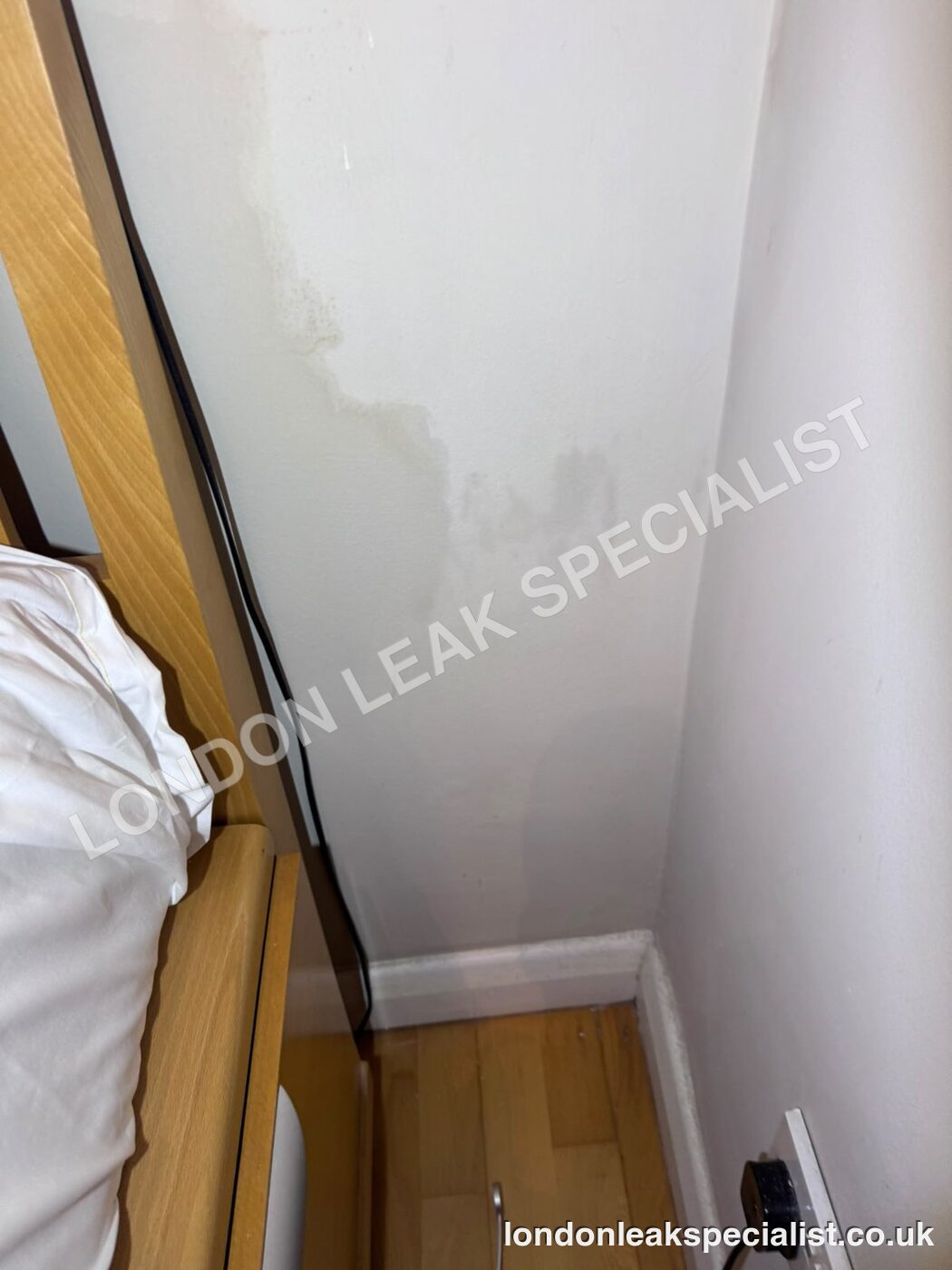
The stained wall beside the bed, from a flat in Chelsea, SW3.
Black staining behind a bed, mould in the shower next door and a leaseholder who assumed the shower was leaking into the bedroom. We tested the pipes, the shower and the waste in Chelsea, SW3 and found that the wall had a different problem.
Damp on a bedroom wall next to a shower room has an obvious suspect, and it is usually the shower. This job, a flat in Chelsea, SW3, in the Royal Borough of Kensington and Chelsea, started that way. The leaseholder had black staining on the wall behind the bed, mould inside the shower enclosure, and a reasonable belief that one was feeding the other.
It turned out to be two separate problems. The shower was letting water through, but we could find nothing in the plumbing that explained the bedroom wall. That is a useful answer, because it stops someone paying to open up the bathroom when the wall needs a different trade. We have removed the client, the address and every contact detail. You can download the redacted report as a PDF.
The brief: a stained wall and a mouldy shower
We were called to look at two things in one flat: a black, damp-looking area on the wall behind the bed, and mould growth, with tired grout and mastic, in the shower enclosure. The job was logged as a shower leak getting into the adjacent bedroom. The question we were asked to answer was whether an internal plumbing leak was contributing to either problem.
What we ruled out, and how
We worked from the least invasive checks to the more specialised ones. Each test answers one question, which is why one result on its own is never enough.
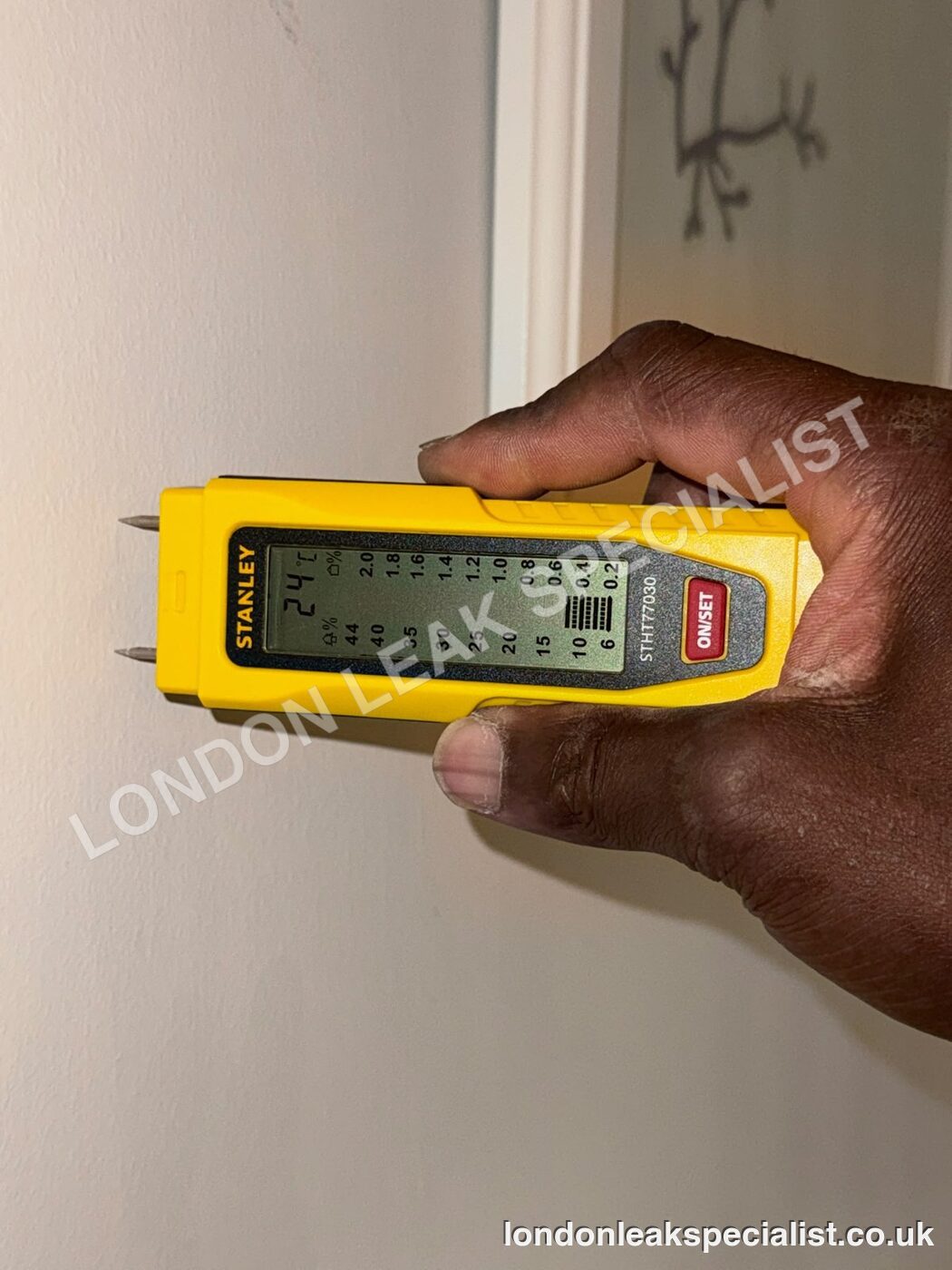
1. Mapping the wall with a moisture meter
We took readings across the stained area and compared them with the wall around it. The readings in and around the stain were very high, so the wall was holding a lot of water. A moisture meter tells you where the wet is and how wet. It does not tell you where the water came from, and it cannot say whether the wet is new or left over from months ago. That is why the next steps mattered.
2. Looking for anything in the wall that could leak
We checked the affected section for pipework and for anything on the other side of it, such as a riser, a cistern or a heating pipe. There was no visible internal plumbing in that section of wall and nothing adjoining it that offered an obvious source. This is a plain but important step. If there is no pipe, a plumbing leak into that wall is unlikely, whatever the stain looks like.
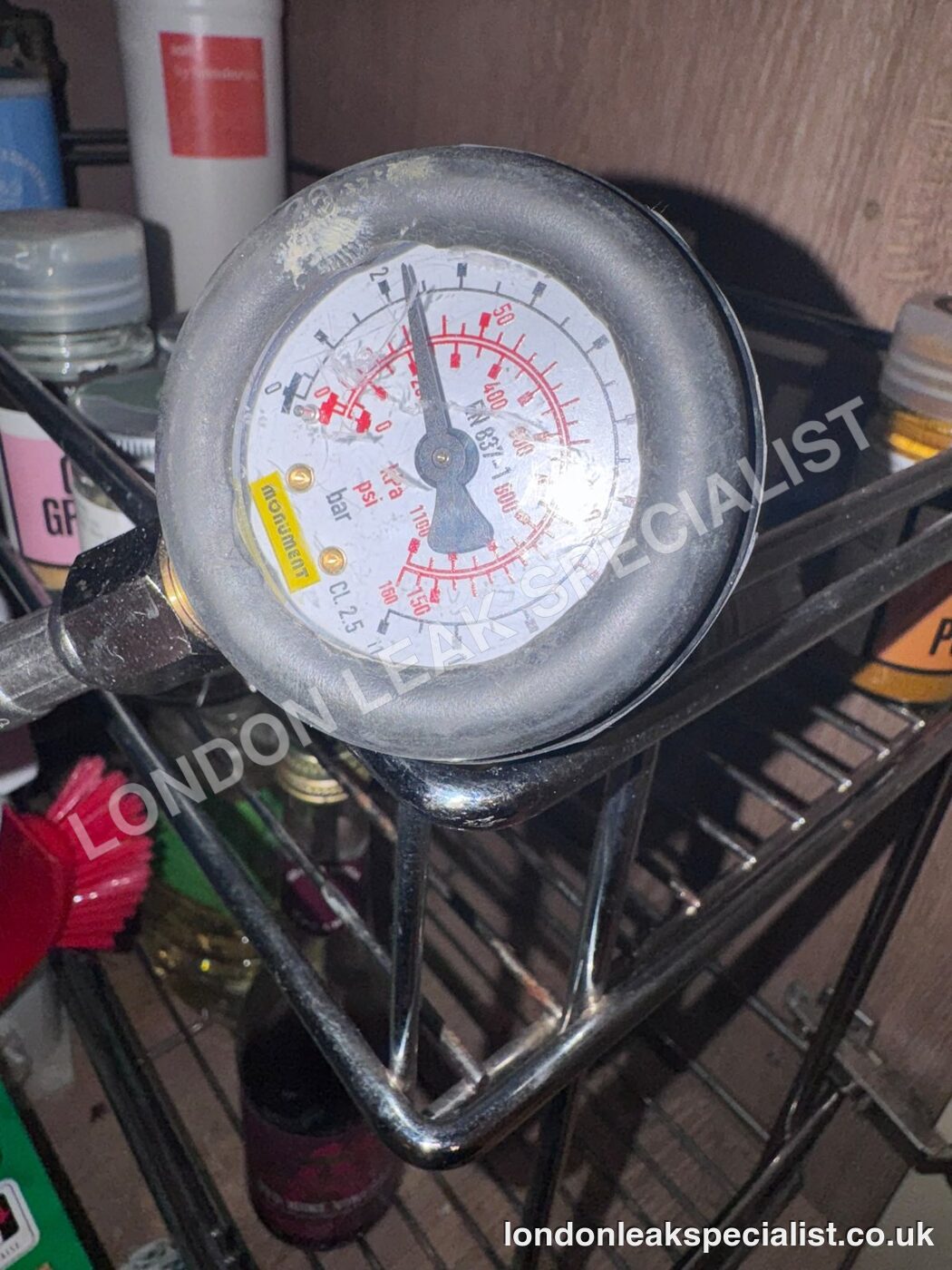
3. Pressure testing the hot and cold systems
We isolated the supply and pressure tested the hot and cold systems separately. Neither dropped. A pressure test works by shutting a pipe system off and watching whether the gauge falls, because a leak lets pressure escape. Two steady gauges are good evidence that the pressurised pipework is not leaking, which is what you need before you blame a pipe for a wall.
4. A water run test on the shower
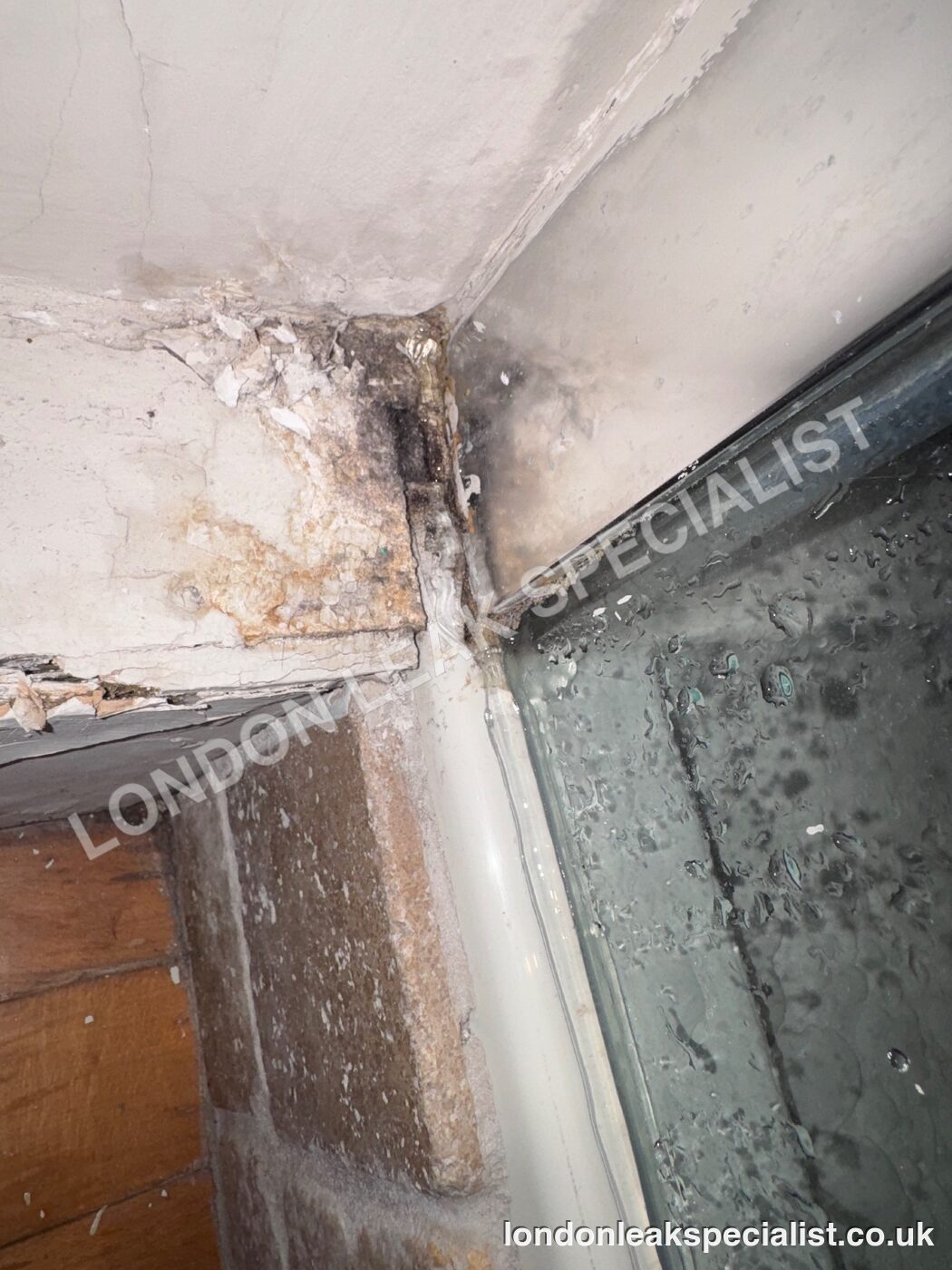
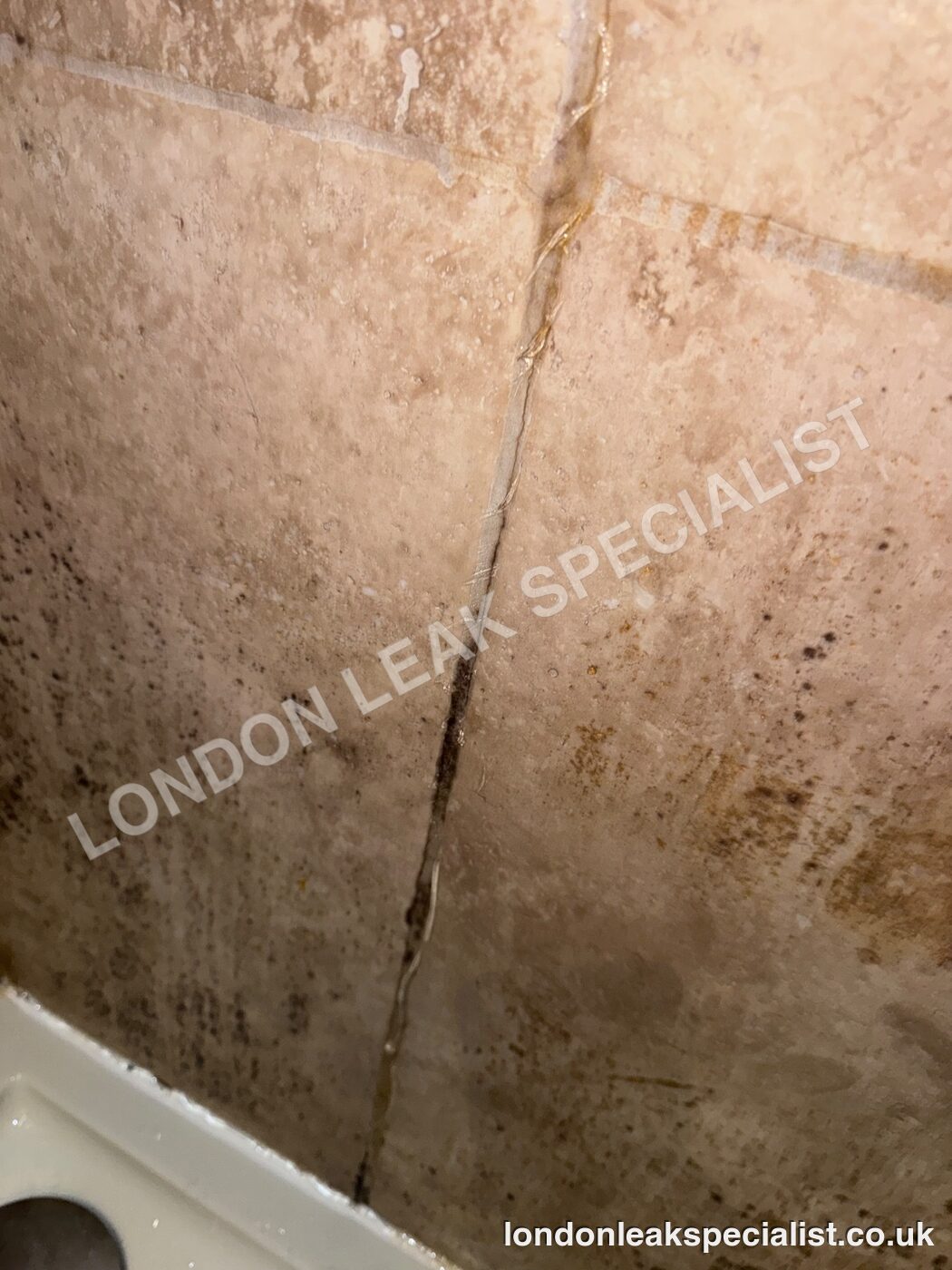
We ran the shower continuously for about ten minutes to copy normal use and watched the enclosure. A small amount of water came through where the grout had deteriorated and left clear gaps. So the shower was leaking, just not in a way that reached the bedroom wall through any route we could show.
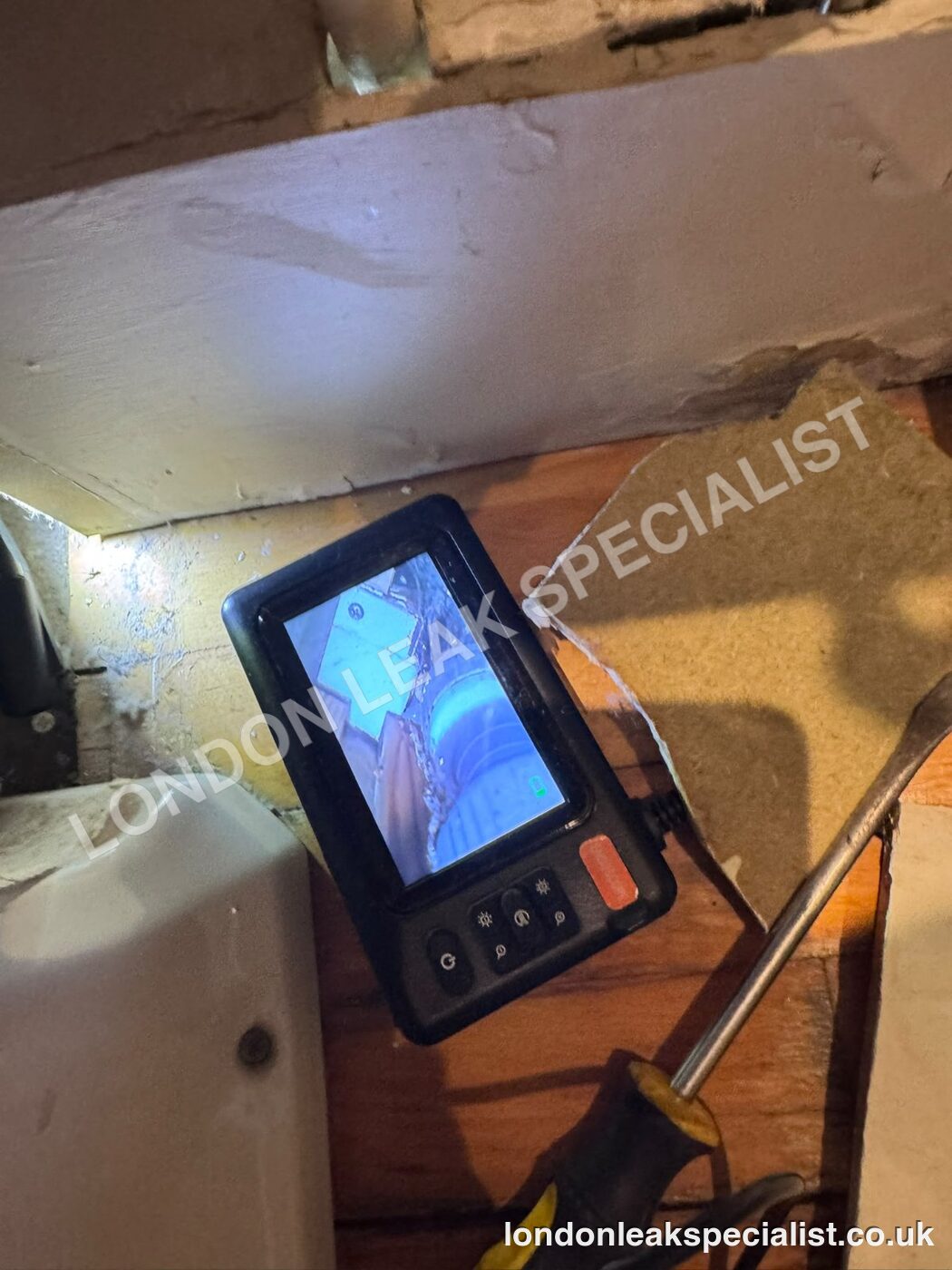
5. An endoscope camera behind and under the enclosure
An endoscope is a small camera on a flexible cable. It lets us look into concealed spaces without lifting floors or cutting walls. We used it behind and beneath the enclosure and it confirmed water could pass through the failed grout and sealing. We also checked the shower waste pipe as far as we reasonably could. There was no dripping or active leak from the waste during the test.
What we found
Two findings, kept apart on purpose.
- The shower enclosure. Water was getting through deteriorated grout with substantial gaps and voids, and failed mastic. That is a real defect and it needs a proper repair. We saw no sign that the waste pipe was leaking.
- The bedroom wall. It was holding a significant amount of moisture, but there was no plumbing source we could identify. Hot and cold pressure tests held, and no pipe sat in that section of wall.
The likely explanation, which we recorded as an assessment and not a confirmed finding, is water arriving from outside the flat. That can mean porous or damaged brickwork, failed pointing, cracks or external joints, a roof or flashing defect, or water tracking down from higher in the building. We could not confirm which from inside the flat, and the report says so. An external inspection by a suitably qualified contractor is the next step. This also matches GOV.UK guidance on damp and mould, which lists leaks, penetrating damp and condensation as separate causes and says the underlying cause has to be found and fixed, not just the visible mould cleaned off.
What we did on the day
We completed the test sequence above, wrote up the results and applied mastic sealant around the visible cracks and defective areas in the shower enclosure as a temporary measure, to cut down further water getting in. The report is explicit that this is not a permanent repair. We did not open up the wall or the bathroom, because the tests gave no reason to.
What permanent repair is needed
For the shower, the proper repair is to remove the failed grout and the old mastic, dry and prepare the surfaces, regrout with a suitable waterproof grout, reseal the joints with a sanitary-grade sealant, then repeat the water test to confirm the enclosure is sound. For the wall, it is the external investigation first and a repair to whatever it finds, then time for the wall to dry, with moisture readings repeated to check the levels are falling. Redecoration comes last, once the wall is dry.
We can quote the repair and the make-good together, so the customer gets the shower fixed and the room back to like-new, and not only a diagnosis and a temporary seal. Our rates are on the pricing page.
Why this saved time, money and damage
The obvious route was to treat the shower as the cause of everything: strip out the enclosure, perhaps open the bedroom wall, and replace the pipework. If the water is coming from the outside of the building, that work would have been done in the wrong place and the black staining would have returned. Because both pressure tests held and no pipe sat in the wall, we could say with confidence that the plumbing was not the explanation, and point the next contractor at the building envelope instead. We are not putting a figure on the saving, because it would be invented. The point is a wrong assumption avoided and a second trade not paid to look in the wrong place.
Damp and leaks in Chelsea, SW3
Chelsea sits in SW3 in the Royal Borough of Kensington and Chelsea. Much of the housing is older terraces, mews houses and mansion flats, often converted, where brickwork, parapets and shared roofs can let rain in as readily as a pipe can leak. That makes it easy to blame the nearest bathroom. The record for this job does not say whether the council was involved, so we make no claim about that. If you rent and the landlord is not dealing with damp, the borough's environmental health team is where to ask about private rented disrepair. We cover leak detection across Kensington and Chelsea, including Chelsea.
The report, and what an insurer, agent or freeholder looks for
This report is worth having in a leasehold flat where cause and responsibility are not obvious. It records why we attended, every test and its result, what was ruled out, what could not be established and what to do next. That helps a managing agent, freeholder or insurer see that an internal plumbing leak was investigated and not found, and that an external source needs checking, which can sit with someone other than the leaseholder.
On insurance, be careful. Trace and access cover, which pays to find a hidden leak and open up to reach it, is in many buildings policies but not all. Some policies exclude gradual wear or failed sealant, and damp that is not from an escape of water may not be covered at all. We cannot promise what an insurer will decide. We can give them clear evidence. See our guides to insurance leak claims and trace and access cover.
What you can check yourself
- Ask what is on the other side of the wall. A bathroom, a cistern or a riser means a plumbing leak is possible. An outside wall, a chimney breast or a party wall points elsewhere. It works because damp needs a source, and the location often narrows it before any test.
- Note when it gets worse. Worse after heavy rain suggests the outside of the building. Worse after showers suggests the bathroom. A stain that does not care about either may be old moisture still drying. Our guide on how to tell damp from a leak goes through the signs.
- Read the water meter with everything off. Note the reading, use no water for an hour and read it again. A moving meter means a supply leak somewhere. A still meter makes one less likely. See why your water meter might be spinning.
- Look outside. From the street or a window, check the brickwork, pointing, gutters and downpipes above the damp area. Water that overflows or leaks from a gutter can run down a wall and soak it from the outside.
- Do not paint over it. Paint hides the evidence and traps moisture. Photograph the area weekly from the same spot so you can see whether it is spreading or drying. If a ceiling is affected as well, read what to do about a damp patch on a ceiling.
For a comparison of our methods, see acoustic, thermal and tracer gas leak detection. A shower job where the leak was found and proved is in our NW5 shower leak case study.
Damp wall, mouldy shower or a leak nobody can find in Chelsea, SW3, or anywhere in London? We test the plumbing in an order that avoids opening up more than necessary, seal what we can on the day, and write the report so that agents, freeholders and insurers can use it. We can also quote the permanent repair and make-good.
How we help with this
If the article describes a problem you actually have, these are the visits that deal with it.
- damp and moisture surveys
Moisture mapping that separates a leak from condensation or damp.
- leak detection in London
Finding a hidden leak without opening the property up first.
Not sure which one applies? Describe the symptom on the phone and you will be told which survey it is, the hourly rate and roughly how long it takes, before anything is booked. 020 7123 8560
Frequently asked questions
Can a shower leak cause black damp on the bedroom wall next to it?
It can, but it is not the only explanation. A shower that lets water through grout can wet a neighbouring wall, but damp also comes from outside through brickwork, pointing, roofs and flashings. Pressure tests, a water run test on the shower and a look at what sits behind the wall help separate the causes before anything is opened up.
How do you tell plumbing damp from damp coming through the wall?
We map the wall with a moisture meter, check whether any pipework or fitting sits behind it, pressure test the hot and cold systems and run the suspect fixture. If the pipes hold pressure and nothing in the wall can leak, the cause is likely the building, such as brickwork, pointing or the roof, and an external inspection is the next step.
Is mastic around a shower a permanent repair?
No. Fresh mastic over cracked or gappy grout is a temporary measure. The proper fix is to remove the failed grout and mastic, let the surfaces dry, regrout with waterproof grout, reseal with a sanitary-grade sealant, then water test the enclosure again.
Will home insurance cover damp on a bedroom wall?
Not always. Cover for escape of water, and for trace and access, is common in buildings policies but not universal. Damp from gradual wear, failed sealant or rain coming through the building may be excluded. We cannot promise cover, but a clear report of what was tested and ruled out gives the insurer evidence to work from.
Do you do leak detection and damp investigation in Chelsea and SW3?
Yes. We attend flats and houses in Chelsea, SW3 and across the Royal Borough of Kensington and Chelsea. We test the plumbing, say plainly whether a leak is the cause, repair simple faults on the day where safe, and can quote the permanent repair and make-good.