Case Study: The Shepherds Bush W12 "Underfloor Heating Leak" That Was a 15 mm Valve Under the Bath
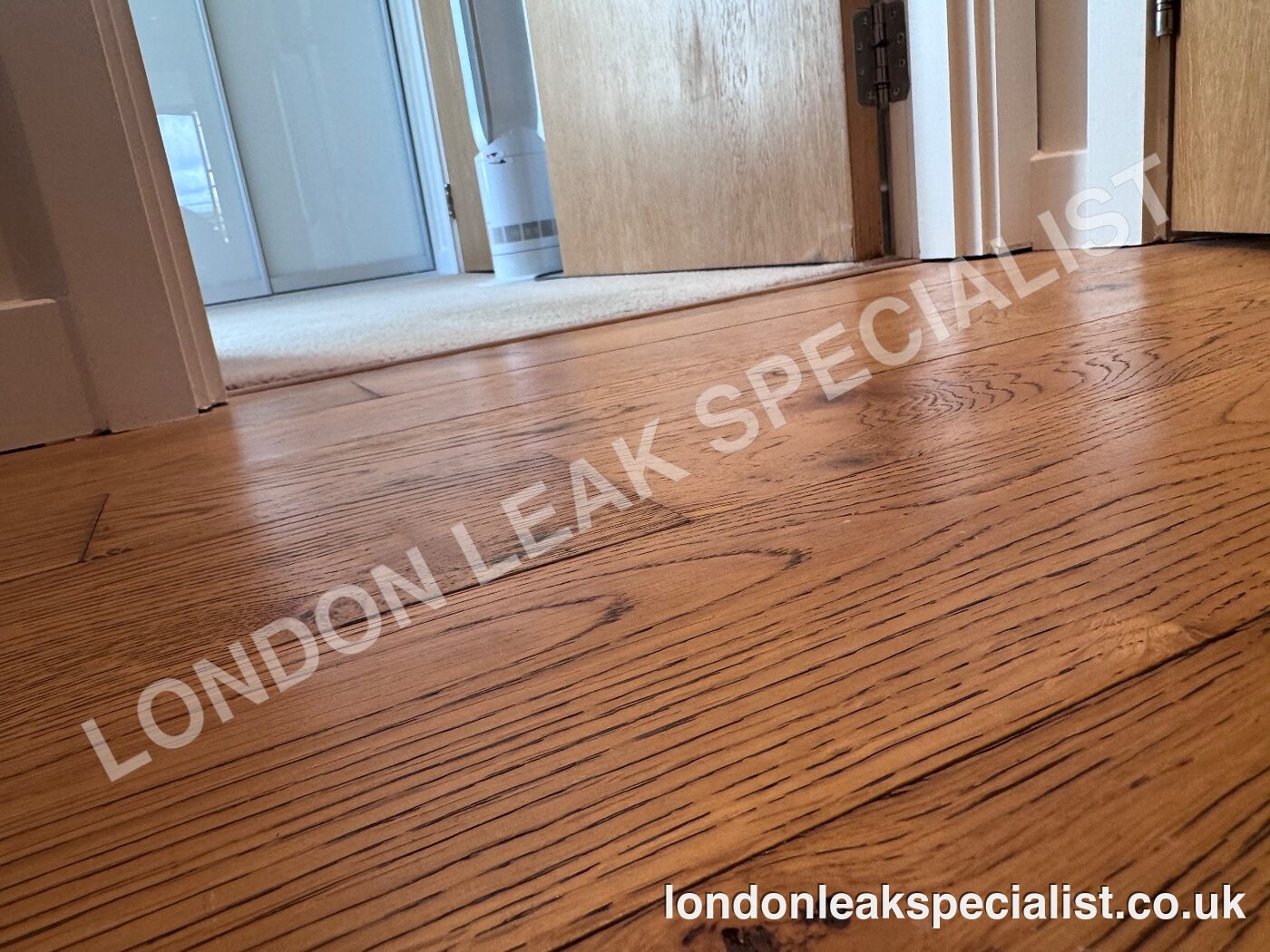
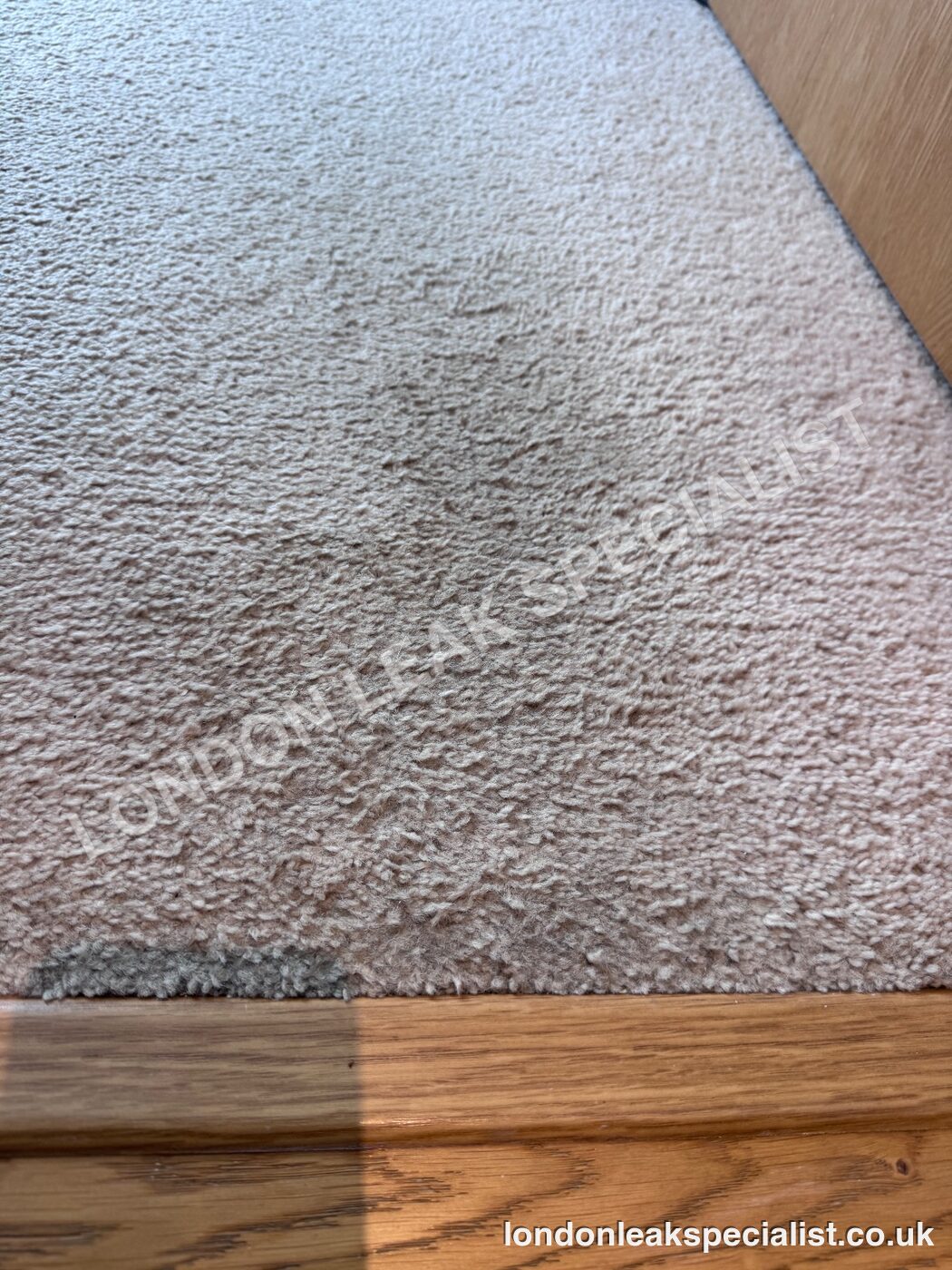
The reported wet patch on the floor between the hallway and bedroom, from a flat in Shepherds Bush, W12.
A tenant in Shepherds Bush, W12 was sure the underfloor heating had failed. Thermal imaging, a pressure test and tracer gas showed a small drain-off valve under the bath was the cause, and it was replaced the same day.
When a floor with underfloor heating goes damp, everyone looks at the floor. In this job, a flat in Shepherds Bush, W12, in the London Borough of Hammersmith and Fulham, the tenant had already decided the heating was to blame. It was not, and the way we showed that is worth setting out, because the wrong assumption would have pointed the next person at the most expensive and most disruptive place to dig.
The client, the address and all contact details have been removed. What remains is the method, the photos and the report, which you can download as a redacted PDF.
The brief: a wet patch between the bedroom and the hallway
We were asked to attend a flat in Shepherds Bush, W12 after a wet patch appeared on the floor where the bedroom meets the hallway. The tenant believed the underfloor heating system was the cause. That is a reasonable guess. Heating pipes sit under the finished floor, and a damp patch on that floor is exactly where you would expect one to show.
It is also a guess that can cost a lot. If the heating is blamed, the conversation turns quickly to isolating a manifold, lifting flooring and possibly pulling up a screed. Our first job was to find out whether the premise was true. If you want the background on how those systems fail, our guide to underfloor heating leak signs and repair covers it, and our page on underfloor heating leak detection in London explains how we test them.
What we ruled out first
We started with the bathroom next to the wet patch, because it was the nearest room with water in it. We checked the bath and its mastic, the junctions with the tiled walls, the grout, the accessible supply pipework and the visible waste connections. Nothing was leaking. The mastic was intact and the grout and tiles showed no defects that could account for water on the floor.
We then took off the bath panel and looked at the pipework and waste connections beneath. There was no water around the bath waste or its connections. We also checked whether water could be passing through the tile and grout joints, and found no sign of it. The waste pipework in the adjoining room ran away from the wet patch, which made it an unlikely source. That left the area around the bath as the main place to look, but not yet a leak.
The method: thermal imaging, then a pressure test
With nothing visible, we moved to methods that do not need anything opened up.
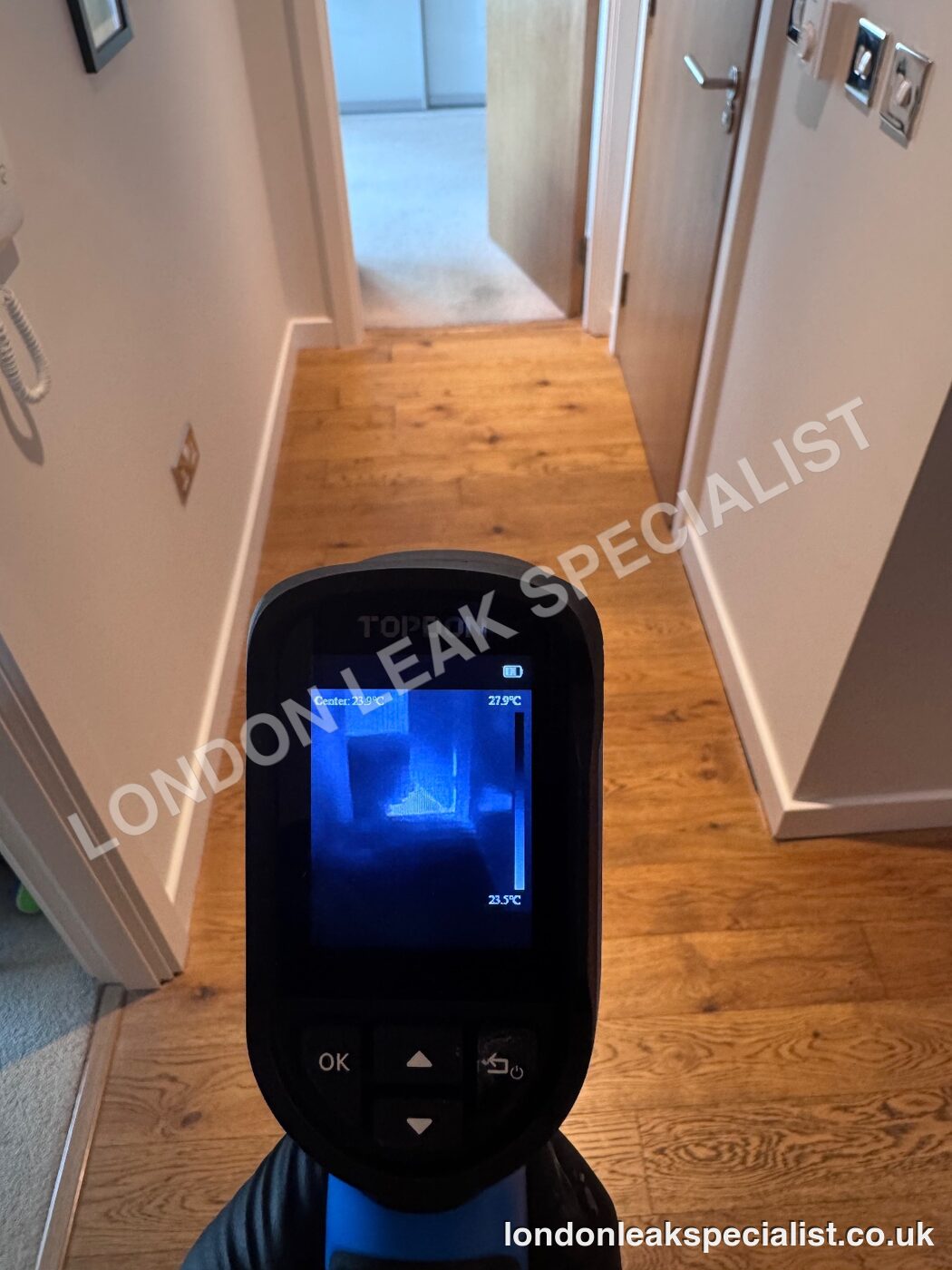
Thermal imaging. We walked a thermal camera through the hallway and bedroom, following temperature differences in the floor and surrounding areas. It does not show water, only surface temperature, so on its own it proves nothing. What it did was narrow the search towards the bathroom and the area beneath the bath, and away from a wide failure across the heated floor. That mattered, because a failed heating loop can show as a pattern along the pipe runs, not as one point beside a bath. Our comparison of acoustic, thermal and tracer gas methods explains what each tool can and cannot tell you.
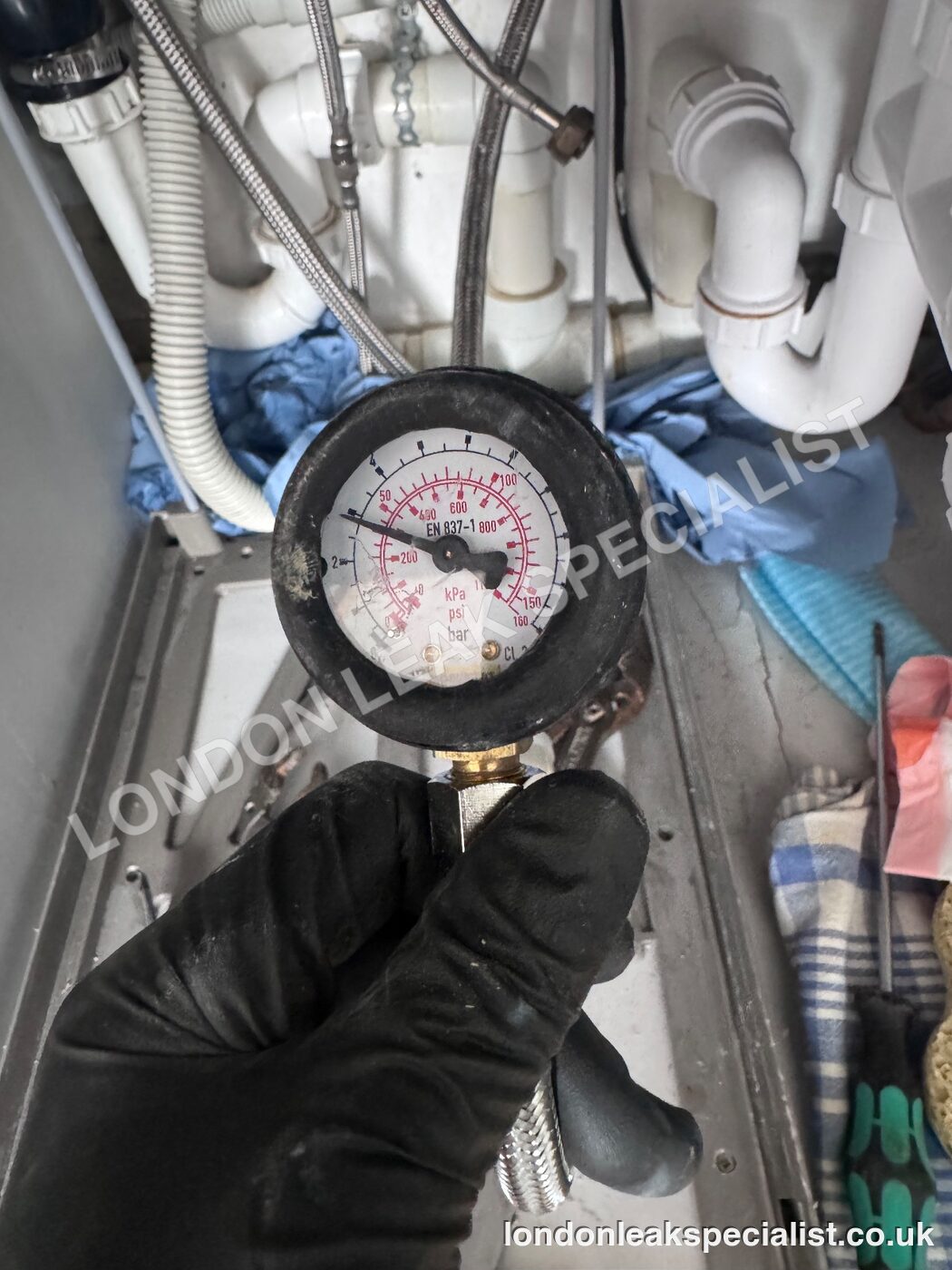
Pressure testing. We tested the hot and cold water services separately. The hot water held pressure for the whole test. The cold water showed a slight drop. That told us there was probably a small leak somewhere on the cold supply, and that the hot side was not the problem. A slight drop is a small number and easy to dismiss, but it was the only measurable evidence we had at that point, so we treated it as the thread to pull.
Looking, then gas
A pressure drop tells you a leak exists. It does not say where. The next step was access and a camera, so we removed a section of plasterboard beneath the bathroom to reach the pipework serving the bath tap.
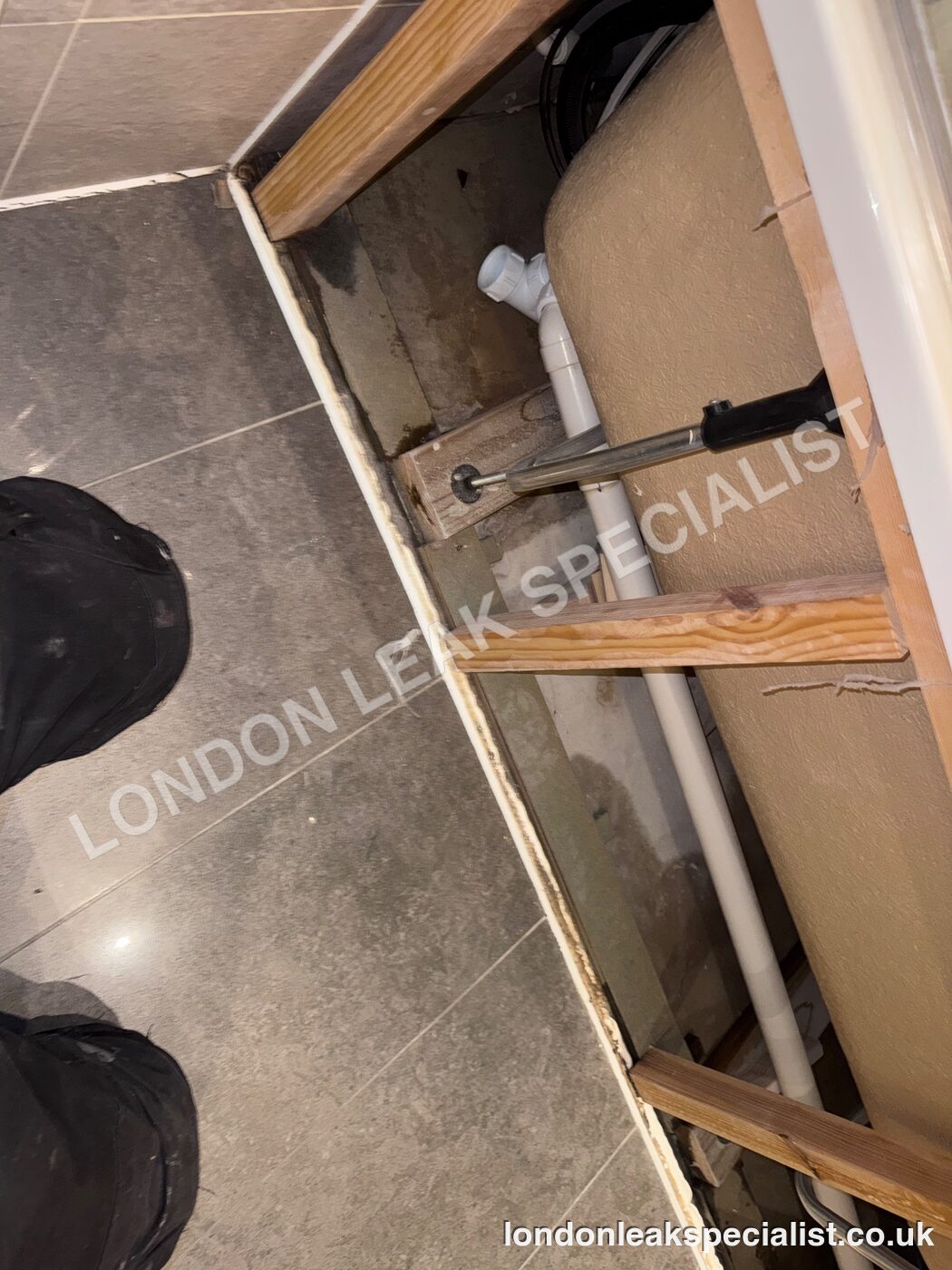
The camera inspection and the visual checks of the exposed tap connections did not find the leak. At that stage we had a confirmed loss on the cold supply and no visible source, which is exactly the situation tracer gas is for.
We introduced tracer gas into the water system. Tracer gas is a mixture based on hydrogen, which is a very small molecule and escapes through a defect far smaller than a visible weep; there is more on how it works in this manufacturer's overview of tracer gas leak detection. A handheld detector then picks up where the gas is escaping. Almost immediately, the detector found the leak beneath the bath, coming from a defective 15 mm drain-off valve.
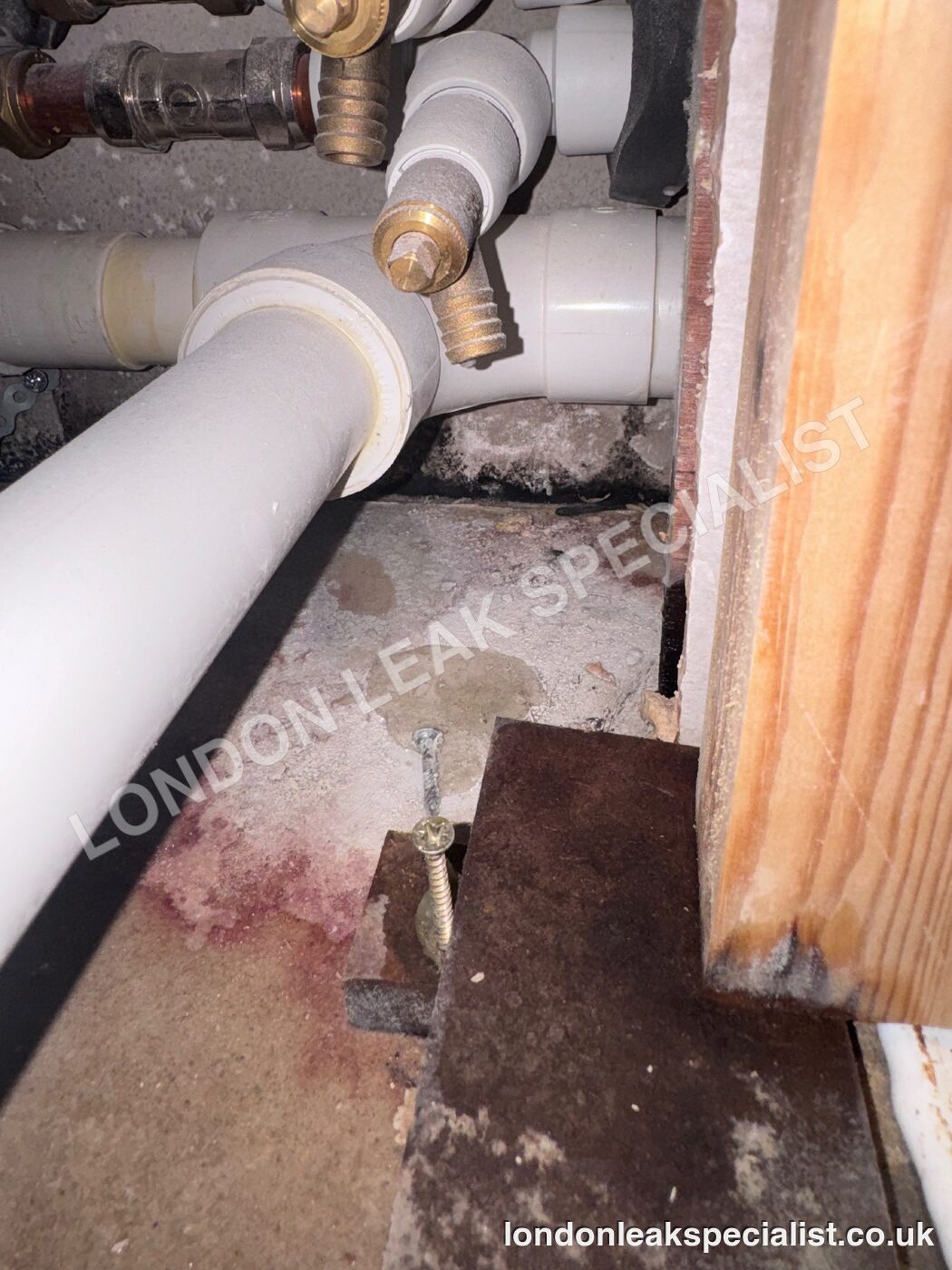
A drain-off valve is a small fitting used to empty a section of pipe. It is easy to forget and it sits in exactly the kind of hidden place where a weeping seal can go unseen for a long time. It was consistent with the loss we had measured on the cold side.
What we did on the day
We drained the water system down to isolate the affected section, removed the defective valve and fitted a new 15 mm valve. We then restored the supply, refilled the system and checked the repaired valve and all accessible connections for leaks. We retested the cold water pressure and monitored the system after reinstatement. It held pressure, there was no further loss and there was no visible leakage from the repaired area. The report records each of those checks, because the retest is the evidence that the cause has been fixed, not just found.
What is still to do: the make-good
Finding and fixing a leak is half of the job. The access opening we made beneath the bathroom needs reinstating, and the area that was wet needs to dry and be checked before it is covered up again. If the floor finish was affected, that needs repair too. We can quote the permanent repair and make-good, so the property is put back to a proper finish, not left as a temporary fix. Our pricing page shows the standard rate, which is £160 an hour for detection, with the repair work at the same hourly rate and materials costed on top and agreed before we start.
Why this saved time and damage
The obvious route was the heating. Blaming underfloor heating would have meant isolating and pressure testing the heating circuit, and if that had been inconclusive, lifting the floor to find a pipe that was not leaking. We did not need to touch the floor. We reasoned from evidence: the visual checks found nothing, thermal imaging pointed away from a wide heating failure, the hot side held pressure and only the cold side dropped. Each test narrowed the search until a single small opening beneath the bath was enough. A pressure test and a gas test cost a short visit. Opening up the wrong place costs a floor.
We are not claiming a figure for what that saved, because we do not know what the alternative would have cost. The point is the direction of the error. A wrong assumption about a heated floor leads to the most disruptive work, and testing before digging avoids it.
Shepherds Bush W12 and Hammersmith and Fulham
This job was in Shepherds Bush, W12, which falls within the London Borough of Hammersmith and Fulham. Flats in this area are often conversions with pipework added over the years and threaded through voids around baths and bathrooms, which is where a small valve can leak unseen. We attend W12 and the rest of the borough regularly. See our pages for leak detection in Shepherds Bush and across Hammersmith and Fulham.
What an insurer, agent or council looks for in the report
Whoever has to pay or decide wants the same things:
- The reason for attendance, in the words of the person who reported it.
- What was inspected and what was ruled out, so they can see the cause was not assumed.
- The tests used, with their results, including the ones that found nothing.
- The confirmed cause and where it is.
- What was repaired on the day and the retest that proves it worked.
- What remains to be done.
Trace and access cover, which pays for finding a hidden leak and the opening-up needed to reach it, is included in most but not all buildings insurance policies. Whether a particular claim is paid depends on the policy wording and we cannot promise cover. What we can do is give your insurer the evidence. Our guide to leak claims and insurance sets out how that works, and trace and access cover explained covers the wording to look for. You can read the full report as a redacted PDF.
What you can check yourself
- Check the other water first. Look at baths, basins and any visible valves before blaming the heating. A damp floor beside a bathroom has more likely suspects than a pipe buried in the floor.
- Look at the pressure gauge on the boiler. If the heating pressure stays steady and you never top it up, the heating circuit is probably not losing water. If the gauge is falling, the heating system deserves a closer look. Our guide to boilers losing pressure explains what a falling gauge means.
- Do the meter test. Turn off every tap and appliance, note the reading, wait half an hour and read it again. Movement means water is going somewhere. See why your water meter is spinning.
- Note whether hot or cold is involved. If you can isolate one supply, you halve the search, which is how our test pointed to the cold side.
- Photograph and date the patch. A record of how it changes over a few days helps whoever investigates, and helps an insurer.
A damp floor in W12, Hammersmith and Fulham or anywhere in London, and not sure whether it is the heating? We test before we open anything up, and we write the report so insurers and agents can use it. If we do not find your leak, you do not pay.
How we help with this
If the article describes a problem you actually have, these are the visits that deal with it.
- tracer gas leak detection
For leaks the other methods cannot reach, including buried pipework.
- central heating leak detection
For a boiler losing pressure or a circuit that will not hold.
- underfloor heating leak detection
Loop by loop testing without lifting the whole floor.
Not sure which one applies? Describe the symptom on the phone and you will be told which survey it is, the hourly rate and roughly how long it takes, before anything is booked. 020 7123 8560
Frequently asked questions
How do I know if a wet floor is from underfloor heating or something else?
Check the nearby water first: baths, basins and valves, and whether the boiler pressure is dropping. In this Shepherds Bush, W12 case the heating was suspected but hot water held pressure while cold dropped, and the source was a valve beneath the bath. Testing before lifting the floor avoids opening up the wrong place.
What is tracer gas leak detection and when is it used?
Tracer gas is a hydrogen-based mixture put into the pipework, and a handheld detector picks up where it escapes. We use it when a pressure test shows a loss but camera and visual checks cannot find it, as here, because it pinpoints the leak without opening up large areas.
Can a small drain-off valve cause damp?
Yes. A drain-off valve is a small fitting that can weep slowly under a bath or in a void, where it is hidden from view. A slight drop in pressure on one supply is often the only sign, which is why we pressure test hot and cold separately.
Do you carry out leak detection in Shepherds Bush and Hammersmith and Fulham?
Yes. We attend Shepherds Bush, W12 and across the London Borough of Hammersmith and Fulham. We find the leak, repair what we can on the day and can quote the permanent repair and make-good afterwards.
Will my insurance pay for finding a leak under the bath?
Most but not all buildings policies include trace and access cover, which pays for finding a hidden leak and the opening-up needed to reach it. Gradual wear can be treated differently by some policies, and we cannot promise cover, but our report gives your insurer the evidence to assess a claim.