Case Study: The N11 Leak Hiding Under the Sink, Not Behind the Washing Machine
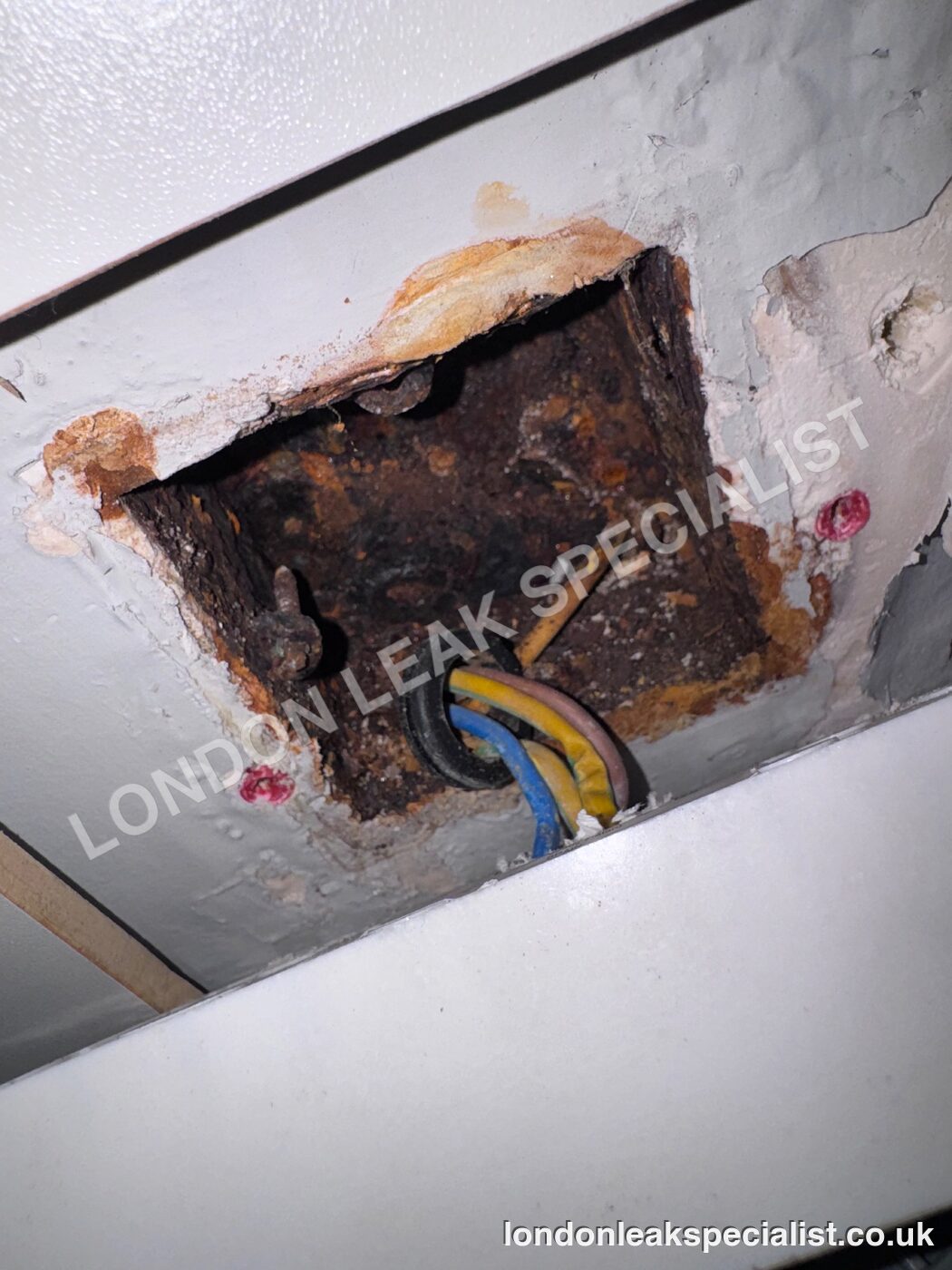
The wet socket back box that first showed water in the wall, from a job in N11, north London.
A wet socket and months of damp pointed at the washing machine. Pressure and isolation tests in N11 showed a slow drip from a valve under the sink, and the report is what the insurer needs.
A wet plug socket behind a kitchen unit is how this job started. Damp, stained skirting and a washing machine cupboard that had already been "dealt with" months earlier is how it carried on. The house is in N11, the north London postcode district that takes in New Southgate, Friern Barnet, Bounds Green and Arnos Grove. The washing machine was blamed. It was innocent, and the real leak was a slow drip from a valve that nobody could see.
We have removed the client, the address and every contact detail. What is left is the method, the photos and the findings, and you can download the redacted report as a PDF.
The brief: a wet socket and a suspect washing machine
An electrical fault had led to a socket in the back kitchen wall being opened up, and it was soaking. There was damp staining on the wall of the middle room (the ground floor is open plan), around the skirting and under the kitchen sink. Some months earlier the occupants had noticed damp around a built-in washing machine and had treated it as a washing machine leak or condensation. The problem came back.
So the starting assumption was the washing machine, its hoses and its waste pipe. Our job was a trace and access investigation: find where the water was really coming from, show how far it had travelled, and write it up so an insurer could act on it.
What we ruled out, and how
We did not start with the pipes. We started with the things people had already suspected, because a leak specialist who skips them has to argue the point later.
- The washing machine and its connections. We inspected the inlet connection, the isolation valve and the waste pipe. We also ran water through the waste pipe with a hose to see whether it escaped. Nothing leaked and nothing looked damaged.
- The floor under the washing machine. On the second visit we lifted sections of flooring beneath it to expose the cold feed and part of the waste. Both were dry.
- The downstairs WC. Its plumbing and drainage showed no sign of an escape.
- The bathroom upstairs. It sits above the back kitchen wall where the socket was wet, so we took the bath panel off. A small amount of water was passing through the sealant at the bath edge, but there was no evidence of a floor or ceiling leak. It was worth noting and not the cause.
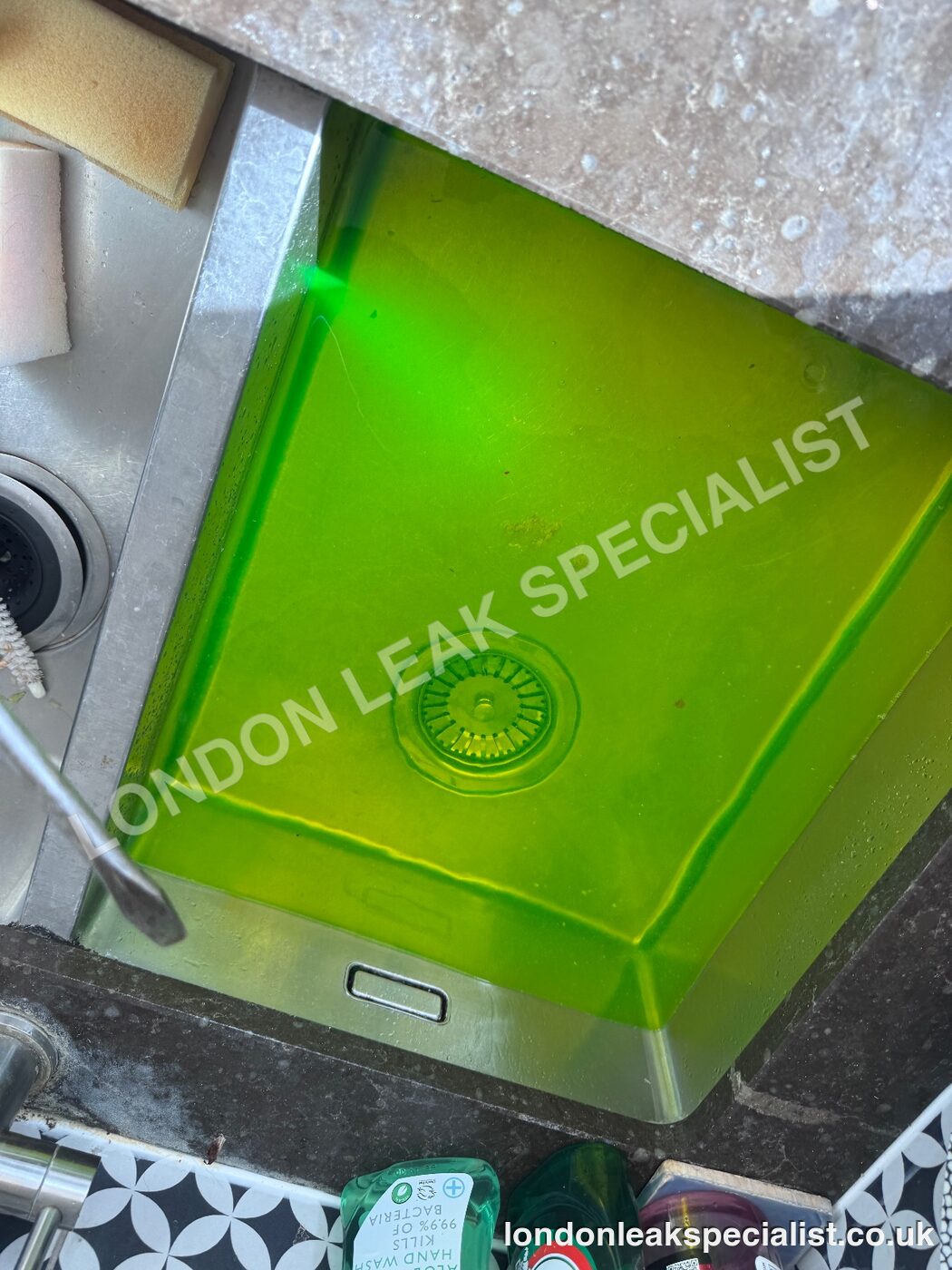
- Drainage. We ran dye through the kitchen sink, the toilet and the basin and watched for it appearing anywhere it should not.
Each of those is a place where a leak could plausibly have been, and each came back clear. That is what makes the next result persuasive instead of a guess.
The method: map it, pressure-test it, then isolate it
First, moisture mapping. We took readings along the middle room wall, the rear kitchen wall and skirting, around the food cupboard, under the sink and around and behind the washing machine. Elevated readings sat where the damage was already visible, but the pattern showed water had travelled well beyond its source, through the floor construction and wall cavities. A moisture meter does not tell you where water started. It tells you where it ended up.
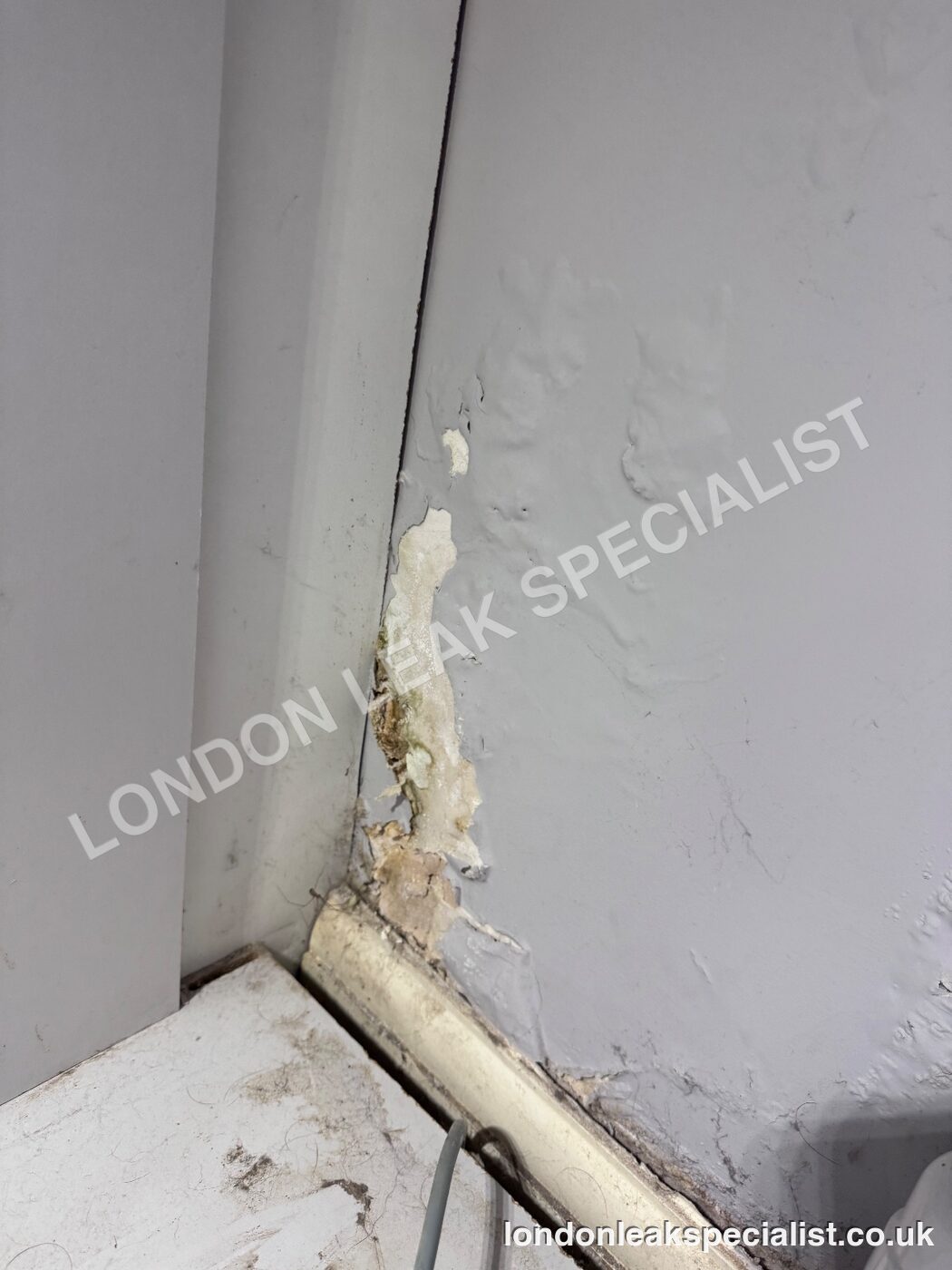
Second, pressure testing. We tested the hot and cold circuits separately. Hot held. Cold dropped. That is the key finding of the whole job: the loss was on the cold supply.
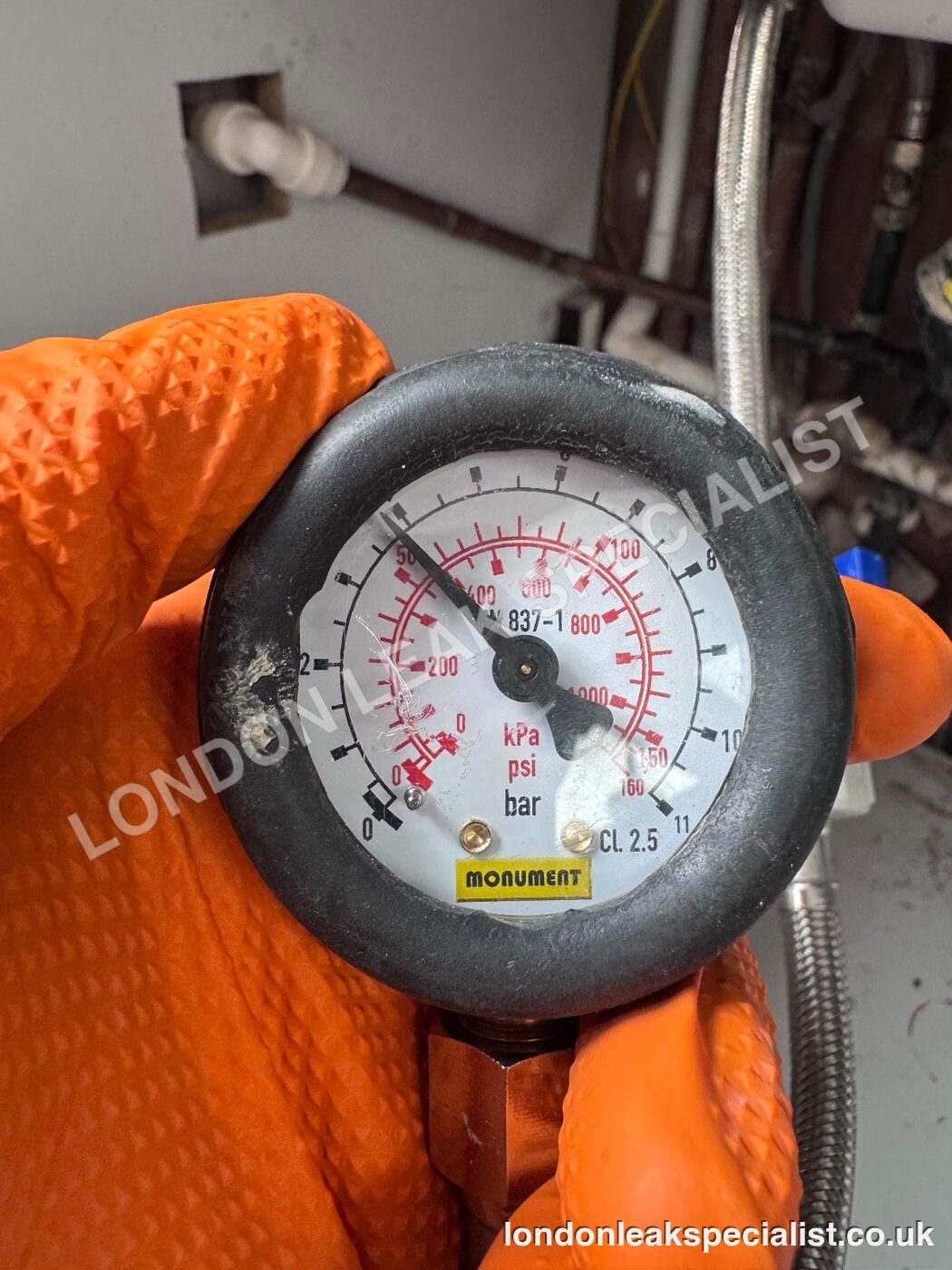
Third, isolation. A pressure drop only says that water is going somewhere. To find where, we closed off sections of the system one at a time and repeated the test. When we isolated the washing machine valve under the kitchen sink, the pressure drop stopped and the cold circuit held. That one valve was responsible.
Fourth, we backed it up with other methods, because one test is not a diagnosis. Tracer gas on the pressurised pipework found no second concealed leak. Thermal imaging helped show where moisture was moving. An endoscope camera let us look into voids without opening them up, and the images pointed back at the area around that same valve.
What we found
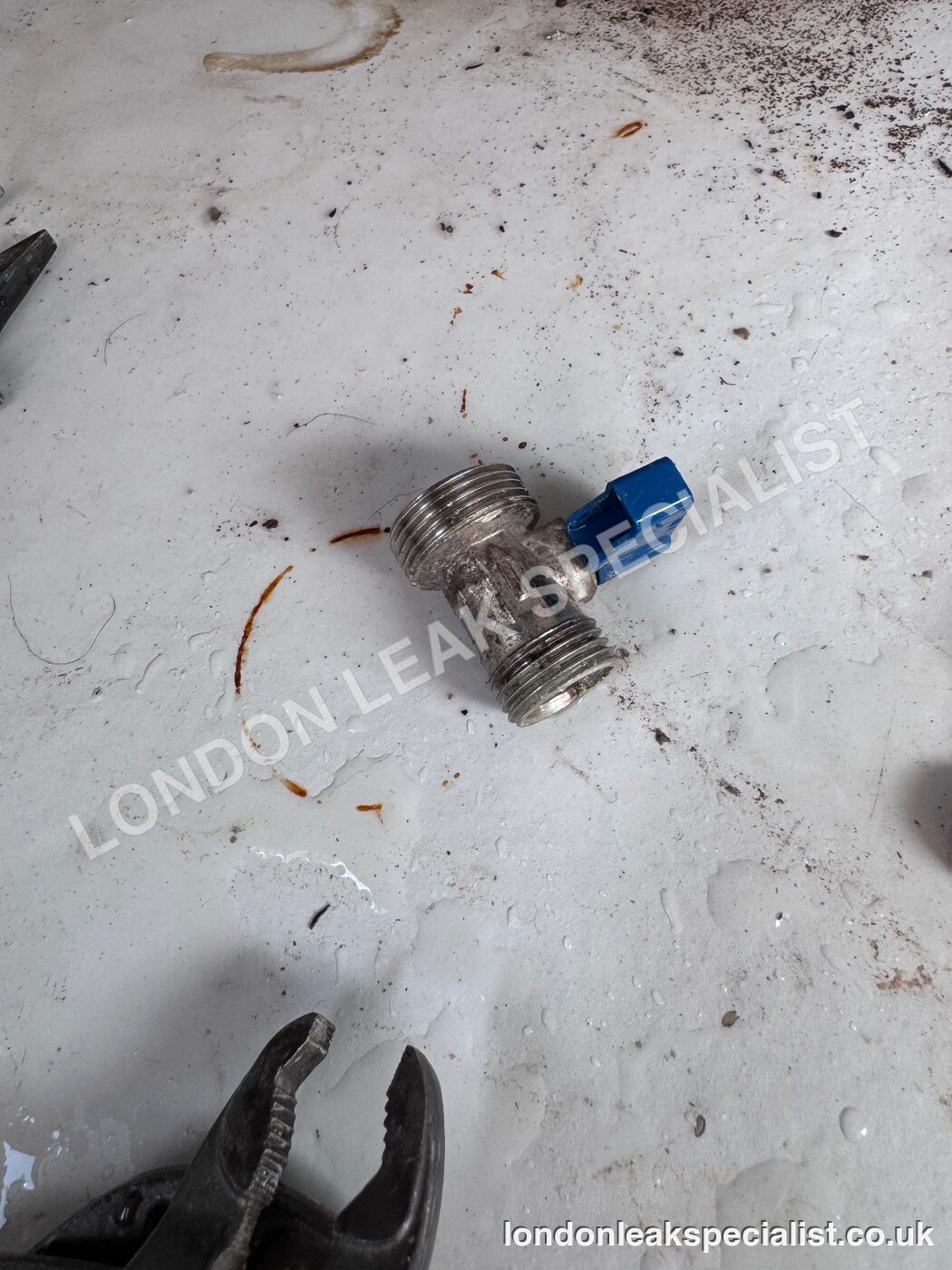
The washing machine isolation valve under the kitchen sink was slowly dripping. It was not a burst. It was the kind of leak that never shows as running water, sits behind a sink unit and goes on for months. The washing machine itself was not the source.
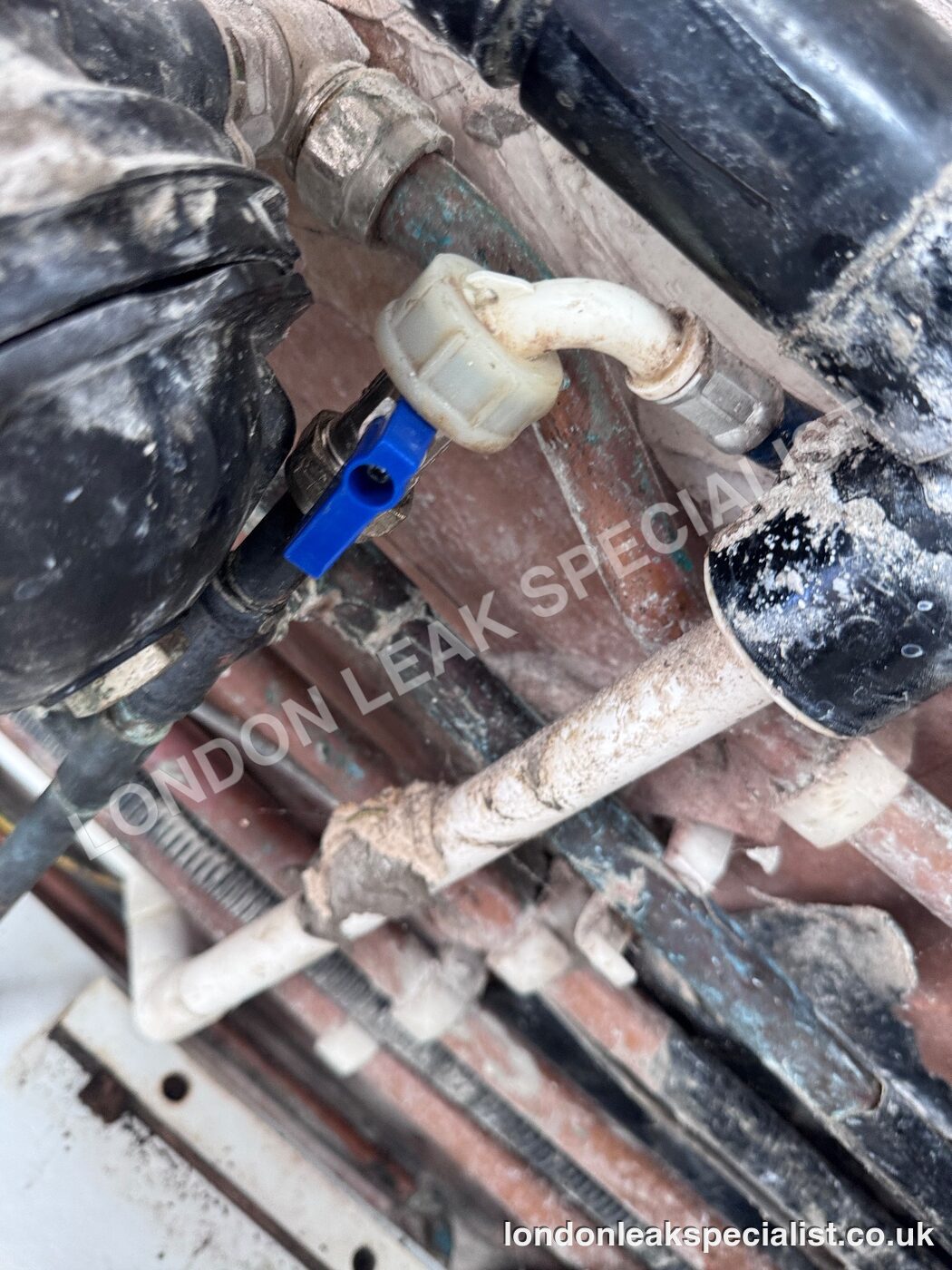
This explains why the earlier attempt to fix things did not hold. Water from a valve under the sink did not stay under the sink. It followed the floor, the skirting and the wall construction to the washing machine cupboard, the food cupboard and the wall behind, where it showed up. Anyone looking at that damp would reasonably suspect the washing machine, because that is where the damp was. Our report says so plainly, and says that nothing visible at the time would have pointed to the valve.
What we did on the day
- Replaced the defective isolation valve.
- Reinstated the cold supply and pressure-tested it again. It held, with no further loss.
- Documented the damage pattern, with photographs, for the insurer and the occupants.
- Advised the occupants to watch the affected areas for fresh staining or any coloured dye appearing after the sinks or appliances are used, because an intermittent drainage leak cannot be fully ruled out by a static inspection.
What permanent repair is still needed
Replacing a valve stops the leak. It does not dry the building. Our report recommends that the insurer appoints or authorises a professional drying contractor before any reinstatement starts, because surfaces can look dry while the floor construction and wall cavities are still wet. After that comes the make-good: flooring, skirting, wall finishes, affected kitchen units, and a qualified electrician to deal with the wet socket and the wiring around it.
We can quote that reinstatement as well, so the customer is not left with a leak that is stopped and a kitchen that is not usable. The aim is the property put back to a like-new finish, not only a remedial patch. Our pricing page sets out the public hourly rate we work from.
On electrics, one public source is worth reading. Calderdale Council, in its guidance on flooding problems in your home, says minor damage from clean water may only need cables dried out and affected sockets, switches or plugs replaced, and that portable appliances should be tested before reuse. A wet socket in a wall is a job for a qualified electrician, not for a hairdryer.
Why this saved time and damage
The washing machine was the obvious suspect, and the obvious route would have been to pull it out, replace hoses, perhaps strip out the built-in cupboard and rebuild it. That would have been disruptive and would not have stopped the water, because the water was not coming from there. Ruling out the machine, its waste, the floor beneath it, the WC, the upstairs bathroom and the drainage, then isolating the one circuit that lost pressure, meant the fix was a single valve, in a place we could reach, without opening up the wrong part of the kitchen first.
It also meant the report could say something definite. Instead of "damp near the washing machine", it says: cold water lost pressure, the loss stopped when this valve was isolated, the valve was seen dripping, and the system held pressure after replacement.
Leaks in N11: New Southgate, Friern Barnet, Bounds Green and Arnos Grove
The N11 postcode district sits across three boroughs. Parts fall within the London Borough of Barnet (Friern Barnet and New Southgate), others within Enfield (around Arnos Grove) and Haringey (around Bounds Green), so the council responsible depends on the street. Housing is a mix of inter-war semis, terraces and converted flats, and many have had kitchens re-fitted with appliances boxed into cupboards. A slow supply leak behind built-in units is a common reason for damp that seems to follow the washing machine.
We cover leak detection in Barnet, Enfield (including Southgate) and Haringey (including Wood Green), so a call from N11 is a local job whichever side of the boundary the house is on.
The report, and what the insurer looks for
Insurers want to see how the cause was established, not only that a leak existed. A report that stands up has the reason for attendance, every test named with its result including the negative ones, a confirmed cause kept separate from suspected causes, photographs of the cause, what was repaired and what is still outstanding. Read our guide to trace and access insurance and our insurance leak claims page for how that evidence is used.
Trace and access cover, which pays for finding a hidden leak and the opening-up needed to reach it, is included in many buildings policies but not all of them. Cover for the repair depends on the cause and the wording, and some policies exclude gradual deterioration. We cannot promise cover. What we can do is give the insurer the evidence, and in this case that includes a recommendation for professional drying before reinstatement.
The full redacted PDF report is available to read.
What you can check yourself
- Look under the sink and behind the appliance, with a torch and a dry piece of kitchen roll. Wipe the valves and joints and look at the paper. A slow drip often leaves no puddle, but the paper picks up the damp, and a white or green crust on a fitting shows it has been weeping.
- Do the meter test. Turn everything off, read the meter, wait half an hour and read it again. If it moves, there is a live supply leak somewhere. Our guide to why a water meter spins explains the readings.
- Turn the washing machine valve off and repeat. If the meter stops moving, the loss is on that branch. This is the same principle as our isolation test, in simple form.
- Do not assume the damp is where the leak is. Water travels along floors, skirting and wall voids. Our guide to a damp patch on a ceiling shows the same pattern with water coming from above.
- Stay away from wet sockets. Switch off at the consumer unit if you can do so safely and call an electrician. Water and wiring is the one place not to experiment.
- Photograph and date everything. It gives an insurer a timeline. A pattern of rising bills may also be a clue, as in our guide to a suddenly high water bill.
Damp you cannot explain in N11, Barnet, Enfield, Haringey or anywhere in London? We investigate in a sequence that avoids opening up more than necessary, and we write the report so insurers and agents can use it. We can also quote the repair and make-good afterwards.
How we help with this
If the article describes a problem you actually have, these are the visits that deal with it.
- leak detection in London
Finding a hidden leak without opening the property up first.
Not sure which one applies? Describe the symptom on the phone and you will be told which survey it is, the hourly rate and roughly how long it takes, before anything is booked. 020 7123 8560
Frequently asked questions
Can a washing machine isolation valve leak and cause damp?
Yes. The valve under the sink is a pressurised joint, and a slow drip from it can run for months without producing a puddle. The water follows the floor and skirting and often appears near the washing machine, which is why the machine is wrongly blamed.
How do you tell a washing machine leak from a leak on its supply valve?
We test them separately. We inspect the machine, its hoses and its waste pipe, and run water down the waste to check it. Then we pressure-test the cold supply and isolate the valve. If the pressure loss stops when the valve is closed off, the valve is the source and not the machine.
Why is there damp in my kitchen wall when I can see no leak?
Water from a slow leak travels through floors, skirting and wall cavities before it shows. The visible damp can be a metre or more from the source. Moisture mapping shows the extent, and pressure and isolation testing show where it started.
My plug socket is wet. What should I do?
Do not use it. If you can do so safely, switch the circuit off at the consumer unit and have a qualified electrician check it. Then find the water source, because replacing the socket will not help if the leak continues.
Do you cover leak detection in N11, New Southgate and Friern Barnet?
Yes. We attend N11 and the surrounding areas of Barnet, Enfield and Haringey. We find the leak, repair what we can on the day, and can quote the drying and make-good afterwards.