Case Study: A Charlton SE7 Flat, a Meter Reading 60 Litres an Hour, and No Leak to Find
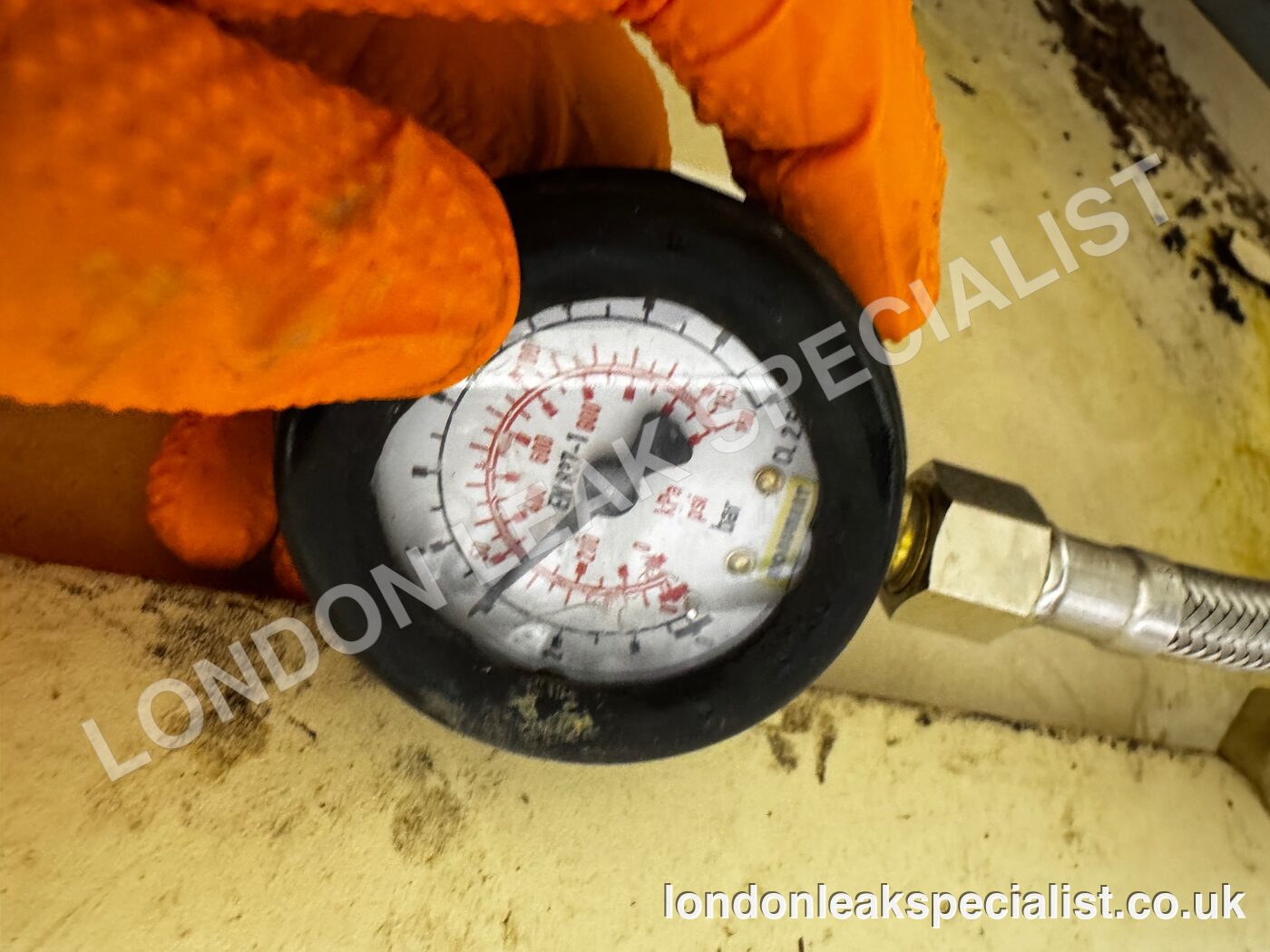
The pressure gauge on the supply during the isolation test at a flat in Charlton, SE7.
A flat in Charlton, SE7, in the Royal Borough of Greenwich, had a meter showing about 60 litres an hour and a bill heading for around £5,000 a year. Thames Water had sent three engineers and asked for a plumber's report. Our pressure test and meter watch found no leak, and the report said exactly what that does and does not prove.
Most of our case studies end with a leak found and a repair priced. This one does not, and that is why it is worth reading. A flat in Charlton, SE7, in the Royal Borough of Greenwich, was showing a water meter reading of about 60 litres an hour, which the household said was heading for an annual bill of around £5,000. Thames Water had already sent three engineers. They found nothing wrong with their meter or their pipework, and asked for a plumber to check every pipe inside the flat and put the result in a report.
That is the job we were asked to do. We tested the supply, inspected the pipework we could reach and checked for moisture. We did not find a leak, and the report says so, with the limits of the tests set out. You can download the redacted report as a PDF. The client, the address and all contact details have been removed.
The brief: prove whether the flat is losing water
Sixty litres an hour, if it ran all day and night, is 1,440 litres a day and more than 525,000 litres a year. A leak that size is not subtle. It would normally leave wet floors, a falling mains pressure, a stain somewhere or a pipe you can hear. Thames Water's engineers had looked at their side of the meter and found nothing. The customer's side was untested, so the water company wanted evidence from a plumber before going any further.
The question we were really answering was narrow: is water leaving the flat's supply, yes or no? Where a bill is in dispute, a clear yes or a clear no, backed by readings, is worth more than a long opinion. Our guide to a suddenly high water bill and hidden leaks covers the usual causes. This case was the unusual one where the plumbing did not account for the number.
What we ruled out first, and how
We started with a visual inspection of everything accessible that uses water:
- the kitchen sink and the pipework under it
- the bath and its accessible connections
- the bathroom basin and its pipework
- the toilets and their connections
- any area with signs of past water damage
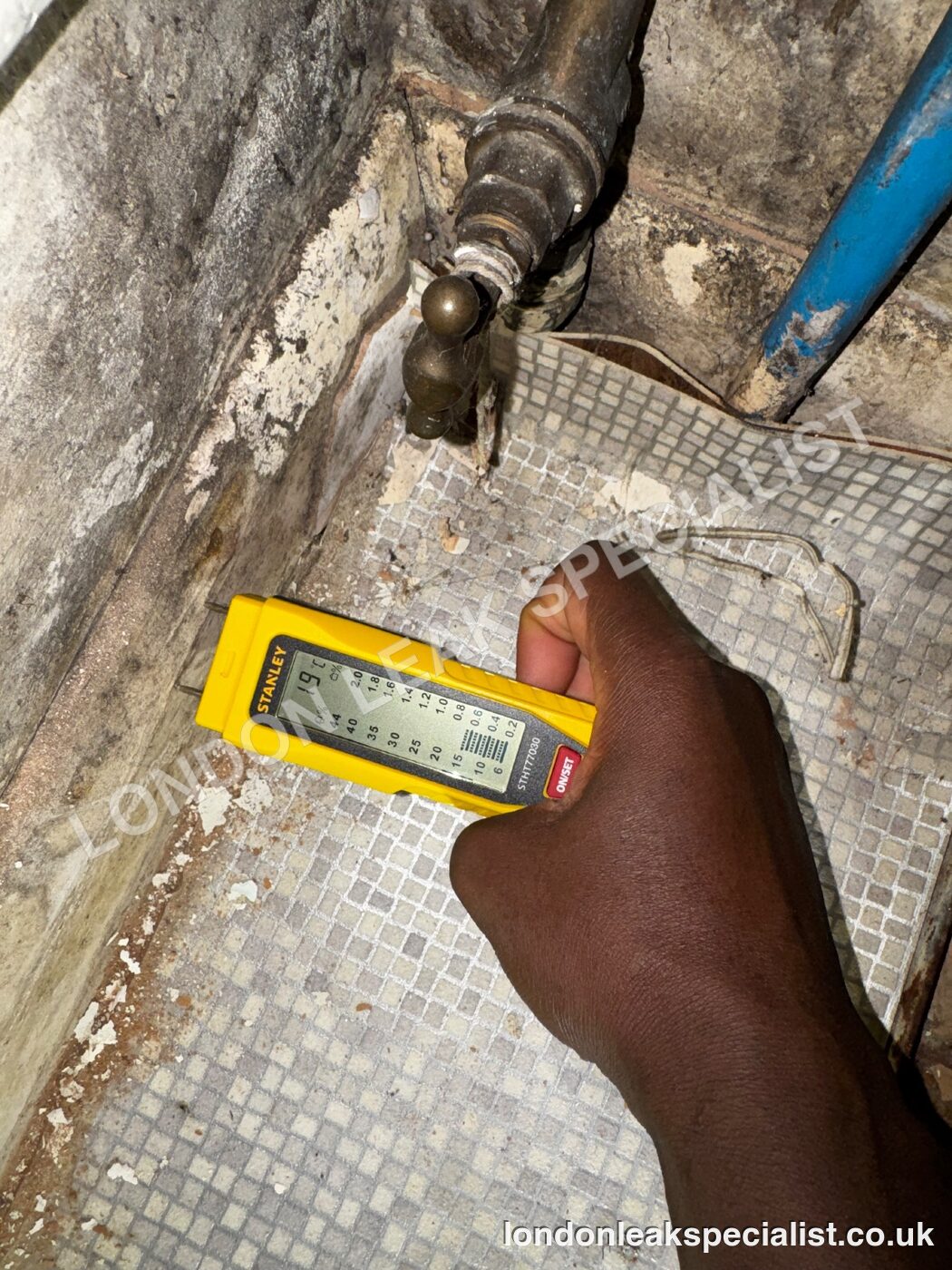
We found no active leak and no significant water damage in the accessible areas. We also took moisture readings with a handheld meter. They showed minor moisture in places, nothing close to what 60 litres an hour would leave behind. A moisture reading cannot rule out a concealed leak on its own, particularly under floors or in the ground, so we did not treat it as proof. It is a quick way to see whether water is going somewhere obvious.
The method: isolate the supply and watch the meter
The test that matters on a disputed meter is simple. Close the supply so nothing in the flat can draw water, then see whether anything still moves. We operated the external and internal stop valves to isolate the flat's supply, connected a pressure gauge, and watched both the gauge and the water company's meter for about 40 minutes.
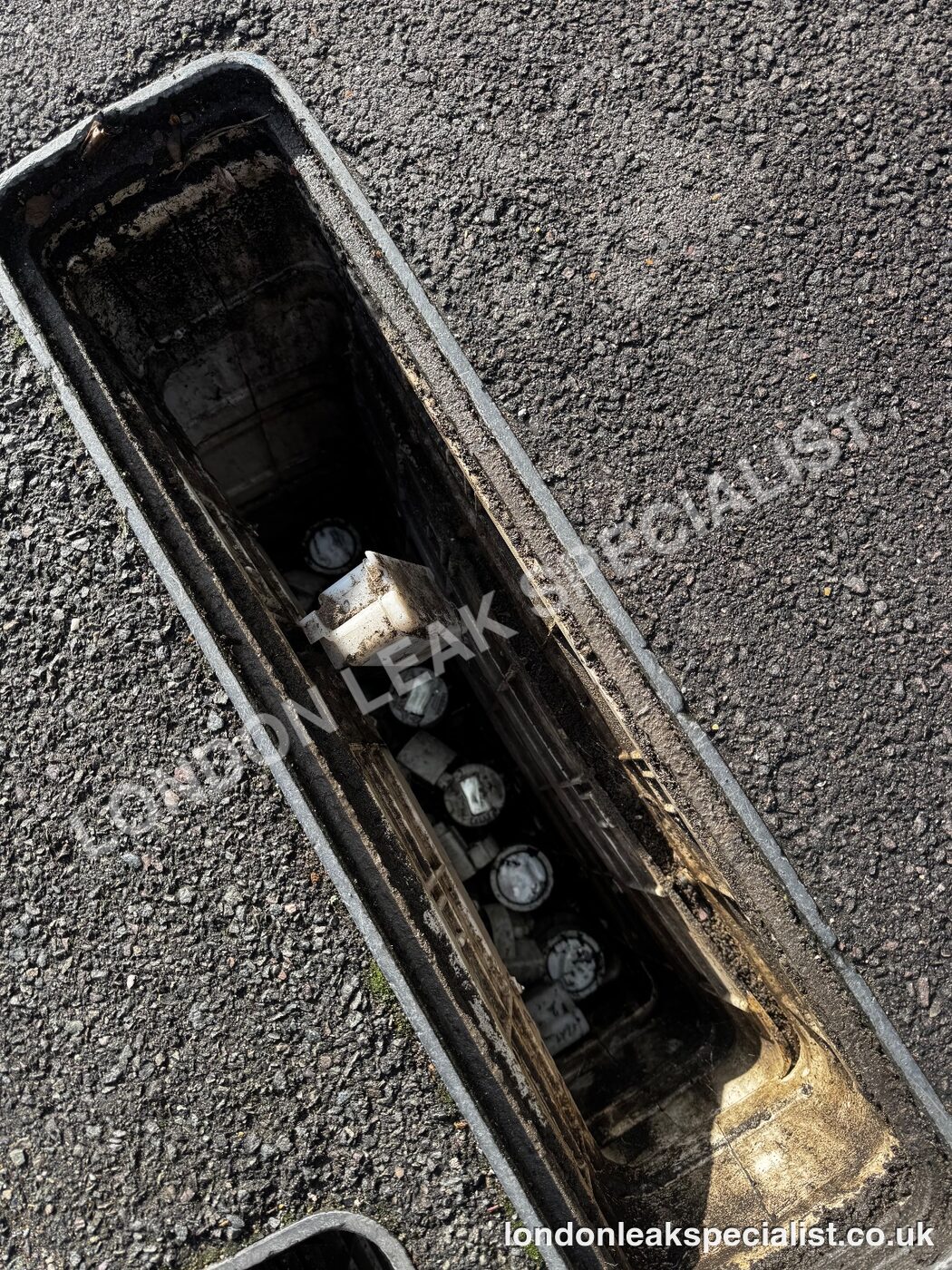
The results were clean. Pressure held at 3.2 bar from start to finish with no drop, and the meter display did not change. A leak on the pipework that was under test would show as falling pressure and a meter that creeps, because pressurised water escaping has to be replaced from the supply. Neither happened.
We chose pressure and meter watching rather than acoustic or thermal tools because those find the position of a leak. There was no evidence yet that a leak existed. Locating something that has not been shown to exist is how time gets spent opening floors. If you want to know when each method fits, our comparison of acoustic, thermal and tracer gas leak detection explains it.
Roughly 40 minutes is a reasonable test, not an exhaustive one, and the report says so. It cannot exclude a leak on a section that was not part of the test, or one that only runs when something is switched on.
What we found, and what we did not
Looking at the pipework closely turned up two real but small points.
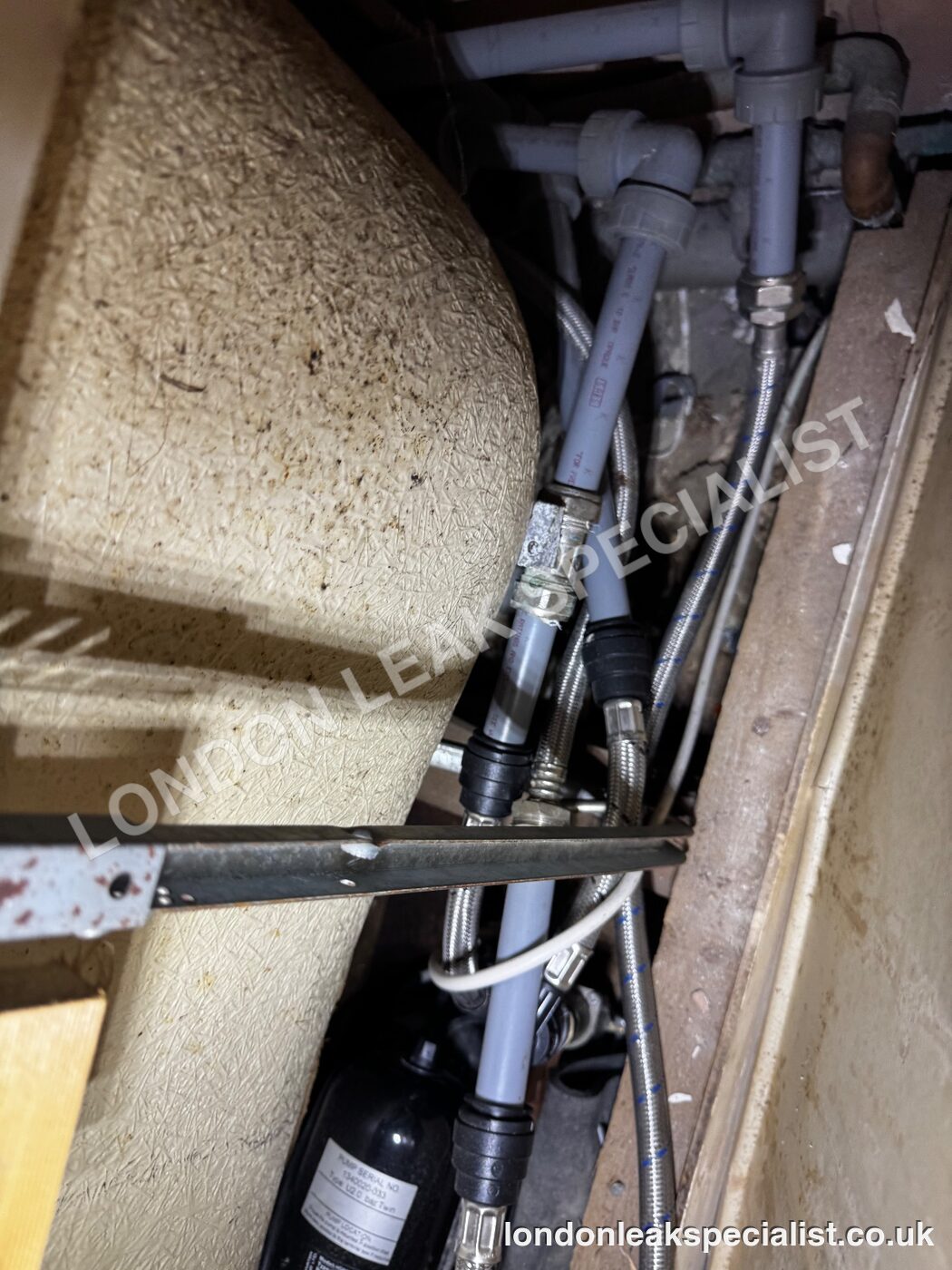
- A minor drip from the washing machine hose. The hose looked worn and was weeping slightly. It is the kind of defect worth fixing before it fails. It is nowhere near 60 litres an hour, and we did not claim otherwise.
- A neighbouring property's toilet overflow running continuously. From outside, we saw an overflow pipe serving the neighbouring property discharging water without stopping. That is a real source of wasted water, but we could not link it to this flat's meter or bill, and the report says it is a separate defect for the responsible party to repair.
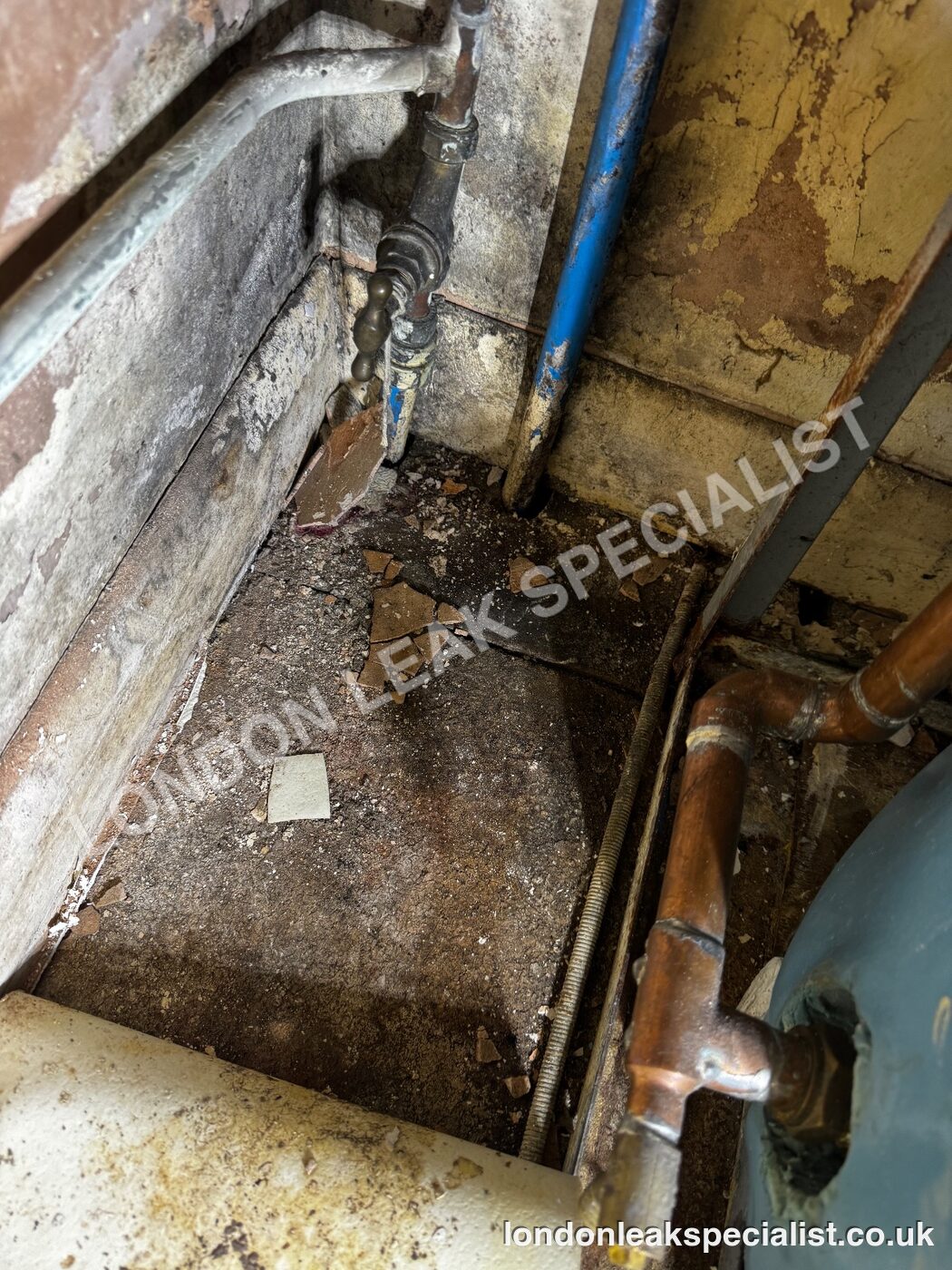
What we did not find was any evidence on the tested supply that could account for the reading. That is a finding in its own right, and the most useful one for what happened next.
What the report recommends
A no-leak result does not end the matter, because the bill is still there. The report recommended that the water company check the following, since these are outside what a plumber can test:
- That the serial number of the physical meter matches the meter recorded against the account.
- That the meter is assigned to the right flat and supply.
- The history of readings, including which are actual and which are estimated.
- A meter test, if one is considered necessary.
We also recommended that the neighbouring overflow is reported and repaired, that the washing machine hose is renewed and tested, and that if high use carries on after those checks, someone looks at concealed pipework and any section the visit did not test. Our report does not say a meter error exists. It says a plumbing inspection cannot confirm or rule one out, and that is the water company's job.
Charlton, SE7 and the Royal Borough of Greenwich
Charlton sits in the Royal Borough of Greenwich, and a lot of the housing is converted houses and purpose-built flats with shared service areas. That matters for a bill like this, because in a building with several flats it is easy for a meter, a stop valve and a flat to be mismatched on paper. Water-company records and what is physically on site are the first thing to compare. If you are in Charlton, SE7 or anywhere in the borough, see our leak detection in Greenwich page and the Greenwich area page. Our Woolwich page covers the neighbouring SE18 area.
What we did on the day
This was an investigation, so there was no repair. On the day we inspected the accessible plumbing, took moisture readings, isolated the supply, ran the pressure and meter test, photographed the findings and noted the hose and the neighbouring overflow. The tenant was advised that the washing machine hose should be renewed. We wrote the report so it could be handed straight to the water company. If a repair is needed, such as the hose or any pipework found later, we can quote the permanent repair and make-good, so the fix is done properly rather than left as a patch.
Why a no-leak result saved time and money
When a meter says water is going, the obvious route is to start opening things up. We avoided that, and the reasoning is the point rather than any figure.
- It stopped a search for a leak that the tests did not show. Lifting floors or breaking into walls on a guess is slow, damaging and expensive, and if the problem is a meter or account issue it finds nothing.
- It put the question where it belongs. With the supply held at pressure and the meter still, the discussion moves from the flat's plumbing to the meter, the account and the readings.
- It answered the water company's own request. They had asked for a plumber's report on the internal pipework. Without one, the dispute stays stuck between the customer and the company.
The report does not promise a result. It gives the customer a dated, evidenced document to put in front of the water company.
What the water company, the landlord and any insurer look for
Thames Water asks for the leak to be repaired promptly if one is found, and has a process for a leak allowance when a hidden leak on a metered supply has been fixed. Its own page says the repair must be done within four weeks of it notifying you or the leak being identified, the claim must be made within three months of the repair, and the evidence is a plumber's details and invoice. You can read Thames Water's leak allowance conditions on its own site, and our guide to the Thames Water leak allowance form walks through the paperwork. That route applies when a leak is found and repaired. Here, the evidence pointed away from a leak.
Whoever reads a report like this wants the same things: which tests were run, the readings with times, what was inspected, what could not be tested, and a clear opinion with its limits. Our page on Thames Water leak letters explains the deadline attached to those letters. For damage claims on buildings insurance, our guide to insurance leak claims shows what an insurer wants to see, though a no-leak finding like this one is not an insurance matter. If you are working out costs, our pricing page lists the public rate, which is £160 an hour.
What you can check yourself
- Do the overnight meter test. Turn everything off, photograph the meter, and photograph it again later without using water. It works because a meter only moves when water passes through it. Our guide to reading your water meter to check for a leak has the steps.
- Look at the toilet cisterns and overflows. A cistern that keeps refilling, or an overflow pipe outside that drips, wastes water without leaving a mark indoors. It is the commonest hidden cause of a high reading.
- Compare the meter serial number with your bill. If the numbers differ, the bill may be built from a different meter. This costs nothing and takes two minutes.
- Ask for the reading history. A pattern of estimated readings followed by a large actual reading can make usage look worse than it was.
- Keep dated photos of the meter. They are your own evidence in any dispute and take seconds to create. If you are unsure who is responsible for which section of pipe, see who is responsible for a Thames Water leak.
High meter reading or water bill in Charlton, SE7, Greenwich or anywhere in London? We test the supply and write the report so the water company, your landlord or your agent can act on it. If we do not find your leak, you do not pay.
How we help with this
If the article describes a problem you actually have, these are the visits that deal with it.
- leak detection in London
Finding a hidden leak without opening the property up first.
- a Thames Water leak notice
What the letter means and the four weeks it gives you.
- underground water leak detection
Supply pipe leaks under drives, gardens and pavements.
Not sure which one applies? Describe the symptom on the phone and you will be told which survey it is, the hourly rate and roughly how long it takes, before anything is booked. 020 7123 8560
Frequently asked questions
Can a water meter show high usage when there is no leak?
Yes. If a supply holds pressure and the meter does not move with everything off, as in this Charlton, SE7 case, the cause may be a meter mismatch, account allocation or estimated readings rather than a leak. A plumber can show the plumbing is not losing water, and the water company has to check the meter.
What is 60 litres an hour in a day and a year?
Sixty litres an hour running continuously is 1,440 litres a day and about 525,600 litres a year. That is a large, steady loss, so it should leave signs such as falling pressure or wet floors, which is why a clean pressure test matters.
How do you test a supply for a hidden leak without digging?
We isolate the supply with the stop valves, connect a pressure gauge and watch both the gauge and the meter for a set time, here about 40 minutes. A pressure drop or a creeping meter means water is escaping. Acoustic or thermal tools are then used to locate it.
Will Thames Water accept a plumber's report about a high bill?
In this case Thames Water had asked for one. A report with readings, times, what was tested and its limits gives them something to act on, including meter and account checks. We cannot promise an outcome, as the decision is theirs.
Do you cover leak detection in Charlton and the Royal Borough of Greenwich?
Yes. We attend homes and flats in Charlton, SE7 and across the Royal Borough of Greenwich. We find the source or show that the plumbing is not at fault, write a report that agents and water companies can use, and can quote the permanent repair and make-good.