Case Study: The Harlesden NW10 Restaurant Leak That Three Years of Plumbers Could Not Find
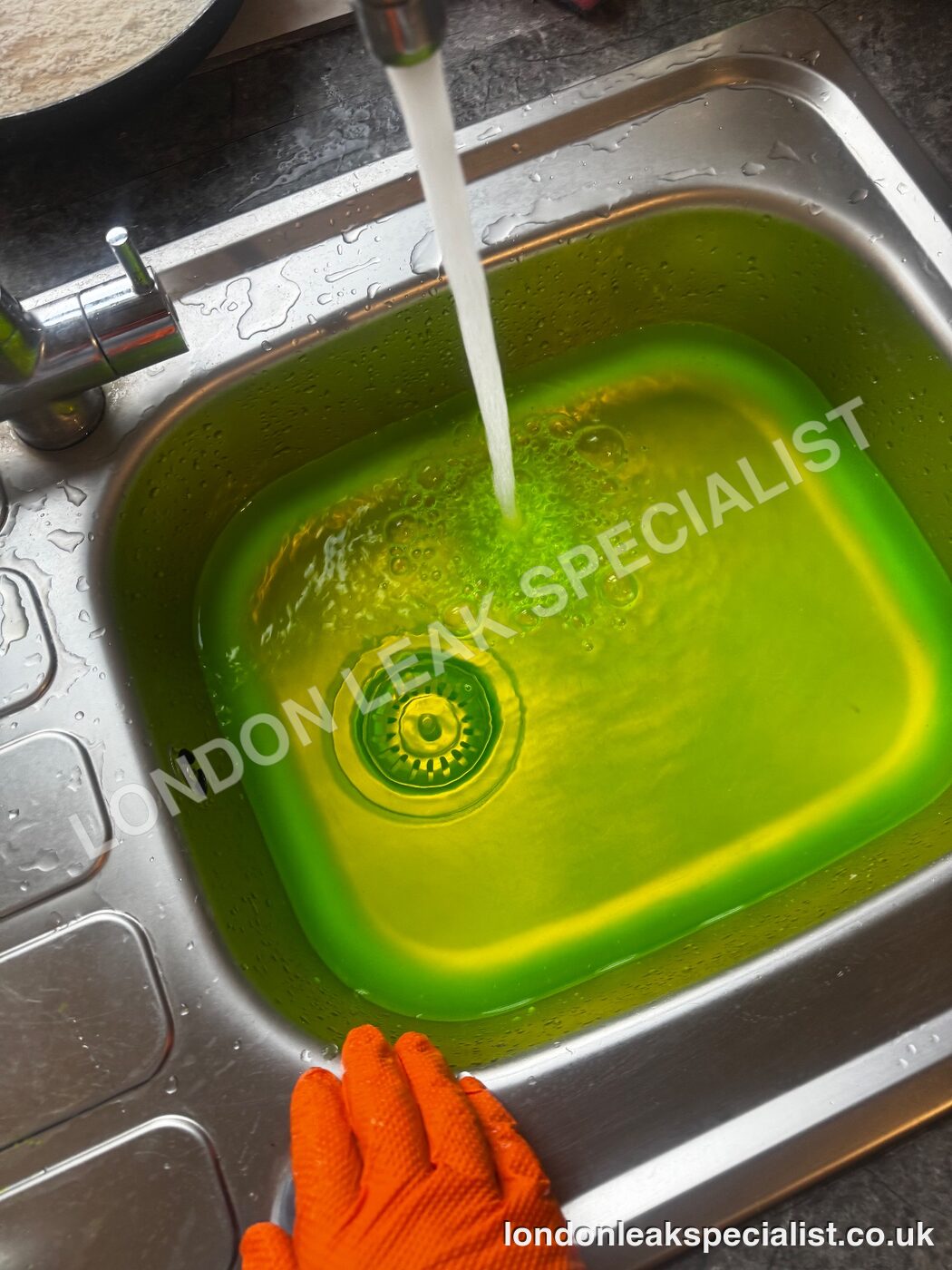
The tracer dye test in the kitchen of the flat above a restaurant in Harlesden, NW10.
A restaurant in Harlesden, NW10 had water coming through its ceiling on and off for about three years, and several plumbers had not found the source. A 15-minute tracer dye test in the flat above reproduced it, and a small ceiling opening showed the soil stack dripping.
An intermittent leak is the hardest kind to find. It is never running when the plumber arrives, the stain dries out, and everyone goes home with a theory. That was the position at a restaurant in Harlesden, NW10, in the London Borough of Brent, when we were called in. Water had been coming through the restaurant ceiling from the flat above on and off for about three years. A number of plumbers had attended in that time. None had found the source.
We found it on the first visit, and the method was not complicated. This case study sets out what we did and why, with the photos and the report. The client, the address and all contact details have been removed. You can download the redacted report as a PDF.
The brief: water through a restaurant ceiling, now and then
The restaurant is on the ground floor with a residential flat directly above it. The complaint was simple: from time to time, water came through the restaurant ceiling. Not every day and not on any pattern the owners could see. For a business that serves food, a ceiling that drips without warning is more than a nuisance. It can mean closed tables, damaged stock and a ceiling that keeps getting patched.
When water appears below a flat, there are usually several possible sources upstairs: a bath, a shower, a basin, a toilet, a kitchen sink, a washing machine, or the pressurised supply pipes that feed all of them. The difficulty with an intermittent leak is that it only shows when one of those is in use. A plumber who checks everything while nothing is running can honestly find nothing wrong. Our guide to water leaking through a ceiling covers the common causes in more detail.
What we ruled out first, and how
We started upstairs in the flat, because that is where the water was coming from. We carried out a visual inspection of every fixture that uses water and its pipework:
- the kitchen sink and its waste pipework
- the toilet and the connections around it
- the bath and its waste connections
- the wash basin and its waste pipework
- the shower area and the plumbing connections we could reach
None of this showed the point of failure. That is not unusual and it is not a waste of time. It tells you the fault is not a visible weep at an exposed joint, which is the first thing anyone would fix. If it were that simple, one of the earlier plumbers would have found it. So the question changed from "what looks wrong?" to "what makes the water appear?"
The method: make the leak happen on purpose
If a leak only shows when something is used, the most direct test is to use that thing, one at a time, while someone watches the ceiling below. Controlled water testing turns an intermittent fault into one that happens on demand.
We started with the kitchen sink. We filled it with warm water mixed with tracer dye, then let it drain while monitoring the restaurant below. The dye makes the test water easy to tell apart from anything else that might be wet in a ceiling void. Warm water was used to help follow how the water moved. The test ran for about 15 minutes.
Within that time, water came through the restaurant ceiling. The leak that had come and gone for three years had been reproduced under controlled conditions, and tied to one appliance draining into the system. This is the kind of evidence that matters later. It is no longer a theory about where water might come from. It is a test with a result.
Dye testing suits waste and drainage leaks because those pipes are not under pressure. A pressure test on the supply would not have found this, because the supply was not the problem. Different leaks need different tools, which our comparison of acoustic, thermal and tracer gas leak detection explains.
What we found
With the leak confirmed, we needed to see it. The waste pipework ran down through a boxed-in section of the restaurant ceiling, so we cut a small inspection opening in that boxing, where the drainage was most likely to be.
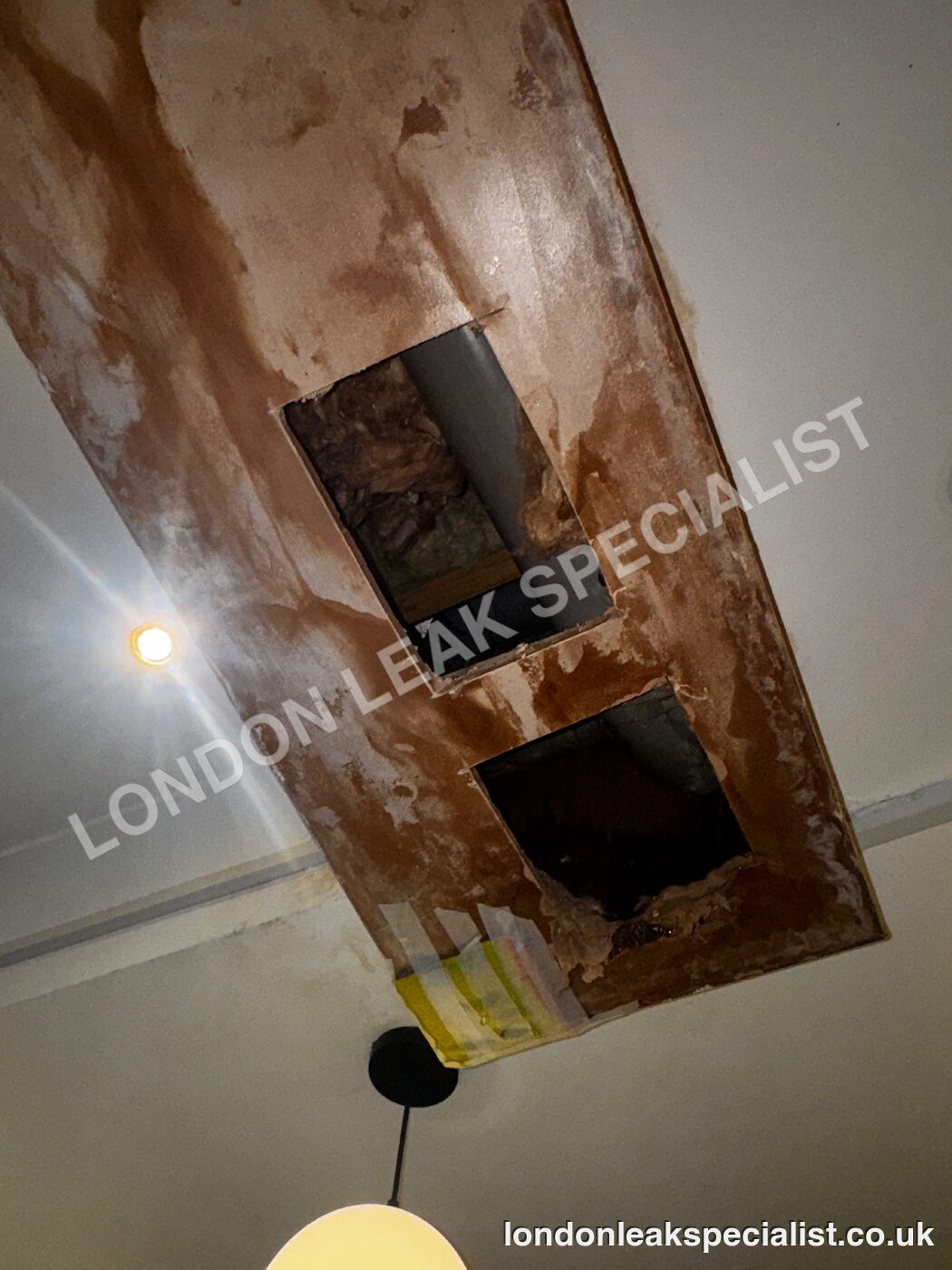
As soon as the ceiling was opened, we could see water dripping from the area of the main soil and waste stack, the large vertical pipe that carries waste from the flat above down to the drains.
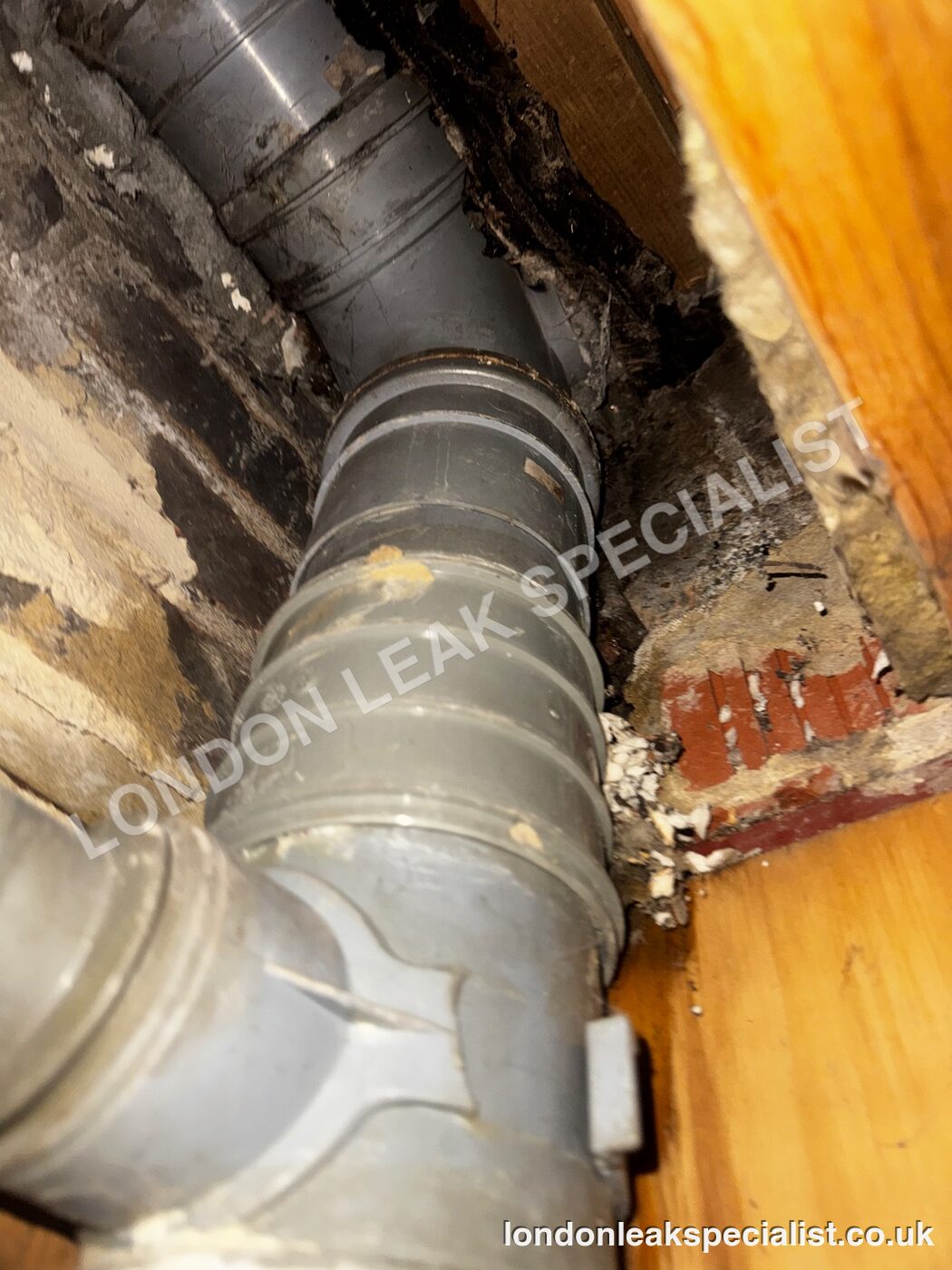
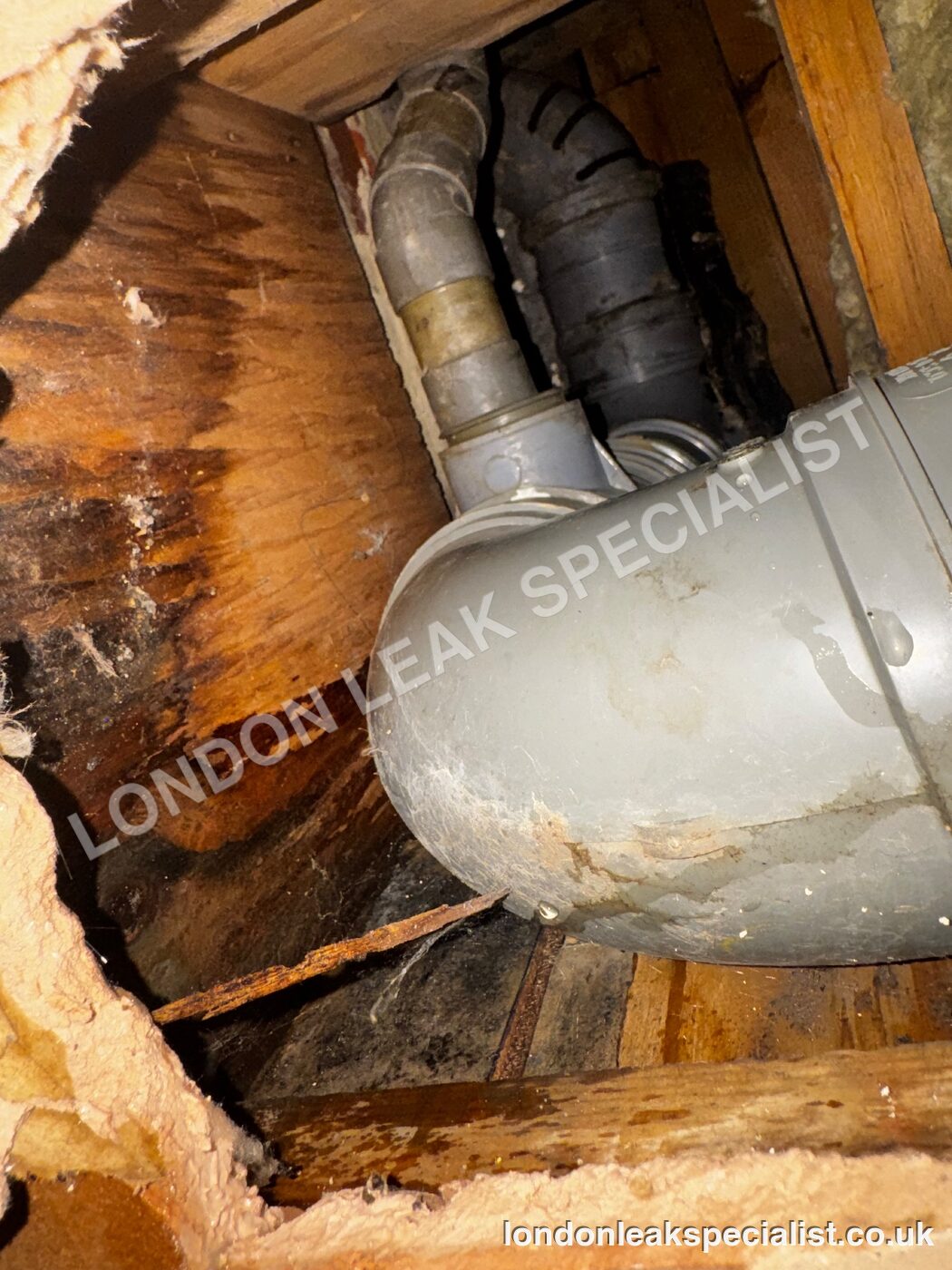
That gave us a direct link between the kitchen sink test upstairs and the water entering the restaurant ceiling. The source is the stack or one of its connections, inside the concealed section of the building.
What we could not do on this visit was put a finger on the exact joint. The stack is partly built into the brickwork and partly enclosed in the ceiling void, so the restaurant side gives very limited access. We used an inspection camera in the void, but a camera does not replace exposing the pipe. We have recorded that honestly in the report, because overstating a finding is how the next contractor ends up repairing the wrong joint.
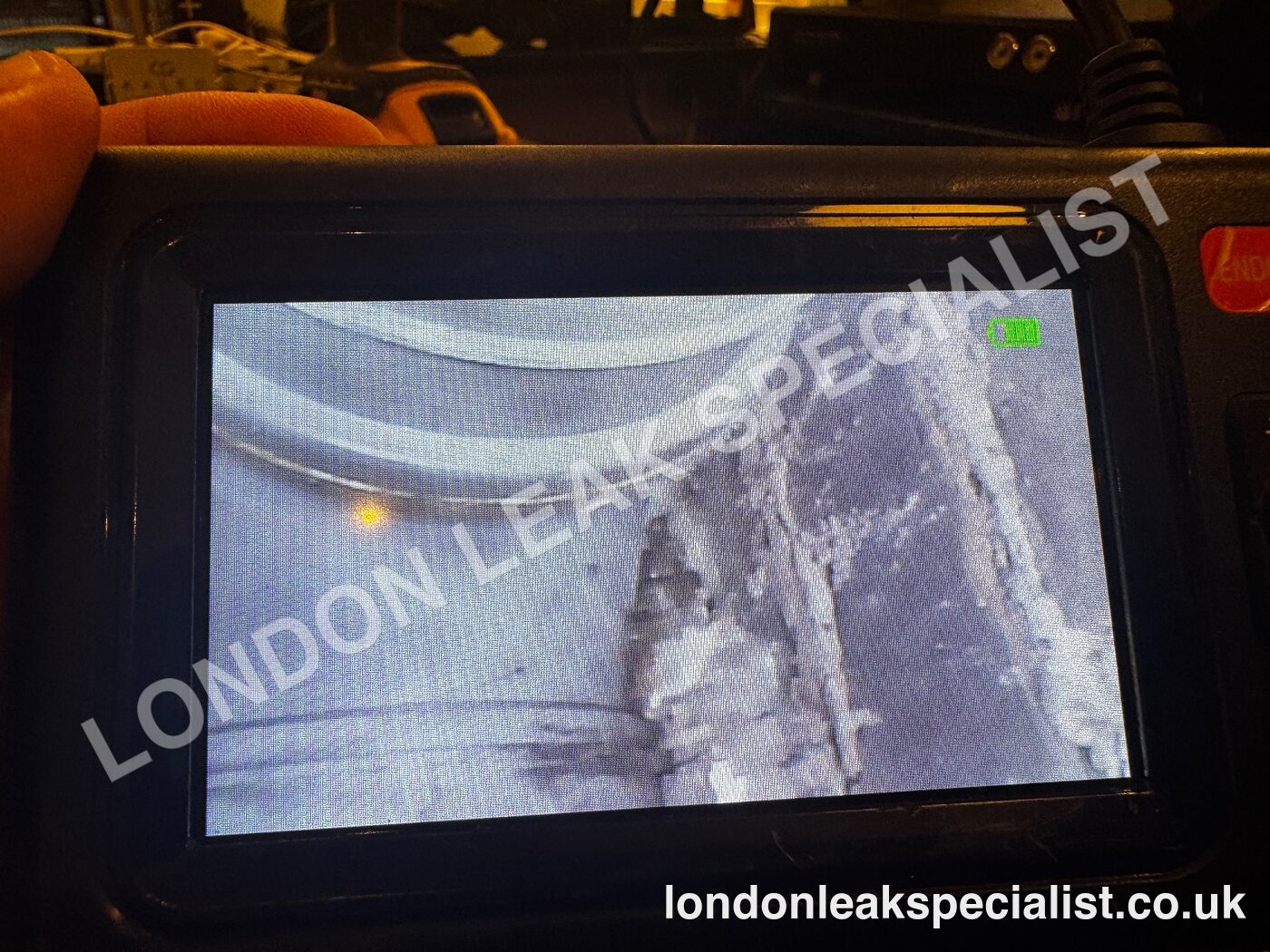
What we did on the day
This visit was an investigation, not a repair, and the report says so. On the day we inspected the flat, ran the dye test, reproduced the leak, opened the ceiling to confirm the source area and recorded everything with photographs. No permanent repair was carried out, because the defective section was not yet exposed and repairing a joint you cannot see is guessing.
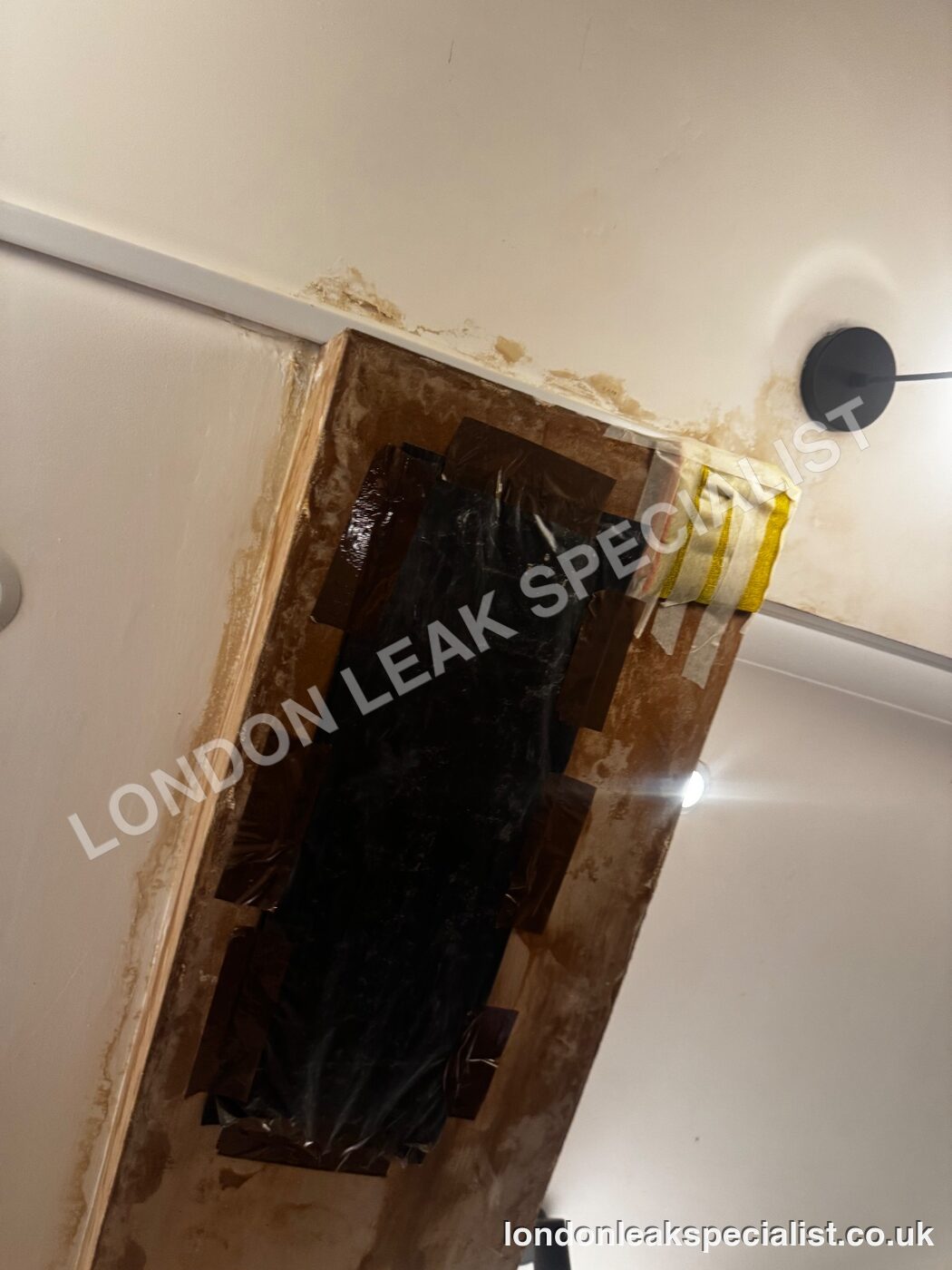
The permanent repair: go in from above
The next stage is to reach the stack properly, find the failed joint, connection or length of pipe, and repair or replace it. The question is where to get in.
Working from inside the restaurant would mean taking down a much larger area of ceiling, and possibly more of the surrounding finishes, with no guarantee of reaching the right part of the pipe because so much of it sits in the brickwork. That is more disruption for a business and more making good afterwards.
Our recommendation is to approach the stack from the flat roof above the residential flat, once the roof construction, the stack's exact position and the access route have been checked and the necessary permissions are in place. The sequence in the report is: mark the stack position from roof level, form an opening, work down to the concealed section, expose and inspect it, repair or replace the faulty part, reinstate the roof with a proper waterproof system and fire-stopping where needed, and then repeat the sink test to prove the leak has stopped. The retest is what turns "we think it's fixed" into evidence.
After that, the restaurant ceiling and finishes need reinstating once the area has dried. We can quote the whole job, from the stack repair and roof reinstatement to the ceiling and decoration, so the property ends up properly finished rather than patched. Our pricing page sets out the rates: standard leak detection is £160 an hour and trace and access work, where the report is written for an insurer, is £200 an hour, with any repair agreed before work starts.
Why this approach saved time and damage
Three years is a long time to live with a leak, and repeated call-outs add up. The usual pattern with an intermittent leak is that each visit checks what is visible, finds nothing running and either leaves or replaces something that was not the cause. Meanwhile the ceiling keeps getting wet, the timbers stain and the repairs below are redone.
The obvious next move after years of failed visits would have been to strip out large areas of the restaurant ceiling to look for the source. That would have closed part of the restaurant and still might not have reached the stack where it runs into the wall. Testing first meant one small opening was enough to confirm the source area, and the repair can now be planned from the side that gives the best access. We cannot put a figure on what that saved, because we do not know what the alternative would have cost. The direction is clear, though: test, confirm, then open up the right place once.
Harlesden, NW10 and the London Borough of Brent
This job was in Harlesden, NW10, in the London Borough of Brent. Harlesden has a lot of shops and restaurants with flats above them, often in older buildings converted over the years, where kitchens and bathrooms upstairs drain through stacks boxed in above the commercial space below. When something fails in that arrangement, the business underneath gets the water and the flat upstairs often has no idea. We work across NW10 and the rest of the borough. See our pages on leak detection in Harlesden and leak detection across Brent, and our commercial leak detection service for shops and restaurants.
Who pays: the stack, the lease and the insurer
A leak between two separate properties raises the question of responsibility early. A soil stack is often treated differently from the pipes inside one flat. As an example, Hounslow Council's guidance for its leaseholders lists leaks from waste pipes and branches up to the soil stack as the leaseholder's repair, and leaks on the main soil stack as the council's. Every lease and building is different, so check yours, but the principle is common: where the failure is matters as much as what failed. A report that places the leak on the stack, rather than on the flat's own fittings, can decide who is responsible.
For insurance, trace and access cover pays for finding a hidden leak and the opening-up needed to reach it. Most, but not all, buildings insurance policies include it. Some policies exclude damage from gradual wear, and we cannot promise any claim will be paid. What an insurer, freeholder or managing agent wants to see is:
- the reason for attendance and how long the problem has gone on
- what was inspected and ruled out
- the test used and what it showed, including how long it ran
- photographs of the source area
- what was not established yet, stated plainly
- the recommended access route and why
The report for this job covers each of those points. Our guide to insurance leak claims explains how the report is used, and trace and access cover explained covers the policy wording to look for. If you live above someone and the dispute is about a shower rather than a stack, our Kentish Town shower leak case study shows how that one was settled with evidence.
What you can check yourself
- Write down when it leaks. Note the date, time and what was being used upstairs, if you can find out. An intermittent leak that lines up with cooking times points at a kitchen waste; one that lines up with mornings points at a shower. It is the quickest way to narrow the search.
- Ask upstairs to run one thing at a time. Have the neighbour fill and drain the sink, then the bath, then the basin, with a few minutes between each, while you watch the ceiling. This works because waste leaks only show when water is flowing through them.
- Check the water meter. With everything off, a meter that keeps moving points to a supply leak rather than a waste one. A meter that stays still while water still appears below points towards drainage. Our guide to why a water meter keeps spinning explains the test.
- Photograph the ceiling each time. Dated photos of the stain show how it spreads and help an insurer or agent see the history.
- Do not keep patching the ceiling. Repainting hides the evidence and the damp underneath carries on. Our guide to a damp patch on the ceiling covers what to do first.
Water coming through the ceiling of a shop, restaurant or flat in Harlesden, NW10, Brent or anywhere in London? We reproduce the leak under test before anything is opened up, and we write the report so insurers, freeholders and agents can act on it. If we do not find your leak, you do not pay.
How we help with this
If the article describes a problem you actually have, these are the visits that deal with it.
- leak detection in London
Finding a hidden leak without opening the property up first.
- commercial leak detection
Offices, shops, restaurants and blocks, including out of hours.
Not sure which one applies? Describe the symptom on the phone and you will be told which survey it is, the hourly rate and roughly how long it takes, before anything is booked. 020 7123 8560
Frequently asked questions
How do you find an intermittent leak from the flat above?
We reproduce it. Each fixture upstairs is used one at a time, often with tracer dye in the water, while someone watches the ceiling below. In this Harlesden, NW10 case, draining the kitchen sink for about 15 minutes brought water through the restaurant ceiling, which tied the leak to the waste system.
Can a leaking soil stack cause water through the ceiling below?
Yes. A failed joint or connection on a soil and waste stack leaks only when water is draining through it, so the ceiling below gets wet now and then rather than all the time. That is why these leaks are often missed on a visit when nothing is running.
What is a tracer dye test for leaks?
Dye is added to water in a sink, bath or toilet and drained through the waste. If coloured water appears below, it confirms which fixture or pipe run the leak is on. It suits waste and drainage leaks, which are not under pressure and will not show on a supply pressure test.
Who is responsible for a leaking soil stack in a building with flats?
It depends on the lease. A stack that serves more than one property is often treated as a shared part the freeholder or landlord maintains, while waste pipes inside one flat may be the leaseholder's responsibility. A report that shows exactly where the leak is helps settle that.
Do you carry out commercial leak detection in Harlesden and Brent?
Yes. We attend shops, restaurants and flats in Harlesden, NW10 and across the London Borough of Brent. We find the source, write a report insurers and agents can use, and can quote the permanent repair and make-good.