Water Leak Between the Meter and the House: Finding It Without Digging
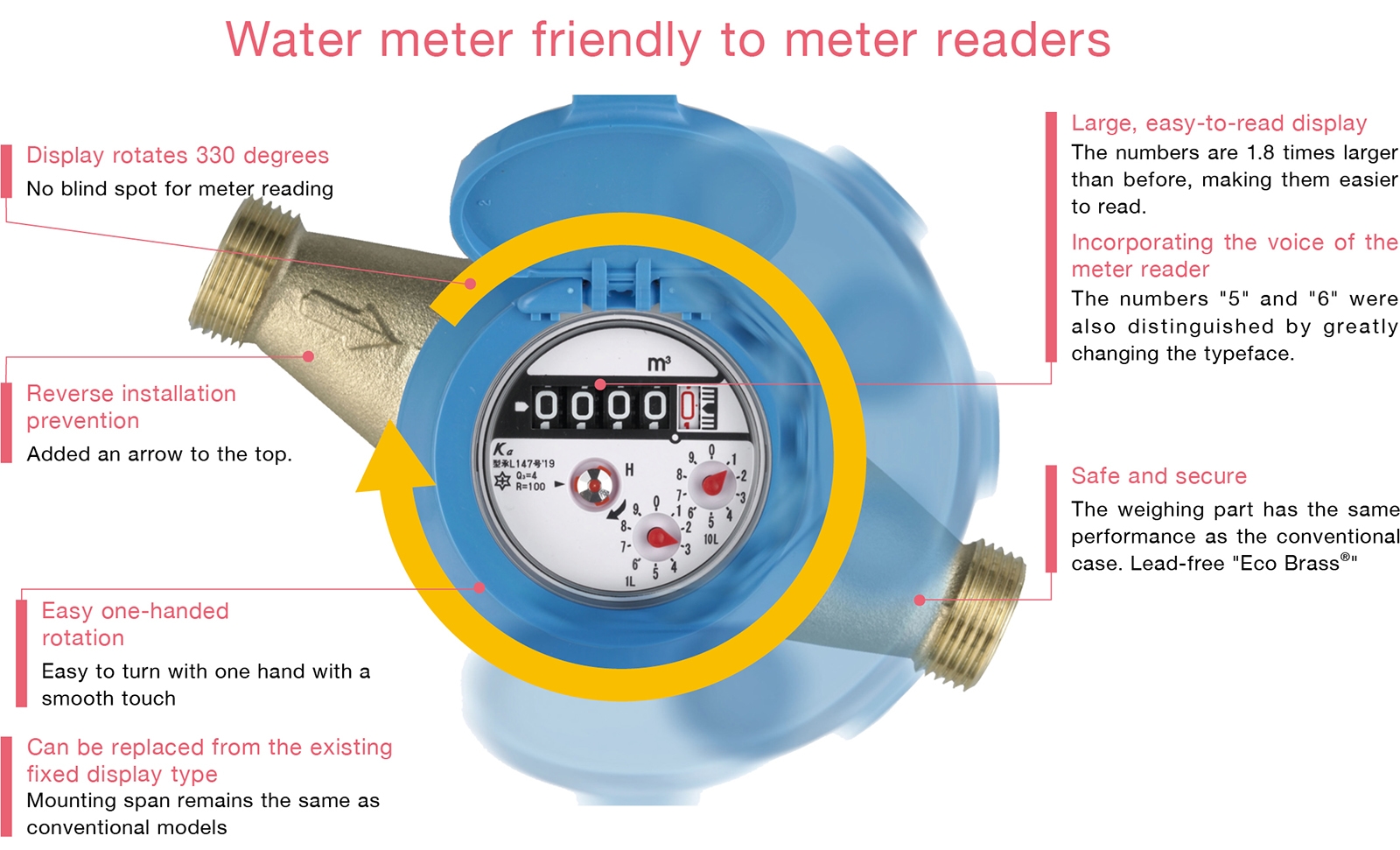
A metered leak sends most people hunting indoors. The likeliest culprit is the buried pipe between the boundary and your wall, and one ten minute test tells you whether that is where yours is.
When a water company letter says your meter is recording a leak, almost everyone starts looking indoors. Taps, the loo, under the sink, the boiler. It is the wrong end of the property. On a metered London home the likeliest place for water to be escaping is the one stretch of pipe nobody can see: the buried run between the meter at your boundary and the point where the supply comes through your wall.
That run is a few metres of plastic, lead or iron under a lawn, a path or a driveway. Its route is rarely recorded, it is under mains pressure every hour of every day, and it can leak for a year without putting a mark on the surface. This is what makes it fail so often and get found so late. What follows is why it goes, how to prove your leak is on it before anyone lifts a slab, what the three detection methods actually do, and what the work costs.
Why this is the stretch that fails
Four things stack up against the pipe between your meter and your house, and they do not apply to the pipework inside the building.
It lives in moving ground. London clay shrinks in a dry summer and swells again in winter. Tree roots push. A driveway loads the ground above with a car. Every one of those flexes a buried pipe that was laid to sit still, and the flexing works on the weakest point until something opens.
It is frequently old, narrow and much repaired. Thames Water describes its lead replacement work as swapping out "existing smaller pipes (12-15mm)" for the industry standard 25mm. That is a fair picture of what is still in the ground under a lot of pre-war London housing: narrow bore pipe, laid by hand, joined and patched several times over a century.
Nobody knows where it goes. There is no as-built drawing for a domestic supply pipe. It is rarely straight, it often detours around something that is no longer there, and on an extended property it can run underneath a room built forty years after the pipe was laid.
Depth varies more than people expect. Thames Water's Codes for Adoptions Appendix D, its design and construction specification, requires service pipes today to be laid with cover of between 750mm and 1350mm from finished ground level. The regulation underneath it, Schedule 2 of the Water Supply (Water Fittings) Regulations 1999, sets no figure at all: it says only that a water fitting laid below ground shall have "a depth of cover sufficient to prevent water freezing in the fitting". Older pipes were laid to whatever the ground and the day allowed, which is why depth on your property is a question to answer rather than assume.
Then there is the reason it gets found late. A pressurised leak into free draining ground, made ground or an old service trench surfaces nowhere at all. The water simply goes away. Your only witness is the meter, and by the time a bill or a letter prompts anyone to read it, the leak has usually been running for months.
The ten minute test that proves it is the buried run
Before you book anything, settle which side of the wall the problem is on. This costs nothing and it changes what you should be booking.
- Turn off everything that uses water. Every tap, the dishwasher, the washing machine, the garden tap, any water softener or filter. Do not flush a toilet during the test.
- Find your meter. In most London streets it sits in a boundary box in the footpath or front path, under a small lid marked with a W or the supplier's logo. Older installations are sometimes indoors near the internal stop tap.
- Read it properly and write it down. The digits move too slowly to show a small leak in ten minutes. What you want is the low flow indicator, the small wheel, dial or triangle that turns on the tiniest flow.
- Close the internal stop tap. Usually under the kitchen sink. That valve is the end of the buried run and the start of your indoor plumbing.
- Wait ten minutes, touch nothing, then look again.
If the meter is still turning with the internal stop tap shut, water is escaping between the meter and that valve. That is the buried supply pipe and nothing indoors will explain it. You need an external trace, not a plumber with a torch.
If the meter stopped, the buried run is holding. Reopen the stop tap and run the test again with everything inside still off. Movement now puts the leak on internal pipework.
If nothing moved either way, you have no live leak at this moment. Intermittent movement is usually a legitimate user rather than a leak, a water softener regenerating overnight being the classic. Our guide to what a spinning water meter is telling you covers how to read the speed and the intermittent cases.
One result deserves a second look. If your meter turns with your own stop tap closed, check whether the supply is shared. In older terraces one pipe frequently feeds two or more houses off a single tee, and the section serving all of them is a joint responsibility, which is dealt with in our note on a shared water supply pipe with a neighbour. A trace that puts the leak on the shared length, or past your boundary altogether, is the difference between paying for your pipe and paying for somebody else's.
On ownership generally, Thames Water's own pipe responsibility page is blunt: you are responsible for the supply pipe running from the boundary of your property into your home, and once a leak on your property is confirmed it is your legal responsibility to arrange the repair within four weeks. The full picture, including what happens when that window passes, is in our article on who is responsible for an underground supply pipe leak.
What your pipe is made of, and how each material gives way
Material is not trivia here. It decides where the pipe fails, how loudly it fails, and therefore which detection method will find it.
Blue MDPE
Anything laid from the 1970s onward is almost certainly blue medium density polyethylene, and 25mm outside diameter is the minimum Thames Water specifies for a standard domestic service. MDPE rarely splits along its length. It fails at compression fittings, at the joint where an old lead run was married into a new plastic one, and at any point where it was laid straight onto a sharp stone or backfilled with rubble.
The awkward part is acoustic. Plastic damps the noise of an escaping leak instead of carrying it, so a leak on MDPE can be almost silent twenty metres away even when it is losing a litre a minute. That is the reason a buried survey should never be booked as an acoustic job before anyone has established what the pipe is.
Lead
Pre-war London still has a great deal of it, at the 12 to 15mm bore Thames Water describes replacing. Lead is soft, which is both why it survived a hundred years of ground movement and why it eventually loses. It splits along the barrel where it was work hardened at a bend, and it opens at wiped joints. It does at least carry sound well, so a lead leak is usually the easiest kind to hear.
A lead supply is also a water quality question in its own right, and that changes the economics of the repair. Patching a split in a pipe that is going to be replaced anyway is money spent twice. Our guides to old pipes in London homes and the Thames Water lead pipe replacement scheme cover where replacement beats repair.
Galvanised iron and steel
The least common of the three and the most misleading. Iron corrodes from the inside outward, so the first symptom is poor flow rather than water anywhere. Deposits narrow the bore for years, then the wall pinholes. Iron rings loudly when it leaks, which helps, but a pipe that has pinholed once will pinhole again a metre further along, so a single repair on a corroded iron run is a temporary answer.
How a buried leak is found, and which method does what
Three techniques do the work, and they are not interchangeable. A competent survey starts by tracing where the pipe actually runs, because every method after that depends on knowing the route.
Ground microphones
A leak under pressure forces water into the surrounding ground and makes a continuous noise doing it. A ground microphone is moved across the surface above the route in a grid, and the point where that noise is loudest is normally close to the fault. It works best on metal pipe, at shallow depth, under a hard surface, in a quiet street, and it struggles with plastic, deep runs, soft lawn that absorbs the sound, and traffic. On a busy road the survey may have to be done at night.
Correlation
This is the method that earns its keep on long runs. Two sensors are clamped to contact points at either end of the suspect length, typically the boundary box or external stop tap at one end and the internal stop valve at the other. The same leak noise reaches each sensor at a slightly different time. Given the distance between the two sensors and the speed at which sound travels in that particular pipe material and diameter, the instrument calculates where along the run the noise is coming from.
The accuracy of that answer is only as good as the numbers fed into it. Guess the distance, or the material, or miss a section where lead becomes plastic halfway along, and the calculation confidently marks the wrong spot. That is why route tracing comes first and is not padding on the invoice.
Tracer gas
Where sound will not do it, the pipe is isolated and drained and charged with a safe mix of hydrogen and nitrogen. The gas escapes at the failure point, rises through soil, paving joints and cracks, and is picked up at the surface with a probe.
It is slower, it needs the supply off for the duration, and it needs a bottle of gas. In exchange it works regardless of pipe material, depth within reason, or how noisy the site is. On a plastic supply under a driveway it is frequently the only method that produces a mark rather than an area.
What you are buying in all three cases is a marked position. A survey that concludes the leak is somewhere along the drive has not saved you a single spadeful. Our underground water leak detection page sets out how the route trace, correlation and gas stages fit together on a live job.
What the ground does to the answer
Two identical leaks on two identical pipes can take very different amounts of time to find, and the variable is usually what the pipe is buried in.
- Made ground and old service trenches give water a channel. It travels along the trench and appears, if it appears at all, a long way from the fault.
- Free draining gravel, or a drain run nearby, can swallow the escape completely, so nothing ever shows at the surface and the meter is the only evidence there is.
- London clay holds water rather than dispersing it, which helps, but it also transmits ground movement straight into the pipe.
- Hard surfaces carry sound, soft ones absorb it. A leak under concrete or tarmac is easier to hear than the same leak under a lawn.
- Depth trades off against acoustics. Past roughly a metre of cover the surface signal thins out and the correlator, or gas, carries the job.
The practical consequence is the one people find hardest to accept: the wet patch on the lawn is almost never above the leak. Digging where it looks wet is how a garden ends up with two holes and one unfixed pipe.
What it costs
Mains and supply pipe tracing is £180 an hour and a typical external trace takes two to three hours, so £360 to £540 in total. The rate is quoted before anyone travels and is not exceeded on the day, whatever the job turns into. Where tracer gas is needed the hourly rate is unchanged and £80 is added for the bottle, and you are told that before we attend rather than on the driveway. If we come to a confirmed live leak and cannot locate it, the detection time is not charged, which is the mechanism explained in full in our note on no find, no fee leak detection.
Excavation and the repair are charged at the same hourly rate once the leak is marked, with parts and materials agreed before anything starts. Full rates are on the pricing page.
What moves the number is mostly site, not skill: the length of the run, whether anyone knows the route, the surface over it, whether there are usable contact points at both ends for a correlator, and whether the supply can be isolated long enough for gas. A ten metre run across a lawn with an accessible boundary box is a short job. A twenty metre run under a resin driveway with a shared tee in the middle is not. Set against that is the alternative: speculative excavation is the most expensive way to respond to a meter reading, because reinstating a resin or block surface routinely costs more than the detection and the repair combined, and it buys no information at all if the guess was wrong.
Trace and access, and the water you have already paid for
Two separate pots of money are worth knowing about before you commit. The first is your buildings insurance. Most policies carry a trace and access section, which pays the reasonable cost of finding the source of an escape of water and of opening up and making good to reach it, subject to its own limit. Two caveats apply consistently: it pays to find and reach the leak rather than to repair the pipe, and it responds to escape of water rather than to gradual damage you knew about and left. Your own schedule is the version that decides your claim.
The second is the water itself. Thames Water operates a leak allowance, and its guidance describes the mechanism as comparing how much water you used in the past against the amount recorded while you had the leak, with the repair arranged once the leak is confirmed. Our guide to the Thames Water leak allowance covers what to send and when. Neither pot pays for the other, and the paperwork for both comes out of the same survey.
What to do this week
Run the ten minute test. If the meter keeps turning with your internal stop tap closed, you have a leak on the buried run and no amount of looking indoors will change that. The next step is a trace, not a trench.
Call 020 7123 8560 and tell us what the meter did. We will tell you on the phone which methods the pipe and the surface are likely to need, the hourly rate, and a realistic hour range before anyone sets off. We cover London out to the M25. Book an underground water leak detection survey to get the position marked, and where the pipe needs opening up and making sound again, the same engineer handles the water leak repair at the same hourly rate, so there is no second firm and no second call out to arrange.
How we help with this
If the article describes a problem you actually have, these are the visits that deal with it.
- leak detection in London
Finding a hidden leak without opening the property up first.
- home leak detection
Flats and houses, at £160 an hour agreed before we travel.
- a Thames Water leak notice
What the letter means and the four weeks it gives you.
Not sure which one applies? Describe the symptom on the phone and you will be told which survey it is, the hourly rate and roughly how long it takes, before anything is booked. 020 7123 8560
Frequently asked questions
How do I know if the leak is between the water meter and my house?
Turn off everything that uses water, close the internal stop tap under the kitchen sink, note the meter reading including the low flow indicator, then wait ten minutes and read it again. If the meter is still turning with that valve shut, water is escaping between the meter and the house, which is the buried supply pipe. If it has stopped, the leak is on internal pipework.
Who is responsible for the pipe between the meter and the house?
The property owner, in almost all cases. Thames Water states that you are responsible for the supply pipe running from the boundary of your property into your home, and that once a leak on your property is confirmed it is your legal responsibility to arrange the repair within four weeks. Where one pipe serves several houses, the shared length is a joint responsibility of all the properties on it.
How much does it cost to find a water leak between the meter and the house?
Mains and supply pipe tracing is £180 an hour and a typical external trace takes two to three hours, so £360 to £540. The rate is quoted before anyone travels and is not exceeded. Tracer gas does not change the hourly rate and adds £80 for the bottle. If we attend a confirmed live leak and cannot locate it, the detection time is not charged.
Can a leak on the supply pipe be found without digging up the garden?
Yes, and that is the point of the survey. Ground microphones listen for the leak through the surface, a correlator clamped to contact points at each end of the run calculates the position from the difference in arrival time of the same sound, and tracer gas rises through soil and paving where sound will not carry. The outcome is a marked position, so one small excavation replaces a trench.
Why is there no wet patch if the pipe is leaking underground?
Because the water usually has somewhere to go. Free draining gravel, made ground, an old service trench or a nearby drain will take the escape away without anything ever showing at the surface. Where a patch does appear it is rarely above the fault, since water travels along the trench and surfaces at the low point or the first crack.
Is a supply pipe leak covered by insurance?
The pipe repair itself is usually not, but most buildings policies include a trace and access section that pays the reasonable cost of finding an escape of water and of opening up and making good to reach it, up to the limit in your schedule. Separately, Thames Water operates a leak allowance that compares your past usage with the amount recorded while the leak was running. Check your own policy wording, since that is what decides your claim.