Case Study: Neighbour Still Reporting a Leak After the Shower Was Replaced in Leytonstone E11
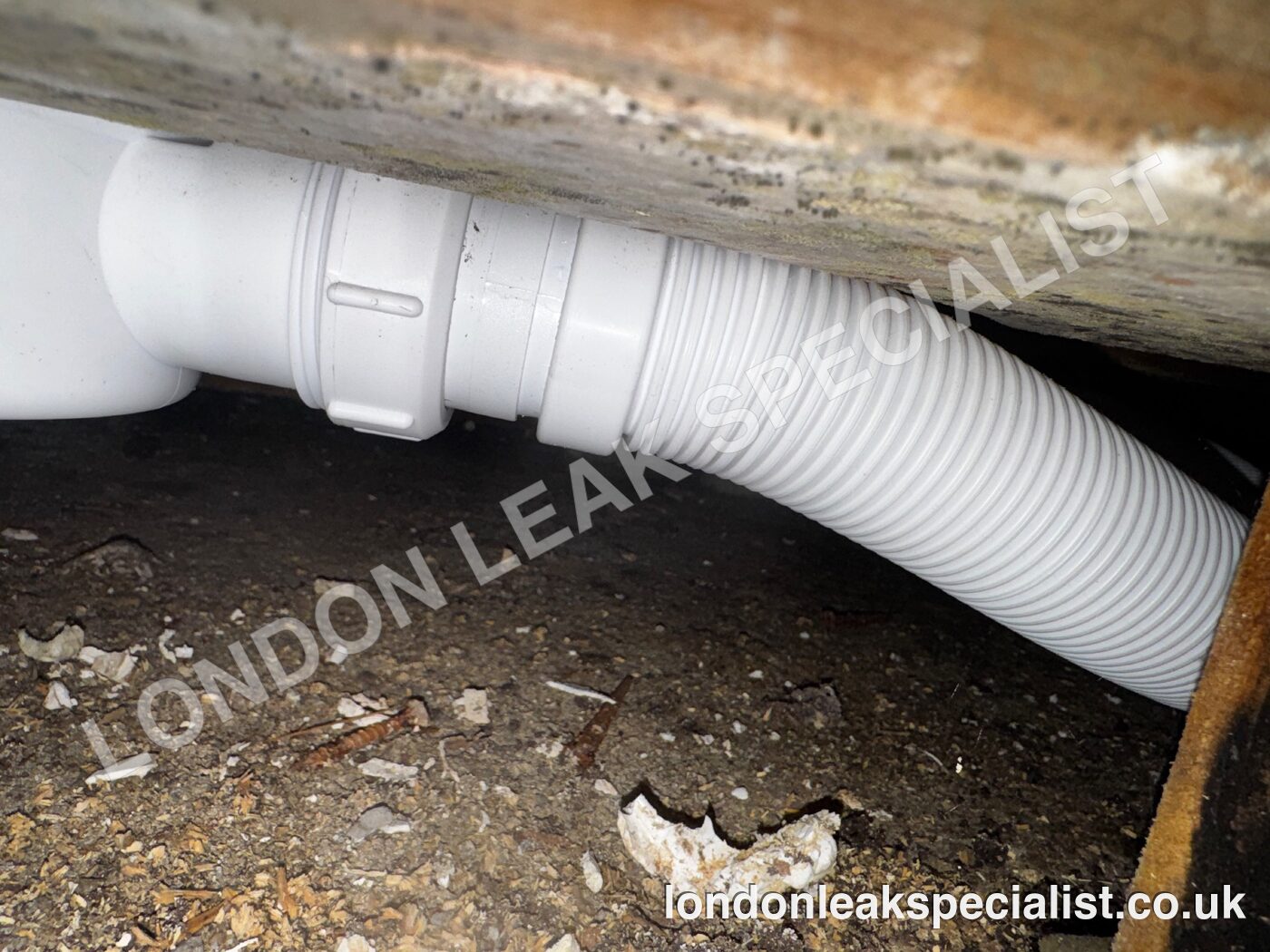
The shower waste trap and flexible waste pipe, seen from beneath the tray, on a job in Leytonstone, E11.
A new shower tray, new tiles and fresh sealant, and the neighbour was still reporting water in their kitchen. We tested everything we could reach in Leytonstone, E11 and found no active leak, which was itself the useful answer.
Most leak detection jobs end with a pipe, a joint or a seal that has failed. This one, in Leytonstone, E11, ended differently. The shower had already been stripped and rebuilt to stop water reaching the neighbour's kitchen. The neighbour was still reporting water. We were asked to find out whether the shower was still leaking.
After a full set of tests we could not find an active leak in anything we could test or reach. That is a less satisfying headline than "found it", but it changed what should happen next, and it avoided a second round of expensive demolition aimed at the wrong thing. We have removed the client, the address and every contact detail. You can download the redacted report as a PDF.
The brief: a repaired shower and a kitchen that stayed wet
The neighbouring occupants had told the property owner that water kept coming into their kitchen from the adjoining flat. The suspected source was the shower in the tenant's bathroom. The owner had already acted on that. According to what we were told, the works included:
- replacing the shower tray;
- removing and replacing roughly half the wall tiles, from the tray up towards the ceiling;
- renewing the mastic and the grout;
- reinstalling and resealing the tray so it was watertight.
The neighbour said the problem was still there. So the question for us was narrow: is there any evidence of an active leak in this property now, or has the repair worked and something else explains what the neighbour sees?
What we ruled out, and how
We worked from the cheapest and least invasive checks to the more specialised ones. Each answers a different question, which is why a single test is never enough.
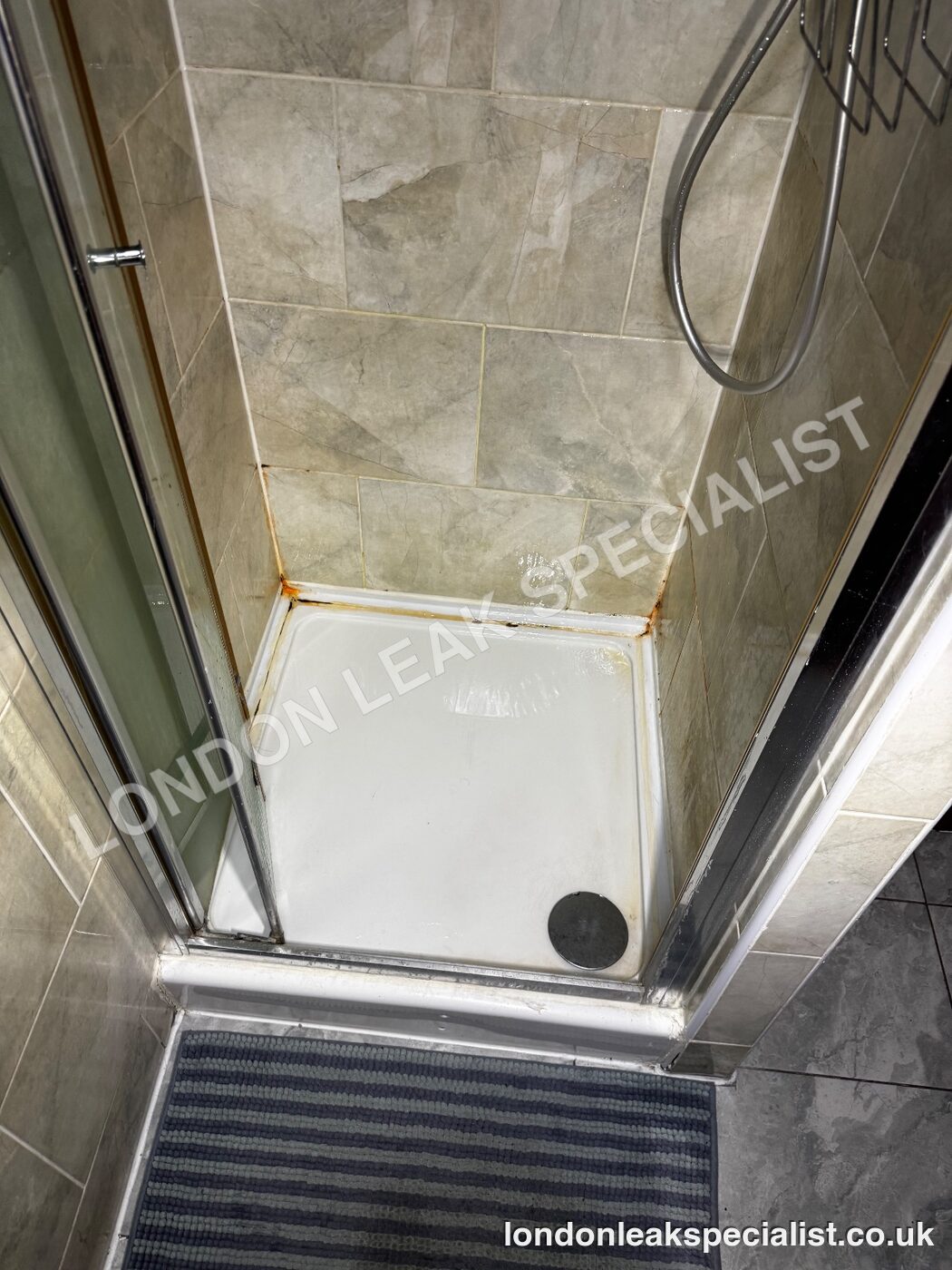
1. A visual check around and under the tray
We looked at the tray, tiles, grout lines and sealant, and at the floor area around and beneath the tray. There was no visible active leak. The area under the tray was still noticeably damp, though. That detail matters later, because dampness is not the same thing as a leak. Damp materials can be the leftovers of an old leak.
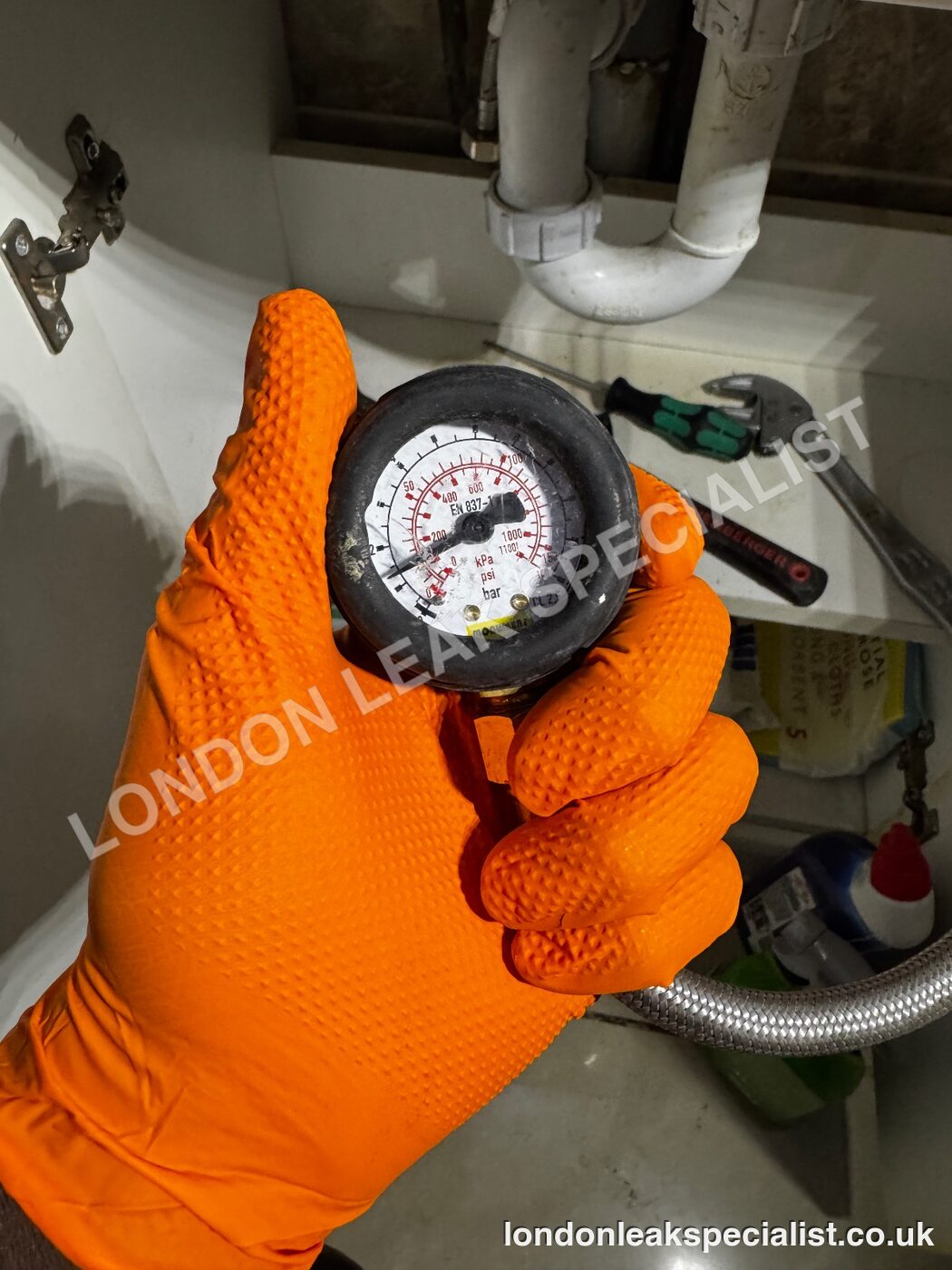
2. Pressure tests on the hot and cold supply
We pressure tested the hot and cold water systems separately. Each held a steady 1.5 bar for 30 minutes with no measurable drop. A pressure test works by isolating a pipe system and watching whether the gauge falls. If water is escaping, pressure falls. It cannot tell you about pipes that are not under pressure, such as the shower waste, which only carries water when the shower runs.
3. A water run test on the shower sealant
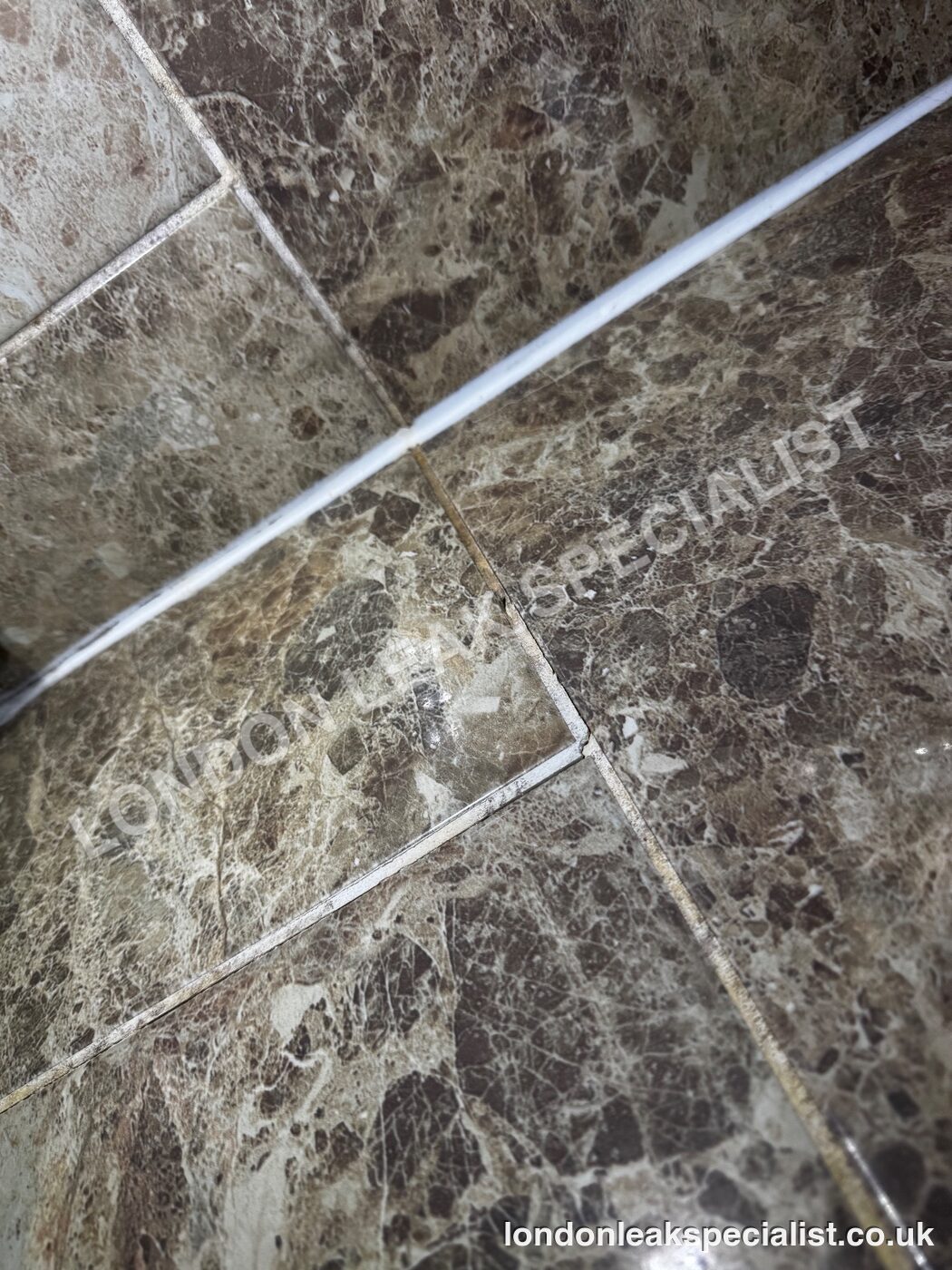
We directed water around the sealed sections for about 15 minutes to mimic normal showering, and watched for water escaping or dripping beneath the tray. Nothing did. This test targets the most common cause of leaks into the room below a shower: failed sealant or grout. It does not clear concealed joints that we cannot see, and the report says so.
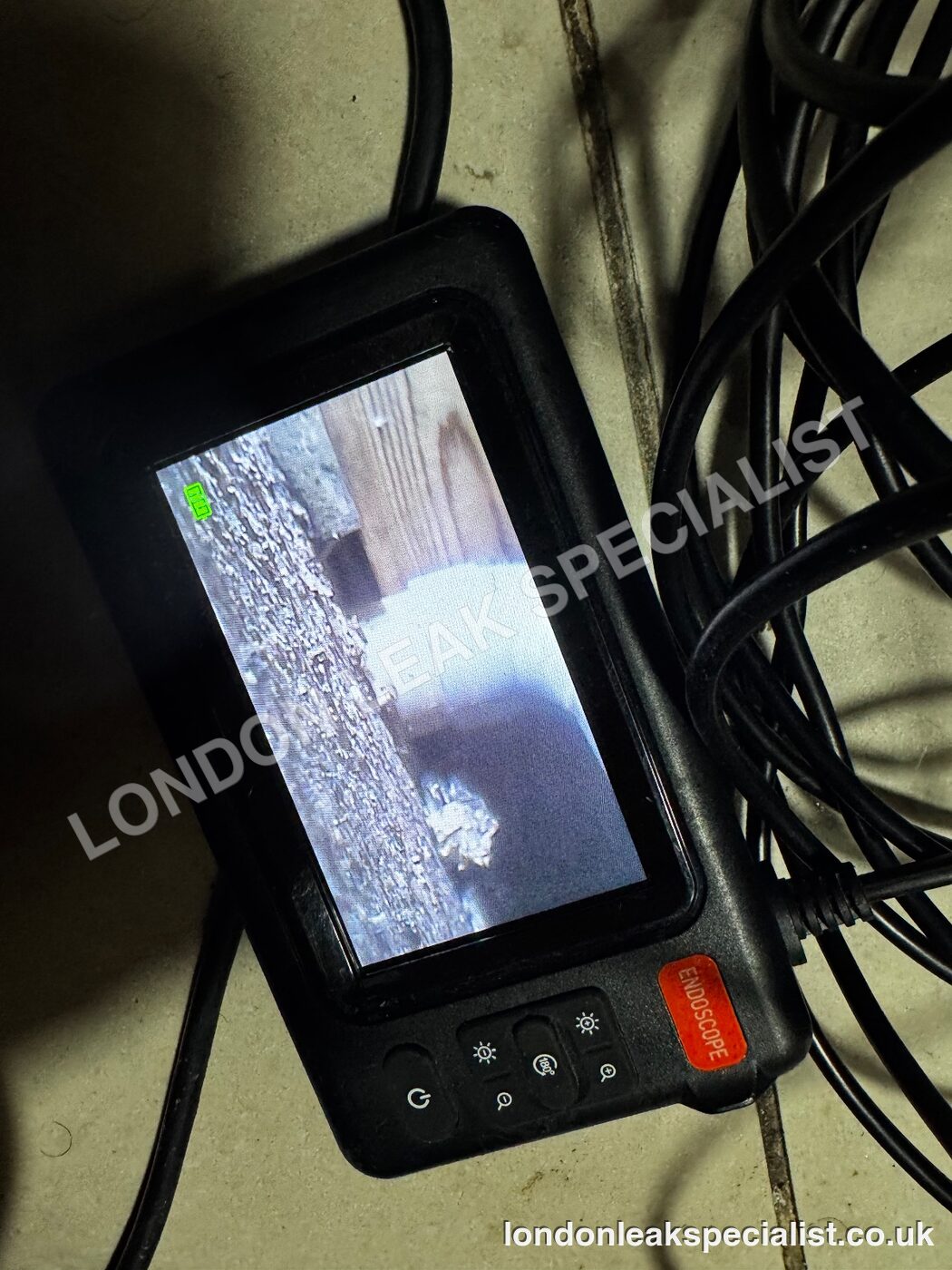
4. An endoscope camera in the concealed areas
An endoscope is a small camera on a flexible cable. It lets us look into voids without lifting floors or cutting walls. We used it beneath the shower tray, under the floorboards behind the washing machine, and around the incoming mains. The mains was several metres from the shower, but we included it to rule out a different source. No active leak was visible in any area the camera could reach.
5. Tracer gas on the hot and cold pipework
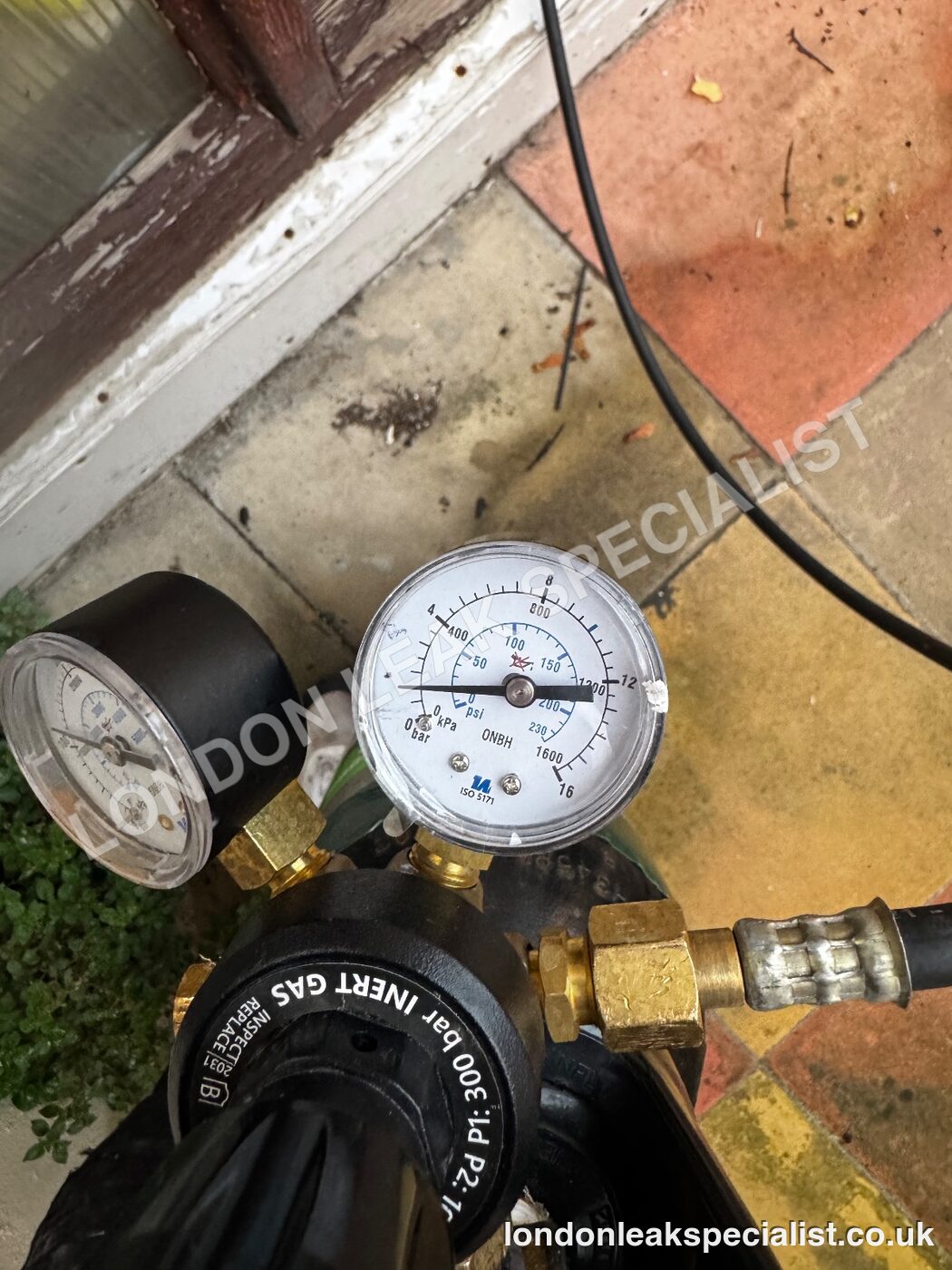
Tracer gas is a harmless gas mix that we put into a drained pipe system. If the pipe leaks, gas escapes at the leak and a sensitive detector can find it. We tested the hot and cold systems separately, about an hour each. The pressure held and no leak signal was detected. This is a stronger test than a short pressure test for a small leak, and for this property it gave the same answer.
What we found
Put plainly: no active leak was identified from the tested hot and cold pipework, the sealant under a water run test, or anything the endoscope could see. The one persistent sign was dampness under the shower tray.
That fits a plausible explanation, which we recorded as an assessment and not a confirmed finding. If the floor structure was soaked by the original leak and the new tray went in before it had fully dried, that moisture can stay trapped. Water held in plaster, masonry and timber can take a long time to dry and can keep moving through the building fabric after the leak that caused it has been fixed. In the neighbour's kitchen, the occupants were running heaters to dry the area, which is also consistent with materials that were not yet dry.
We were careful about the limits. The pressure and tracer gas tests cover the supply pipes only. They do not cover the shower waste, and the report states that leakage from waste pipework or concealed shower connections cannot be excluded.
What we did on the day
We completed the full test sequence above, inspected the neighbour's kitchen, and wrote it all up, including the tests that found nothing. There was no repair to make because there was no failed component to repair. Our recommendations were practical:
- Keep ventilating and heating the affected kitchen so the moisture can evaporate. A professional drying assessment may be worth it if materials stay saturated.
- Monitor the kitchen ceiling and walls for new staining, bubbling paint or fresh droplets, and note whether anything appears during or just after the shower is used.
- If water keeps appearing, investigate the shower waste and concealed structure before deciding the original leak was fully fixed.
What permanent repair is needed
Nothing plumbing-related was confirmed as faulty, so we did not recommend a plumbing repair. The work that does remain is the make-good in the neighbouring kitchen once it has dried: renewing damaged plaster, paint and any affected finishes. If monitoring later points to the shower waste, the next step is a controlled opening-up at the right spot and a repair, followed by a retest. We can quote the repair and the finishing together, so the customer gets the problem fixed and the room back to like-new, not just a diagnosis. Our rates are on the pricing page.
Why this saved time, money and damage
The obvious next move, after a repaired shower failed to quiet the complaint, would have been to strip the shower out again, or to start opening up the neighbour's kitchen, on the assumption that the first repair had missed something. Both are disruptive and costly. Here, the tests showed the supply pipes and the sealant were sound and gave a reason to expect residual moisture, so the sensible step was to let it dry and watch it, not demolish a second time. We are not putting a figure on the saving, because we would be inventing it. The point is that the wrong assumption was avoided.
Leaks and damp in Leytonstone, E11
Leytonstone sits in E11 in the London Borough of Waltham Forest. Many of the older terraces have been split into flats, so pipes and wastes serve more than one home and cross shared floors and party walls. The record for this job does not say which council, if any, was involved, so we make no claim about that. If you are in a rented flat and a leak from next door is not being dealt with, Citizens Advice explains who is usually responsible, and the borough's environmental health team is the place to ask about private rented disrepair. We cover leak detection across Waltham Forest, including Leytonstone.
The report, and what an insurer, agent or neighbour looks for
A report like this is worth having when blame is being argued over. It records the reason for the visit, every test and result, what was ruled out, what could not be ruled out, and a clear recommendation. That is the evidence a managing agent, landlord or insurer needs, because it separates "the leak is still there" from "the building is still drying".
On insurance, be careful. Trace and access cover, which pays to find a hidden leak and open up to reach it, is in many buildings policies but not all, and some policies exclude gradual wear or failed sealant. We cannot promise what an insurer will decide. We can give them a clear report to work from. See our guides to insurance leak claims and trace and access cover.
What you can check yourself
- Do a bathroom-off, water-off check. Note the meter reading, use no water for an hour, and read it again. Movement means a supply leak somewhere. It works because it does not depend on seeing the leak. See why your water meter might be spinning.
- Time the marks. Write down when new staining or drips appear, and whether it is after a shower, a flush or the washing machine. A leak that tracks one fixture points to that fixture's waste or supply, while marks that appear regardless suggest old moisture or a supply leak.
- Photograph the area weekly from the same spot. Fading marks mean drying. Growing marks mean new water. Dated photos also help in a dispute.
- Keep the room warm and ventilated. Moisture leaves materials by evaporation, and a warm, airy room speeds it up.
- Check sealant and grout, but do not stop there. They fail most often, but a clean result does not clear the waste pipe. More in our guide to a damp patch on a ceiling.
For a comparison of our methods, see acoustic, thermal and tracer gas leak detection. A similar shower job where the cause was found is in our NW5 shower leak case study.
A leak complaint that will not go away in Leytonstone, E11, or anywhere in London? We test in an order that avoids opening up more than necessary, repair simple faults on the day, and write the report so that landlords, agents and insurers can use it. We can also quote the permanent repair and make-good.
How we help with this
If the article describes a problem you actually have, these are the visits that deal with it.
- underground water leak detection
Supply pipe leaks under drives, gardens and pavements.
Not sure which one applies? Describe the symptom on the phone and you will be told which survey it is, the hourly rate and roughly how long it takes, before anything is booked. 020 7123 8560
Frequently asked questions
Why is my neighbour still getting water after I replaced my shower tray?
Sometimes the original leak is fixed but the floor and walls are still wet. Materials soaked for weeks can take a long time to dry, and the moisture can keep moving. A leak detection visit that tests the supply, sealant and concealed areas can show whether water is still escaping or whether the structure is drying out.
Can a leak detection company find nothing and still be useful?
Yes. A report that shows which pipes held pressure, which seals passed a water test and which areas were checked helps everyone decide what to do next. It can stop a second round of opening up the wrong place, and it records what could not be ruled out.
How long does a wet floor take to dry after a shower leak?
It depends on how much water got in, the construction and ventilation. We do not give a fixed time. Keeping the room warm and ventilated helps, and a drying assessment may be sensible if materials are still damp after repeated checks.
Does a pressure test prove there is no leak?
No. A pressure test only checks pipes that can be isolated and pressurised, and a short test can miss a small leak. A shower waste is not under pressure, so it needs a different check, such as a water run test or camera inspection. This is why we use several methods.
Do you do leak detection in Leytonstone and E11?
Yes. We attend homes and flats in Leytonstone, E11 and across Waltham Forest. We find the source or show where it is not, repair simple faults on the day where safe, and can quote the permanent repair and make-good.